Representative Charles Boyle Roberts
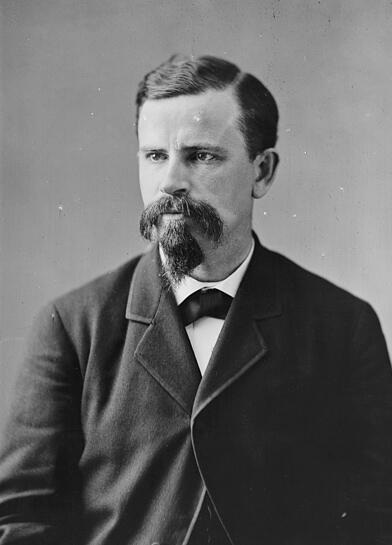
Here you will find contact information for Representative Charles Boyle Roberts, including email address, phone number, and mailing address.
| Name | Charles Boyle Roberts |
| Position | Representative |
| State | Maryland |
| District | 2 |
| Party | Democratic |
| Status | Former Representative |
| Term Start | December 6, 1875 |
| Term End | March 3, 1879 |
| Terms Served | 2 |
| Born | April 19, 1842 |
| Gender | Male |
| Bioguide ID | R000306 |
About Representative Charles Boyle Roberts
Charles Boyle Roberts (April 19, 1842 – September 10, 1899) was an American lawyer, jurist, and Democratic politician who represented Maryland’s second congressional district in the United States House of Representatives from 1875 to 1879. His career spanned private legal practice, statewide executive office, and long service on the bench, and he was active in public life during the turbulent post–Civil War and Reconstruction eras.
Roberts was born on April 19, 1842, in Uniontown, Carroll County, Maryland, a largely rural community in central Maryland. He was educated in local schools before attending Calvert College in New Windsor, Maryland, an institution that served as a regional center of higher learning for young men of the area. He graduated from Calvert College in 1861, at the outset of the Civil War, a period that shaped the political and social environment in which he would begin his professional life.
After completing his formal education, Roberts pursued the study of law. He read law in the traditional manner of the period and was admitted to the bar in 1864, during the final year of the Civil War. He commenced the practice of law in Westminster, Maryland, the county seat of Carroll County, where he built a legal career that brought him increasing prominence in local and state affairs. His work as an attorney in Westminster established his reputation and provided the foundation for his entry into elective office as a member of the Democratic Party.
Roberts was elected as a Democrat to the United States House of Representatives, winning a seat from Maryland’s second district in the Forty-fourth Congress and securing reelection to the Forty-fifth Congress. He served from March 4, 1875, to March 3, 1879, completing two consecutive terms. His tenure in Congress coincided with a significant period in American history, as the nation grappled with the end of Reconstruction, economic challenges following the Panic of 1873, and evolving federal policies affecting both North and South. During his service, Roberts participated in the legislative process and represented the interests of his Maryland constituents in the House of Representatives. He held a leadership role as chairman of the Committee on Accounts in both the Forty-fourth and Forty-fifth Congresses, overseeing matters related to the financial administration and expenditures of the House.
After leaving Congress in 1879, Roberts returned to Maryland and resumed his legal practice, remaining active in Democratic politics. In 1883 he was elected Attorney General of Maryland, the state’s chief legal officer, and he served one term in that office. As Attorney General, he was responsible for representing the state in legal matters, advising state officials, and helping to shape the legal framework within which Maryland’s government operated during the 1880s.
Roberts subsequently entered the judiciary, marking the final major phase of his public career. In 1891 he was elected associate judge of the fifth judicial district of Maryland, a district that included Carroll County and surrounding areas. Soon thereafter he was appointed chief judge of the district to fill the vacancy caused by the death of Judge Miller, assuming the senior judicial role in that circuit. In 1893 he was elected to a full term of fifteen years as chief judge, reflecting public confidence in his judicial service and legal judgment. His work on the bench extended his influence over the development and application of Maryland law in the late nineteenth century.
Charles Boyle Roberts remained in Westminster during his judicial service and until the end of his life. He died there on September 10, 1899, while still serving as chief judge of the fifth judicial district. He was interred in the Catholic Cemetery in Westminster, Maryland, leaving a record of service that encompassed local legal practice, two terms in the United States Congress, statewide executive office as Attorney General, and leadership in the Maryland judiciary.