Representative Charles Hedding Rowland
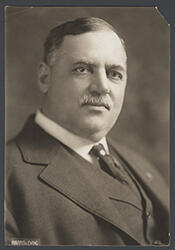
Here you will find contact information for Representative Charles Hedding Rowland, including email address, phone number, and mailing address.
| Name | Charles Hedding Rowland |
| Position | Representative |
| State | Pennsylvania |
| District | 21 |
| Party | Republican |
| Status | Former Representative |
| Term Start | December 6, 1915 |
| Term End | March 3, 1919 |
| Terms Served | 2 |
| Born | December 20, 1860 |
| Gender | Male |
| Bioguide ID | R000480 |
About Representative Charles Hedding Rowland
Charles Hedding Rowland (December 20, 1860 – November 24, 1921) was a Republican member of the U.S. House of Representatives from Pennsylvania who served two terms in Congress from 1915 to 1919. Born in the mid-nineteenth century, he came of age during a period of rapid industrialization and community development in Pennsylvania, influences that later shaped both his business interests and his public service. Although detailed records of his early childhood and family background are limited, his later activities indicate a strong identification with the civic and economic life of his region, particularly the borough of Philipsburg in Centre County.
Rowland’s education and early career unfolded against the backdrop of Pennsylvania’s expanding coal, rail, and commercial sectors. He became involved in local business affairs and community initiatives, gaining experience that would prove valuable in his subsequent political career. By the early twentieth century, he had established himself as a prominent local figure, engaged not only in commercial enterprises but also in efforts to improve the social and cultural infrastructure of his community. His growing reputation as a civic-minded businessman helped lay the groundwork for his entry into elective office.
Rowland’s most enduring local legacy began with a disaster in Philipsburg in 1910, when fire destroyed the Pierce Opera House and a number of other Front Street buildings. Recognizing both the cultural loss and the opportunity to provide a modern public facility, Rowland and his family purchased the site on December 31, 1915, with the intention of constructing a new building suitable to the needs of the local community. Over the next year and a half, plans were developed for a theatre and auditorium that would serve as a center for public meetings, conventions, and entertainment, reflecting Rowland’s belief that such a building was a “public necessity” for a town of Philipsburg’s size and aspirations.
Upon the completion of the new Rowland Theater in June 1917, Rowland issued a statement printed on the brochure distributed to the public on opening night, explaining his vision for the project. He observed that the people of Philipsburg had long hoped for “a comfortable and commodious place of amusement and entertainment” and emphasized that, for years, there had been no suitable venue for public meetings, conventions, or other large gatherings. He argued that community growth would be “retarded without such a public convenience” and expressed his desire for a theatre “of size, safety and perfection of appointment that would anticipate the future, maintain our best past traditions, reflect a progressive spirit, while affording us a place to spend a delightful evening at home.” Rowland further pledged that it was “proposed to stage only plays and moving pictures of class and quality,” and he expressed personal gratification at having been “the one permitted to open to the general public a place for its comfort and entertainment.” The Rowland Theater, which remains open to the public for motion pictures, stage plays, orchestras, and other events, is now listed on the National Register of Historic Places, standing as a lasting testament to his civic vision.
Parallel to his local endeavors, Rowland pursued a career in national politics as a member of the Republican Party. He was elected as a Republican to the U.S. House of Representatives from Pennsylvania and served in the Sixty-fourth and Sixty-fifth Congresses from 1915 to 1919. During these two terms in office, he contributed to the legislative process at a time when the United States was confronting major domestic and international challenges, including the lead-up to and participation in World War I. As a member of the House of Representatives, Charles Hedding Rowland participated in the democratic process and represented the interests of his constituents, aligning his work in Washington with the economic and civic concerns of his district in Pennsylvania.
Rowland’s congressional service occurred during a significant period in American history, marked by debates over preparedness, wartime mobilization, and postwar adjustment. Within this context, he took part in deliberations that affected both national policy and the daily lives of the citizens he represented. His experience as a businessman and community leader informed his perspective on issues such as infrastructure, public facilities, and the welfare of local communities, and he used his position in Congress to advocate for the needs and priorities of his district. After completing his second term in 1919, he did not return to Congress, concluding his formal role in national elective office.
In his later years, Rowland remained associated with the community improvements and institutions he had helped foster, particularly in Philipsburg. The theater that bore his name continued to function as a focal point for civic and cultural life, embodying his belief in the importance of public spaces for entertainment, assembly, and community identity. Charles Hedding Rowland died on November 24, 1921, leaving behind a record of service that combined local philanthropy with national legislative work. His contributions to Pennsylvania’s civic landscape and his two terms in the U.S. House of Representatives secured him a place in the state’s political and community history.