Representative Charles Miller Shelley
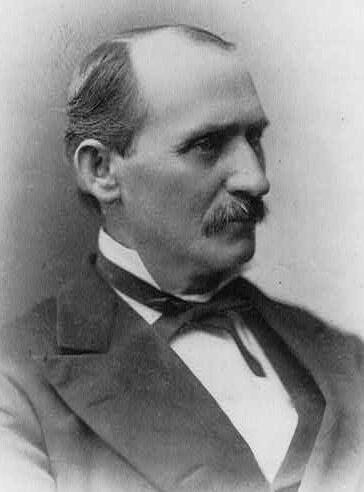
Here you will find contact information for Representative Charles Miller Shelley, including email address, phone number, and mailing address.
| Name | Charles Miller Shelley |
| Position | Representative |
| State | Alabama |
| District | 4 |
| Party | Democratic |
| Status | Former Representative |
| Term Start | October 15, 1877 |
| Term End | March 3, 1885 |
| Terms Served | 4 |
| Born | December 28, 1833 |
| Gender | Male |
| Bioguide ID | S000326 |
About Representative Charles Miller Shelley
Charles Miller Shelley (December 28, 1833 – January 20, 1907) was a brigadier general in the Confederate States Army during the American Civil War and a late Reconstruction era U.S. Representative from Alabama. He was born in Sullivan County, Tennessee, and in 1836 moved with his father to Selma, Alabama. His formal education was limited, but he showed an early aptitude for architecture and construction. During the 1850s he established himself in Selma as an architect and builder, gaining practical experience in design and construction that would support his prewar livelihood.
With the outbreak of the Civil War, Shelley entered the Confederate Army in February 1861 as a first lieutenant and was initially stationed at Fort Morgan on the Alabama coast. He was later attached to the 5th Alabama Infantry and rose steadily through the ranks, ultimately being commissioned as a brigadier general in the Confederate States Army. He saw extensive combat and commanded Cantey’s Brigade in the Army of Tennessee. At the Battle of Franklin in November 1864, he led approximately 1,100 men of Cantey’s Brigade, of whom 430 were left on the field as casualties, a measure of the ferocity of the fighting. General John Bell Hood credited Shelley’s tactical decisions with saving General Alexander P. Stewart’s corps from capture during that engagement. His family was also deeply involved in the conflict; his brother James Shelley, lieutenant colonel of the 10th Alabama Infantry, was killed in action at Petersburg, Virginia.
After the war, Shelley returned to Alabama, where he resumed civilian life and became involved in business and public affairs during the tumultuous Reconstruction period. Aligning with the Democratic Party, he emerged as a political figure in a state undergoing the transition from federal military oversight to the restoration of white Democratic control. His background as a Confederate general and his connections in Alabama’s Black Belt region helped position him as a representative of the postwar Democratic resurgence.
Shelley was first elected as a Democrat to the United States House of Representatives from Alabama’s 4th congressional district on November 7, 1876, during the closing phase of Reconstruction. In that election he received 37.77 percent of the vote in a three-way contest, prevailing because the Republican vote was divided between the party’s official nominee, James T. Rapier, who won about 28 percent, and the incumbent Jeremiah Haralson, who ran as an independent and received more than 33 percent. Shelley took his seat in the Forty-fifth Congress on March 4, 1877, and served continuously through the Forty-sixth Congress, participating in the legislative process during a significant period in American history as federal authority in the South receded and “Redeemer” Democratic governments consolidated power. A member of the Democratic Party, he contributed to the work of the House of Representatives and represented the interests of his Alabama constituents during four terms in office.
Shelley ran for reelection in 1878 and, with the end of Reconstruction and the rise of Democratic intimidation and violence against African American voters, his campaign was markedly less competitive than his first. He received 55.38 percent of the vote, or 8,514 votes, fewer than the 9,655 he had garnered two years earlier, indicating a contraction in the size of the electorate. Haralson again sought office but received only 6,545 votes, or 42.57 percent, reflecting the impact of Democratic efforts to suppress black Republican voting. Shelley was reelected again in 1880. He presented his credentials as a Member-elect to the Forty-seventh Congress, but his election was contested by Republican James Q. Smith. After investigation, the House declared the seat vacant on July 20, 1882. In the special election called to fill the vacancy, Shelley was again chosen and served from November 7, 1882, to March 3, 1883. He then presented his credentials as a Member-elect to the Forty-eighth Congress and served from March 4, 1883, to January 9, 1885, when he was succeeded by George H. Craig, who successfully contested the election. In total, Shelley served in the U.S. House of Representatives from 1877 to 1885, his tenure marked by repeated electoral disputes characteristic of the volatile politics of the Reconstruction and post-Reconstruction South.
After leaving Congress, Shelley settled in Birmingham, Alabama, which was emerging as an industrial center in the New South era. There he engaged in promoting the industrial interests of the region, participating in efforts to develop Birmingham’s manufacturing and commercial base and to attract investment to the area. He remained active in these pursuits until his death in Birmingham on January 20, 1907. Charles Miller Shelley was interred in Oak Hill Cemetery in Talladega, Alabama, closing a life that spanned the antebellum period, the Civil War, Reconstruction, and the early decades of the industrial South.