Representative Charles Rufus Skinner
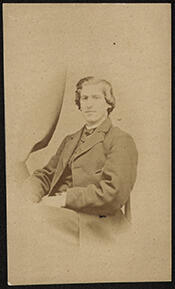
Here you will find contact information for Representative Charles Rufus Skinner, including email address, phone number, and mailing address.
| Name | Charles Rufus Skinner |
| Position | Representative |
| State | New York |
| District | 22 |
| Party | Republican |
| Status | Former Representative |
| Term Start | December 5, 1881 |
| Term End | March 3, 1885 |
| Terms Served | 2 |
| Born | August 4, 1844 |
| Gender | Male |
| Bioguide ID | S000467 |
About Representative Charles Rufus Skinner
Charles Rufus Skinner (August 4, 1844 – June 30, 1928) was a Republican U.S. Representative from New York who served in the United States Congress from 1881 to 1885 and later became a prominent state and national leader in public education. He was born in Union Square, a hamlet now called Maple View, in the Town of Mexico, Oswego County, New York, the son of State Senator Avery Skinner (1796–1876) and Charlotte Prior (Stebbins) Skinner (1802–1888). He attended the common schools and Clinton Liberal Institute and graduated from Mexico Academy, New York, in 1866. After completing his studies, he taught in the common schools, beginning a lifelong association with education that would shape much of his public career.
Skinner entered journalism and local public service in Watertown, New York, soon after his early teaching work. He became editor of the Watertown Daily Times from 1870 to 1874, using the newspaper as a platform for civic engagement and Republican politics. He served as a member of the board of education of Watertown from 1875 to 1884, where he helped oversee the city’s public schools during a period of expanding educational opportunity. His growing prominence in local affairs led to his election to the New York State Assembly, representing Jefferson County’s 1st District in 1877, 1878, 1879, 1880, and 1881. In the Assembly he gained legislative experience and a reputation as an advocate for education and public improvement.
Building on his state legislative service, Skinner was elected as a Republican to the Forty-seventh United States Congress to fill the vacancy caused by the election of Warner Miller to the U.S. Senate, and he was re-elected to the Forty-eighth Congress. He held office from November 8, 1881, to March 3, 1885, serving two terms as a Representative from New York. His service in Congress occurred during a significant period in American history, in the decades following the Civil War and during the emergence of new industrial and economic forces. As a member of the House of Representatives, Charles Rufus Skinner participated in the democratic process, contributed to the legislative work of the period, and represented the interests of his New York constituents. He served in Congress alongside fellow Republican William McKinley, who would later be elected President of the United States in 1896 and 1900.
While in national public life, Skinner also undertook additional federal responsibilities. In 1884 he served as a member of the Board of Visitors to the United States Military Academy at West Point, reflecting his standing in educational and governmental circles. After leaving Congress in 1885, he returned to journalism in Watertown, becoming editor of the Watertown Daily Republican from 1885 to 1886 and then city editor of the Watertown Daily Times in 1886. These positions allowed him to remain an influential voice in public affairs while transitioning from national legislative work to administrative and educational leadership.
Skinner’s most enduring impact came through his long career in educational administration at the state and national levels. He was appointed deputy state superintendent of public instruction for New York in 1886, serving until 1892. From 1892 to 1895 he was supervisor of teachers’ training classes and teachers’ institutes in the State Department of Public Instruction, and in 1894 he served as chairman of the Executive Committee at the State Normal College at Albany, helping to shape teacher preparation in New York. In 1895 he became state superintendent of public instruction, a post he held until 1904, overseeing the state’s public school system during a period of growth and reform. His leadership was recognized nationally when he was elected president of the National Education Association in 1897, placing him at the forefront of national discussions on public education policy and practice.
After his tenure as state superintendent, Skinner continued in federal and state service. From 1906 to 1911 he served as assistant appraiser of merchandise for the port of New York, a customs position involving the valuation of imported goods at one of the nation’s busiest ports. He later returned to Albany and legislative work, serving as librarian of the New York State Assembly in 1913 and 1914 and as legislative librarian from 1915 to 1925. In these roles he oversaw legislative reference and documentation, supporting the work of lawmakers with organized access to legal and historical materials.
Skinner was also a notable author and commentator on public affairs, education, and history. His writings included “Protection Patriotism Prosperity; A Safe Trinity” (1884) and “Speeches of Hon. Charles R. Skinner, of New York, in the House of Representatives” (1884), reflecting his congressional views; the “Arbor Day Manual; An Aid in Preparing Programs for Arbor Day Exercises” (1890), supporting civic and environmental education; and the “Manual of Patriotism, for Use in the Public Schools of the State of New York” (1900), which promoted civic instruction in schools. He compiled “The Bright Side: Little Excursions into the Field of Optimism” (1909) and “Governors of New York from 1777 to 1920” (1919), and edited “Watertown, N.Y. A History of its Settlement and Progress, with a Description of its Commercial Advantages, as a Manufacturing Point” (1876). In December 1924 he published “How Congress Acted Forty Years Ago: Reminiscences of a Member From New York State” in State Service, offering a retrospective on his congressional experience.
Skinner’s long public life intersected with two of the most consequential presidential assassinations in American history. While living in Washington, D.C., in 1882, he was asked to attend the execution of President James A. Garfield’s assassin, Charles Guiteau, but was unable to do so because of the illness of his daughter. Nearly two decades later, on September 6, 1901, he attended the Pan-American Exposition in Buffalo, New York, to hear President William McKinley deliver a speech on reciprocity. Skinner was present when, after the speech, Leon Czolgosz approached the President and shot him twice; McKinley died of his wounds on September 14, 1901, becoming the third U.S. president to be assassinated, after Abraham Lincoln in 1865 and Garfield in 1881. Skinner was later invited by the warden of Auburn Prison to witness Czolgosz’s execution and served as one of only twelve official witnesses required by New York law when Czolgosz was executed in the electric chair on October 29, 1901, an early use of that method. In 1919 Skinner published “Story of McKinley’s Assassination” in State Service Magazine, recounting his experiences with McKinley, the events of the assassination, and the execution of Czolgosz, including the assassin’s final statement.
Charles Rufus Skinner died from pneumonia at his son’s home in Pelham Manor, New York, on June 30, 1928. His remains were cremated, and his ashes were interred in Brookside Cemetery in Watertown, New York, the community where he had built much of his career in journalism, education, and public service.