Representative Charles Franklin Sprague
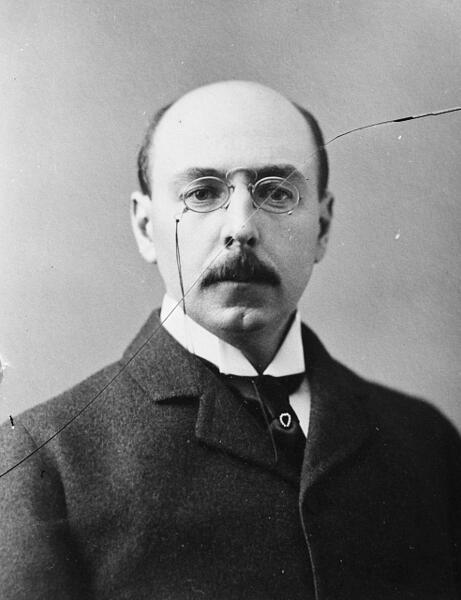
Here you will find contact information for Representative Charles Franklin Sprague, including email address, phone number, and mailing address.
| Name | Charles Franklin Sprague |
| Position | Representative |
| State | Massachusetts |
| District | 11 |
| Party | Republican |
| Status | Former Representative |
| Term Start | March 15, 1897 |
| Term End | March 3, 1901 |
| Terms Served | 2 |
| Born | June 10, 1857 |
| Gender | Male |
| Bioguide ID | S000742 |
About Representative Charles Franklin Sprague
Charles Franklin Sprague (June 10, 1857 – January 30, 1902) was a United States Representative from Massachusetts and a member of the Republican Party, serving two terms in Congress from 1897 to 1901. He was born in Boston, Massachusetts, and was the grandson of Peleg Sprague (1793–1880), a prominent jurist and former U.S. Representative and Senator from Maine. His family background and upbringing in Boston placed him within an established New England political and professional tradition that would shape his later public career.
Sprague was educated in the Boston public schools before entering Harvard University, from which he was graduated in 1879. Following his undergraduate studies, he pursued legal training at Harvard Law School and then completed his legal education at Boston University School of Law. After finishing his studies, he was admitted to the bar in Boston, beginning a professional life grounded in the law. His legal training and practice provided the foundation for his subsequent involvement in municipal and state government.
Sprague’s public career began at the local level in Boston. He served as a member of the Boston Common Council in 1889 and 1890, participating in the governance of the rapidly growing city and gaining experience in legislative and administrative matters. He advanced to state office as a member of the Massachusetts House of Representatives in 1891 and 1892, where he took part in shaping state legislation during a period of industrial expansion and social change in the Commonwealth. In 1893 and 1894 he served as chairman of the board of park commissioners of the city of Boston, overseeing the development and administration of the city’s park system, an important aspect of Boston’s urban planning and public welfare efforts in the late nineteenth century.
Sprague continued his rise in state politics as a member of the Massachusetts State Senate in 1895 and 1896. In the Senate he was positioned to influence broader state policy and to deepen his engagement with issues affecting both Boston and Massachusetts as a whole. His service in both houses of the state legislature, combined with his municipal experience, established him as a capable Republican leader and prepared him for national office.
In 1896 Sprague was elected as a Republican to the United States House of Representatives, winning a seat in the Fifty-fifth Congress and subsequently being reelected to the Fifty-sixth Congress. He served from March 4, 1897, to March 3, 1901, representing Massachusetts during a significant period in American history marked by the Spanish–American War, the nation’s expanding international role, and domestic debates over economic and monetary policy. As a member of the House of Representatives, Charles Franklin Sprague contributed to the legislative process over his two terms, participated in the democratic process at the national level, and represented the interests of his Massachusetts constituents. He declined to be a candidate for renomination in 1900 to the Fifty-seventh Congress, thereby concluding his congressional service at the end of his second term.
In his personal life, Sprague married Mary Bryant Pratt in November 1891, a union that coincided with the early years of his state legislative career. His later years were marked by declining health. He died at the Butler Sanitarium in Providence, Rhode Island, on January 30, 1902. Charles Franklin Sprague was interred in Mount Auburn Cemetery in Watertown, Massachusetts, a resting place for many notable New England figures, reflecting his standing within the region’s political and civic life.