Representative Charles St. John
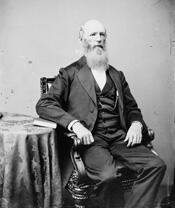
Here you will find contact information for Representative Charles St. John, including email address, phone number, and mailing address.
| Name | Charles St. John |
| Position | Representative |
| State | New York |
| District | 12 |
| Party | Republican |
| Status | Former Representative |
| Term Start | March 4, 1871 |
| Term End | March 3, 1875 |
| Terms Served | 2 |
| Born | October 8, 1818 |
| Gender | Male |
| Bioguide ID | S000765 |
About Representative Charles St. John
Charles St. John (October 8, 1818 – July 6, 1891) was a Republican member of the United States House of Representatives from New York who served two terms in Congress from 1871 to 1875. His congressional service took place during a significant period in American history, in the years following the Civil War, when the nation was engaged in Reconstruction and the redefinition of federal and state powers.
St. John was born on October 8, 1818, in Mount Hope, Orange County, New York. He was educated in the common schools of the area and continued his studies at Goshen Academy and Newburgh Academy, both in New York. This combination of local schooling and academy education provided him with the grounding that would support his later work in business, finance, and public service.
Before entering national politics, St. John pursued a varied and increasingly prominent career in business. He engaged in the lumber trade on the Delaware River, an important commercial artery for the region, and later entered mercantile pursuits and banking in Port Jervis, New York. His growing stature in local economic affairs led to his appointment as an internal revenue collector, a federal position that placed him at the intersection of business and government during a period when the federal tax system was expanding after the Civil War. He also served as president of the Barrett Bridge Company, reflecting his involvement in regional infrastructure and transportation development.
St. John was elected as a Republican to the Forty-second and Forty-third Congresses, serving from March 4, 1871, to March 3, 1875, as a Representative from New York. During these two terms in the House of Representatives, he participated in the legislative process at a time when Congress was addressing issues of Reconstruction, economic development, and the integration of a rapidly industrializing nation. As a member of the House, he represented the interests of his New York constituents and contributed to the broader democratic process through his votes and committee work, aligning with the Republican Party’s policies of the era.
After leaving Congress in 1875, St. John resumed his former business activities in Port Jervis. He continued to be active in local economic development and remained a figure of some prominence in the region. In 1888 he undertook a notable project beyond New York’s borders when he built the High Point Inn at High Point, the highest elevation in New Jersey. The inn became a landmark structure and later formed the basis for the home of Anthony R. Kuser, who converted it into a lodge and ultimately donated the property to the State of New Jersey in 1923, contributing to the establishment of what became High Point State Park.
Charles St. John spent his later years in Port Jervis, where he remained connected to the business and civic life of the community he had long served. He died in Port Jervis on July 6, 1891. His remains were interred in Laurel Grove Cemetery in that city, marking the final resting place of a businessman, local leader, and two-term Republican Representative who had participated in the governance of the United States during a transformative period in its history.