Representative Charles Manly Stedman
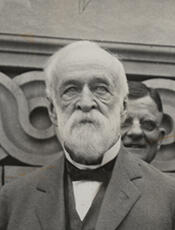
Here you will find contact information for Representative Charles Manly Stedman, including email address, phone number, and mailing address.
| Name | Charles Manly Stedman |
| Position | Representative |
| State | North Carolina |
| District | 5 |
| Party | Democratic |
| Status | Former Representative |
| Term Start | April 4, 1911 |
| Term End | March 3, 1931 |
| Terms Served | 10 |
| Born | January 29, 1841 |
| Gender | Male |
| Bioguide ID | S000827 |
About Representative Charles Manly Stedman
Charles Manly Stedman (January 29, 1841 – September 23, 1930) was a North Carolina lawyer, Civil War veteran, and Democratic politician who served ten consecutive terms in the United States House of Representatives from 1911 to 1930. A prominent figure in his state’s legal and political life, he was the last veteran of either side of the Civil War to hold a seat in Congress and contributed to the legislative process during a significant period in American history.
Stedman was born in Pittsboro, Chatham County, North Carolina, and in 1853 moved with his parents to Fayetteville, North Carolina. He attended Pittsboro and Donaldson Academies before enrolling at the University of North Carolina at Chapel Hill. At the university he was a member of the Dialectic and Philanthropic Societies and graduated in 1861, on the eve of the Civil War.
With the outbreak of the Civil War, Stedman enlisted as a private in the Fayetteville Independent Light Infantry Company, which formed part of the Confederate 1st North Carolina “Bethel Regiment.” He later rose through the ranks and was promoted to major of the 44th North Carolina Infantry. Following the war, he returned to Chatham County and taught school in Pittsboro for one year. He then studied law, was admitted to the bar in 1865, and commenced legal practice in Wilmington, North Carolina, establishing himself in the profession that would underpin his later political career.
Stedman’s formal entry into politics came as a delegate to the 1880 Democratic National Convention, which nominated Winfield Scott Hancock and William Hayden English for President and Vice President of the United States. He was elected the fifth Lieutenant Governor of North Carolina in 1884 and served from 1885 to 1889. In 1888 he was an unsuccessful candidate for the Democratic nomination for Governor of North Carolina, an office he sought again without success in 1903–1904. After his term as lieutenant governor, he continued his legal work, moving to Asheville, North Carolina, in 1891 and then to Greensboro, North Carolina, in 1898, where he maintained an active law practice.
In addition to his political roles, Stedman held several important positions in North Carolina’s civic and professional life. He served as a trustee of the University of North Carolina from 1899 to 1915, reflecting his continuing connection to his alma mater. He was president of the North Carolina Bar Association from 1900 to 1901, underscoring his prominence in the legal community. From 1909 to 1910 he served as director and president of the North Carolina Railroad, participating in the oversight of one of the state’s key transportation enterprises.
Stedman was elected as a Democrat to the United States House of Representatives in 1910 and took his seat in March 1911. He was reelected in 1912, 1914, 1916, 1918, 1920, 1922, 1924, 1926, and 1928, serving ten terms in all and remaining in office until his death in 1930. Throughout this period he represented the interests of his North Carolina constituents in the House of Representatives and participated in the national legislative process during an era that encompassed World War I, the postwar adjustments, and the early years of the Great Depression. In 1923 he introduced legislation in Congress to create a “Mammy” memorial in Washington, D.C.; although the bill passed the Senate, it encountered substantial public protest and ultimately died in the House.
Charles Manly Stedman died in office in Washington, D.C., on September 23, 1930, while still serving in the House of Representatives. At the time of his death he was recognized as the last surviving Civil War veteran, Union or Confederate, to serve in the United States Congress. He was interred in Cross Creek Cemetery in Fayetteville, North Carolina, and a commemorative roadside marker was later placed in Fayetteville in his honor, reflecting his long career in public service and his enduring association with the state.