Representative Charles Warren Stone
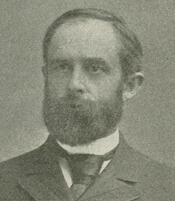
Here you will find contact information for Representative Charles Warren Stone, including email address, phone number, and mailing address.
| Name | Charles Warren Stone |
| Position | Representative |
| State | Pennsylvania |
| District | 27 |
| Party | Republican |
| Status | Former Representative |
| Term Start | December 2, 1889 |
| Term End | March 3, 1899 |
| Terms Served | 5 |
| Born | June 29, 1843 |
| Gender | Male |
| Bioguide ID | S000953 |
About Representative Charles Warren Stone
Charles Warren Stone (June 29, 1843 – August 15, 1912) was a Republican member of the United States House of Representatives from Pennsylvania and the second lieutenant governor of Pennsylvania. His decade of service in Congress, from 1889 to 1899, spanned a significant period in American political and economic history, during which he represented his constituents in northwestern Pennsylvania and contributed to the national legislative process over five consecutive terms.
Stone was born near Groton, Middlesex County, Massachusetts, on June 29, 1843. He attended the local schools and pursued preparatory studies at Lawrence Academy in Groton. He then enrolled at Williams College in Williamstown, Massachusetts, from which he graduated in 1863. Shortly after completing his college education, he moved westward to Pennsylvania in 1863 and settled in the lumber and oil region town of Warren, Warren County, which would remain his principal home and the base of his professional and political career.
Upon establishing himself in Warren, Stone first entered the field of education. In 1865 he was elected superintendent of schools of Warren County, Pennsylvania, overseeing the organization and administration of the county’s public schools in the years immediately following the Civil War. During this period he also taught at the Erie Academy in Erie, Pennsylvania. While engaged in educational work, he studied law, was admitted to the bar in 1867, and commenced the practice of law in Warren. In addition to his legal and educational pursuits, he served as a trustee of Pennsylvania State College (later The Pennsylvania State University), reflecting his continued interest in higher education and public instruction.
Stone married Lizzie Moorhead, a native of Erie, Pennsylvania, whose father was one of the city’s oldest and most prominent citizens. She had attended the Erie Academy and later taught there, and it was in this institution that she and Stone met while both were on the faculty. The couple had four daughters and two sons. Their eldest son served as Stone’s private secretary, and their youngest son attended the preparatory department of Columbia College in New York. Their eldest daughter married a Mr. Allen of Warren; their second daughter, Ann, became well known in Washington society, attended school near Philadelphia, and later traveled in Europe; and their third daughter, Bessie, pursued studies at Baltimore College, underscoring the family’s strong emphasis on education and public life.
Stone’s political career began in the Pennsylvania General Assembly. He was elected to the Pennsylvania House of Representatives and served in 1870 and 1871, representing his district during the early years of the state’s post–Civil War industrial expansion. He subsequently advanced to the Pennsylvania State Senate, where he served in 1877 and 1878. His growing prominence in state politics led to his election as the second lieutenant governor of Pennsylvania, serving during the administration of Governor Henry M. Hoyt from 1879 to 1883. In this role he presided over the state senate and participated in the executive leadership of the Commonwealth during a period of rapid economic development and political realignment. Later, he was appointed secretary of the Commonwealth of Pennsylvania on January 18, 1887, a senior administrative post he held until he resigned to accept the Republican nomination for Congress.
Stone entered national politics when he was elected as a Republican to the Fifty-first Congress to fill the vacancy caused by the death of Representative Lewis F. Watson. He took his seat in the U.S. House of Representatives in 1889 and was subsequently reelected to the Fifty-second and to the three succeeding Congresses, serving continuously until 1899. During his tenure, he represented Pennsylvania at a time of intense debate over tariffs, monetary policy, and industrial regulation. He served as chairman of the House Committee on Coinage, Weights, and Measures during the Fifty-fourth (1895–1897) and Fifty-fifth (1897–1899) Congresses, placing him at the center of legislative consideration of currency, standards of value, and technical measures affecting commerce and industry. His decade in Congress coincided with the Gilded Age and the lead-up to the Progressive Era, and he participated actively in the democratic process on behalf of his constituents.
In 1898 Stone was an unsuccessful candidate for reelection to the House of Representatives, bringing his five-term congressional career to a close. That same year he also sought higher office as a candidate for governor of Pennsylvania but was likewise unsuccessful. After leaving Congress, he returned to Warren and resumed the practice of law, remaining a respected figure in local and state affairs. He continued to live near Warren until his death on August 15, 1912. Stone was interred in Oakland Cemetery in Pleasant Township, Warren County, Pennsylvania. In recognition of his regional and historical significance, the Honorable Charles Warren Stone Museum in Warren was later added to the National Register of Historic Places in 1976, commemorating his contributions to Pennsylvania and to the United States.