Senator Charles Edward Stuart
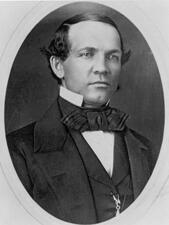
Here you will find contact information for Senator Charles Edward Stuart, including email address, phone number, and mailing address.
| Name | Charles Edward Stuart |
| Position | Senator |
| State | Michigan |
| Party | Democratic |
| Status | Former Representative |
| Term Start | December 6, 1847 |
| Term End | March 3, 1859 |
| Terms Served | 3 |
| Born | November 25, 1810 |
| Gender | Male |
| Bioguide ID | S001033 |
About Senator Charles Edward Stuart
Charles Edward Louis John Sylvester Maria Casimir Stuart (31 December 1720 – 30 January 1788), widely known as Bonnie Prince Charlie and to Jacobites as Charles III, was the 18th‑century Stuart claimant to the title “Prince of Wales” and, from 1766, to the thrones of England, Scotland, and Ireland. He was born in the Palazzo Muti in Rome, Italy, where his father, James Francis Edward Stuart—the “Old Pretender” and son of the deposed King James II and VII—had been granted residence by Pope Clement XI. His mother was Maria Clementina Sobieska, a Polish noblewoman and granddaughter of King John III Sobieski of Poland. Baptized with the names Charles, Edward, Louis, Casimir, and Sylvester, he was raised in an exiled royal household that maintained a strong sense of dynastic legitimacy and the divine right of kings following the Glorious Revolution of 1688 and the subsequent exclusion of the Catholic Stuarts from the British succession.
Charles’s early life in Rome and Bologna was marked by both privilege and family discord. He reportedly suffered from weak legs in childhood, possibly due to rickets, and was put on a strict regime of exercise and dancing that eventually strengthened his constitution. His younger brother, Henry Benedict Stuart, was born on 6 March 1725, but the brothers’ relationship later cooled as Henry devoted himself to religious life. Their parents’ marriage was troubled; in 1725, shortly after Henry’s birth, Maria Clementina left the palace for a convent and did not return until 1727. Charles’s education was overseen by James Murray, the Protestant Jacobite Earl of Dunbar, under the condition—insisted upon by both his father and the papacy—that Charles be raised as a Roman Catholic. Among his tutors were the Chevalier Ramsay, Sir Thomas Sheridan, and Father Vinceguerra. He became conversant in English, French, and Italian, though contemporaries claimed he never fully mastered any language and remained only partially literate. He cultivated interests in hunting, horsemanship, a form of golf, music, and dancing, all considered appropriate pursuits for a prince in exile.
In 1734, at the age of thirteen, Charles received his first exposure to war when his cousin, the Duke of Liria, invited him to accompany the Spanish forces of Don Carlos in the campaign for Naples. Appointed nominally as a general of artillery, he departed Rome on 30 July 1734 and observed the final stages of the French and Spanish siege of Gaeta, reportedly coming under fire in the trenches. He returned to Rome later that year, only to suffer the loss of his mother, who died of scurvy in January 1735. In 1737, his father sent him on a tour of major Italian cities—Genoa, Florence, Parma, Bologna, and Venice—to complete his education as a prince. The journey disillusioned him: most courts, wary of antagonizing Britain, received him only as “Duke of Albany,” not as a reigning prince. By his early twenties, Charles had become a conspicuous figure in upper‑class Roman society, noted for his fondness for alcohol and fine clothes, often beyond his allowance. Increasingly impatient with his father’s reliance on foreign intervention, he came to favor a more direct attempt to reclaim the British crowns. On 23 December 1743, James Francis Edward Stuart named him prince regent, authorizing him to act in his name in Jacobite affairs.
In January 1744, believing he had secured renewed French support, Charles travelled covertly from Rome to France, intending to accompany a French invasion of England. Although neither King Louis XV nor his ministers had formally invited him, the French government agreed to a projected landing, only for the invasion fleet to be scattered by storms at the spring equinox. Charles remained in France, residing at Gravelines, Chantilly, Paris, and a rented house in Montmartre, where his heavy spending on wardrobe, attendants, and drink left him 30,000 livres in debt. When French subsidies were cut and he could no longer pay his rent, he was lent a country estate near Paris by the Archbishop of Cambrai, then later stayed at the country house of Anne, Duchess of Berwick, in Soissons. During this period, he intensified his correspondence with Jacobite agents and exiles, meeting supporters in Rome and Paris and seeking funds for an independent expedition to Scotland. With assurances from Irish and Scottish exiles such as Sir Thomas Sheridan and a petition from Sir Hector Maclean, he resolved to act without waiting for a formal French invasion. He borrowed approximately 180,000 livres from Paris bankers John and George Waters, secured in part on the Sobieski crown jewels inherited through his mother, and used the funds to arm the 66‑gun Elisabeth and the 16‑gun privateer Du Teillay.
Charles sailed from France on 5 July 1745, encouraged by the recent French victory at the Battle of Fontenoy. En route, his small squadron was engaged by HMS Lion in the Celtic Sea; the Du Teillay, carrying Charles, escaped, while the damaged Elisabeth returned to Brest with most of the arms and artillery intended for the rising. Charles landed with seven companions—the “Seven Men of Moidart”—at Eriskay in the Outer Hebrides on 23 July 1745 and then at Loch nan Uamh on the Scottish mainland. Initial responses from Highland chiefs were cool; figures such as MacDonald of Sleat and Norman MacLeod advised him to return to France, doubting both his prospects and his judgment in arriving without French troops. Nevertheless, he secured crucial support from Donald Cameron of Lochiel, chief of Clan Cameron, by guaranteeing compensation for Lochiel’s estate should the rising fail. On 19 August 1745, he raised his father’s standard at Glenfinnan, formally inaugurating the Jacobite rising of 1745. Marching east via Invergarry Castle and the Corrieyairack Pass, he reached Perth on 4 September, reorganized his forces under Lord George Murray, and took Falkirk on 14 September. On 17 September he entered Edinburgh with about 2,400 men, while Edinburgh Castle held out under George Preston. On 21 September, at the Battle of Prestonpans near Duddingston, his army decisively defeated Sir John Cope’s government force, the only regular army then in Scotland, securing control of most of the Lowlands and enabling him to hold court at Holyrood Palace.
Buoyed by victory and by the arrival in mid‑October 1745 of French supplies and an envoy, Charles pressed for an invasion of England. A Prince’s Council of senior Jacobite leaders—among them Perth, Lord George Murray, Sheridan, O’Sullivan, Lochiel, and others—debated strategy. Charles favored advancing via Berwick and Newcastle, but the council, concerned about artillery and logistics, opted for a western route through Carlisle. On 2 November 1745, an army of roughly 6,000 men crossed into England, investing Carlisle on 9 November and compelling its surrender on 15 November. Charles made a triumphal entry into the town on 18 November and then advanced south through Penrith (21 November), Kendal (23 November), Preston (26 November), and Manchester (29 November), where he lodged at a townhouse on what is now Market Street, levied taxes, and formed the Manchester Regiment from local and Lancashire Jacobites, though recruitment fell far short of expectations. Proceeding via Macclesfield and Leek, he reached Derby on 4 December 1745, with advanced elements at Swarkestone Bridge on the River Trent. There, amid rumors of large government armies converging and in the absence of visible English Jacobite or French support, his council voted on 6 December to retreat to Scotland. Charles, who admitted he had not heard from English Jacobites since leaving France despite earlier claims, was distraught and saw the decision as a fatal blow to his cause.
The retreat north followed the same route: through Manchester, where on 9 December Charles demanded £5,000 and received £2,500, then through Preston, Lancaster, and Kendal, with government forces in pursuit. A rearguard action at Clifton Moor near Penrith on 18 December allowed the Jacobites to continue to Carlisle, which Charles re‑entered on 19 December, leaving the Manchester Regiment as a garrison. Crossing the River Esk, he returned to Scotland and reached Glasgow on 26 December 1745, remaining there until 3 January 1746 to refit his army. He then moved to lay siege to Stirling and Stirling Castle; the town capitulated, but the castle’s artillery and an approaching relief force thwarted his plans. On 17 January 1746, he won another victory at the Battle of Falkirk Muir, yet failure to capture the castle forced a withdrawal north through Crieff and Moy to Inverness. At Moy Hall he narrowly escaped capture when a small local picket detected an advance party sent to seize him. After regrouping around Inverness, he faced the army of Prince William, Duke of Cumberland, son of King George II. On 16 April 1746, at the Battle of Culloden near Inverness, Charles rejected Lord George Murray’s advice and chose to fight on open, marshy ground that favored government artillery and disciplined infantry. Commanding from behind the front line for his own safety, he allowed his men to stand under sustained artillery fire before ordering an attack; the order was delayed when the messenger was killed, and the resulting charge was disjointed and devastated by musketry and grapeshot. Although some units reached the government front line and others, including Irish and Scots regulars, retired in good order, the Jacobite army was effectively destroyed, ending any realistic prospect of a Stuart restoration.
In the aftermath, Charles fled the battlefield and moved through Gorthleck, the home of Lord Lovat, to Invergarry Castle, then into the Highlands and Hebrides, remaining a fugitive from 16 April until 19 September 1746. Assisted by Highlanders who refused to betray him despite a £30,000 reward, he moved through Benbecula, South Uist, North Uist, Harris, and Lewis. Funds from Spain and France arrived too late to affect events; only the Spanish gold was landed, and much of it was lost. In late June 1746, Flora MacDonald famously helped him escape from South Uist to the Isle of Skye, disguising him as her maid “Betty Burke.” He then went to Raasay and back to the mainland at Morar, hiding for weeks in the western Grampians. On 19 September 1746, he finally embarked from Loch nan Uamh aboard the French frigate L’Heureux, commanded by Richard Warren; the Prince’s Cairn in Lochaber marks the traditional site of his departure. Landing in France on 10 October 1746 (29 September Old Style), he was initially celebrated in Paris and received courteously by Louis XV, but his efforts to secure renewed military assistance proved unsuccessful. A brief journey to Madrid in March 1747 for an audience with Ferdinand VI likewise failed to win Spanish support. His relationship with his brother Henry deteriorated sharply when Henry accepted a cardinal’s hat in July 1747 with their father’s approval, prompting Charles to break off communication with James in Rome. Excluded from France under the terms of the Treaty of Aix‑la‑Chapelle in 1748, he spent most of his remaining years in Italy, chiefly in Florence and Rome. He had several mistresses and, in 1772, married Princess Louise of Stolberg‑Gedern, though the union was unhappy and produced no legitimate heirs. In later life his health declined severely, and contemporaries described him as an alcoholic. He died in Rome on 30 January 1788. His dramatic campaign of 1745–1746, his narrow escape from Scotland, and the failure of the Jacobite cause combined to make him a lasting romantic symbol of heroic defeat, ensuring his place in historical memory as the most famous of the Stuart pretenders.