Representative Charles Phelps Taft
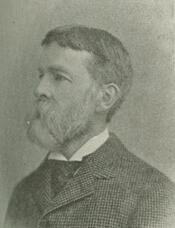
Here you will find contact information for Representative Charles Phelps Taft, including email address, phone number, and mailing address.
| Name | Charles Phelps Taft |
| Position | Representative |
| State | Ohio |
| District | 1 |
| Party | Republican |
| Status | Former Representative |
| Term Start | December 2, 1895 |
| Term End | March 3, 1897 |
| Terms Served | 1 |
| Born | December 21, 1843 |
| Gender | Male |
| Bioguide ID | T000007 |
About Representative Charles Phelps Taft
Charles Phelps Taft (December 21, 1843 – December 31, 1929) was an American lawyer, newspaper editor, art collector, businessman, and Republican politician who served as a Representative from Ohio in the United States Congress from 1895 to 1897. Over the course of a varied public and private career, he edited the Cincinnati Times-Star, helped build a significant Midwestern media enterprise, and became a prominent figure in professional baseball as an owner of both the Philadelphia Phillies and the Chicago Cubs. His single term in the U.S. House of Representatives placed him in national politics during a significant period in American history, and he remained an influential civic and cultural figure in Cincinnati for decades.
Taft was born on December 21, 1843, in Cincinnati, Ohio, the eldest child of Alphonso Taft and Fanny Phelps Taft. His father, a leading Ohio jurist and statesman, later served under President Ulysses S. Grant as the 34th Attorney General of the United States and the 31st Secretary of War. Through his father, Taft was a member of the prominent Taft family; his paternal grandparents were Peter Rawson Taft (1785–1867) and Sylvia Howard Taft. His maternal grandfather was Judge Charles Phelps of Townshend, Vermont, from whom he received his middle name. Among his younger half-brothers were William Howard Taft, who became the 27th President of the United States and the 10th Chief Justice of the United States, and Horace Dutton Taft, founder of The Taft School in Watertown, Connecticut, to which Charles Phelps Taft donated $150,000 in 1929. He was also the uncle of Senator Robert Alphonso Taft and of Charles Phelps Taft II, who later served as mayor of Cincinnati, and the granduncle of Representative Robert Taft Jr.
Taft received a rigorous education that prepared him for a career in law and public life. He attended Phillips Academy in Andover, Massachusetts, and then entered Yale University, from which he graduated in 1864. He continued his legal studies at Columbia University’s law department, earning his degree in 1866. Following his graduation from Columbia Law School, he was admitted to the bar and became a partner in the New York law firm of Sage, Haacke & Taft. He remained with that firm until he left to study abroad in Germany and France, further broadening his education. In 1867, he received an additional degree from the University of Heidelberg. After returning from Europe, he resumed the practice of law in 1869 in Cincinnati, forming a partnership with General Edward F. Noyes, who later served as the 30th Governor of Ohio and as U.S. Minister to France. During this period he was elected to the Ohio State Legislature, marking his first significant step into elective office.
Taft’s legal and political activities were soon complemented by a major role in journalism and publishing. In 1879 he became editor of the Cincinnati Times-Star, a position that placed him at the center of civic discourse in one of the Midwest’s leading cities. Under his guidance, the paper became the foundation of what came to be known as the Taft media empire and was his principal claim to public prominence outside politics. The Times-Star would later be purchased by the Cincinnati Post, but during Taft’s tenure it was a powerful Republican-leaning voice in Ohio. His work as editor and publisher strengthened his ties to the Republican Party and to business and political leaders throughout the region, and it provided a platform from which he influenced public opinion on local and national issues.
In national politics, Charles Phelps Taft served as a Republican Representative from Ohio in the United States Congress from March 4, 1895, to March 3, 1897. Elected to the Fifty-fourth Congress, he succeeded Bellamy Storer and represented his constituents during a period marked by debates over tariffs, monetary policy, and the nation’s industrial expansion. As a member of the House of Representatives, he participated in the legislative process and represented the interests of his Ohio district, contributing to the democratic process during his single term in office. A member of the Republican Party, he chose not to be a candidate for renomination in 1896 to the Fifty-fifth Congress, and his seat was subsequently taken by William B. Shattuc. After leaving Congress, Taft returned to his newspaper and business interests. He remained active in party affairs and served as a presidential elector in the 1904 presidential election, further underscoring his continuing engagement in national politics.
Taft also became a significant figure in early twentieth-century professional baseball. In 1905 he became a minority owner of the Chicago Cubs when Charles Murphy purchased the club. In 1909, Taft and Murphy helped finance Horace Fogel’s purchase of the Philadelphia Phillies. Although the pair publicly denied owning a second club, they acknowledged that Taft owned Philadelphia’s National League Park. After Fogel received a lifetime ban from baseball in 1912, Taft sold the Phillies to William H. Locke. In 1914, Murphy sold his stock in the Cubs to Taft, who then named Charles H. Thomas, formerly Murphy’s secretary, as the new club president. Taft sold the Cubs to Charles Weeghman, with financial backing from William Wrigley Jr., after the 1915 season. In 1916, he disposed of his remaining baseball real estate interests by selling West Side Park in Chicago and National League Park in Philadelphia to Murphy. These activities made him one of the more prominent owners and financiers in Major League Baseball during the sport’s formative business era.
On December 4, 1873, Taft married Anna (Annie) Sinton (1850–1931), the daughter of David Sinton, an industrialist whose fortune was built in pig iron. Anna Sinton Taft was an heiress in her own right, and together the couple became notable patrons of the arts. They assembled an important art collection, which they opened to the public in their Cincinnati home. That residence later became the Taft Museum of Art, one of the city’s leading cultural institutions. Charles and Anna Taft had four children: Jane Ellison Taft (1874–1962); David Sinton Taft (1876–1891), who died young; Anna Louise Taft Semple (1879–1961); and Charles Howard Taft (1885–1931). Through their daughter Jane, they were the grandparents of World War I flying ace David Sinton Ingalls (1899–1985), who married Louise Hale Harkness, daughter of William L. Harkness and granddaughter of Daniel M. Harkness, a key figure in the formation of Standard Oil. They were also the grandparents of Anne Taft Ingalls, who in 1929 married Rupert E. L. Warburton, described as a scion of one of England’s oldest families. His nephew, Charles Phelps Taft II, who served as mayor of Cincinnati from 1955 to 1957, was named in his honor.
Taft’s wealth and cultural interests were reflected in the scope of his art collection and philanthropy. By 1908, his collection was regarded as one of the most valuable in the American West. It included at least two works each by Jean-Baptiste-Camille Corot, Jean-François Millet, and Ernest Meissonier; many pieces of fine Chinese porcelain; and major paintings such as Rembrandt’s “Portrait of a Man Rising from His Chair,” Thomas Gainsborough’s “The Tompkinson Boys,” and Frank Duveneck’s “The Cobbler’s Apprentice.” He also owned works by Anthony van Dyck, Frans Hals, Jan Steen, Meindert Hobbema, Francisco Goya, Joshua Reynolds, and Théodore Rousseau, among others. His support for education and culture extended to his family’s institutions: in 1929 he made a substantial gift to his brother Horace’s Taft School, and after his death his widow would endow a major academic fund in his name.
Charles Phelps Taft died on December 31, 1929, in Cincinnati, Ohio, and was buried at Spring Grove Cemetery in that city. He left an estate valued at $6,367,374, reflecting the success of his legal, publishing, and investment ventures. Following his death, Anna Sinton Taft donated $5 million to the University of Cincinnati in 1930 and established a memorial fund in his name, which in 2005 was transformed into the Charles Phelps Taft Research Center at the University of Cincinnati. Beyond his enduring legacy in education and the arts, the city of Taft, Texas, was named for him in 1904, further commemorating his prominence in the late nineteenth and early twentieth centuries.