Senator Charles William Tobey
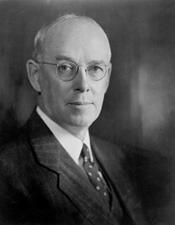
Here you will find contact information for Senator Charles William Tobey, including email address, phone number, and mailing address.
| Name | Charles William Tobey |
| Position | Senator |
| State | New Hampshire |
| Party | Republican |
| Status | Former Representative |
| Term Start | March 9, 1933 |
| Term End | December 31, 1953 |
| Terms Served | 6 |
| Born | July 22, 1880 |
| Gender | Male |
| Bioguide ID | T000289 |
About Senator Charles William Tobey
Charles William Tobey (July 22, 1880 – July 24, 1953) was an American politician who served as the 62nd governor of New Hampshire from 1929 to 1931 and as a United States senator from New Hampshire from 1939 until his death in 1953. A member of the Republican Party, he was a prominent figure in state and national politics for more than three decades and contributed significantly to the legislative process during six terms in Congress, serving first in the House of Representatives and then in the Senate during a transformative period in American history.
Tobey was born in Roxbury, Massachusetts, the son of William Tobey, an accountant who had moved to Massachusetts from Maine in the 1860s, and Ellen Hall Parker Tobey. He had relatively little formal education. He attended the Roxbury Latin School for four years as a member of the Class of 1897, but was forced to withdraw before graduation because of family financial difficulties. His mother, an ardent Baptist, gave him a thorough knowledge of the Bible, and his speeches throughout his public life were marked by frequent biblical quotations and classical allusions. On June 4, 1902, he married Francelia Lovett. In 1903 the couple began spending summers in Temple, New Hampshire, on an old farm they had purchased, an association with the town that would shape both his personal and political identity.
For several years after his marriage, Tobey commuted from Temple to Boston during the summers, working as a clerk for various insurance and banking firms. In 1911 he decided to move permanently to Temple and become a full-time farmer. He proved to be a capable poultryman and thereafter considered himself a farmer for the remainder of his life, even as his career broadened into finance and politics. In 1916 he moved to Manchester, New Hampshire, to resume a career as a bond salesman, drawing on his earlier experience in finance. All four of his children were born in Temple, which he always maintained as his legal residence. His early civic involvement included service on the Temple school board and the board of selectmen, roles that introduced him to local governance and public affairs.
Tobey’s formal political career began in 1914, when he was elected to the New Hampshire House of Representatives as a candidate of the Progressive Party. He was a friend and disciple of progressive Republican Robert P. Bass, a former governor, and aligned himself with a New Hampshire progressivism that sought to democratize governmental processes, ensure more equitable administration, and challenge powerful economic interests such as the Boston and Maine Railroad. After the 1914 election he returned to the Republican Party, but he retained a reformist orientation. He served three non-consecutive terms in the New Hampshire House of Representatives and was elected speaker in 1919–1920, defeating an old-guard candidate and solidifying his reputation as a hard-working, witty, and commonsense legislator. His experience in the bonding business, combined with his political standing, led to his appointment as New Hampshire Liberty Loan chairman during World War I, and he later served in the New Hampshire Food Administration, where he came to know Herbert Hoover. Hoover, along with Bass and Charles Evans Hughes, exerted a lasting influence on Tobey’s political beliefs.
In 1924 Tobey was elected to the New Hampshire Senate and served as president of that body during the administration of progressive governor John Gilbert Winant. In 1928, despite opposition in the Republican primary from the party’s old guard led by Senator George Moses, Tobey won election as governor of New Hampshire. As governor from 1929 to 1931, during the first two years of the Great Depression, he maintained a generally progressive approach to state government, continuing the road-building program and other public works. At the same time, he resembled President Hoover in his insistence on budget-tightening measures in response to economic crisis. He did not seek re-election in 1930, in part because of personal financial difficulties, but remained an influential figure in state Republican politics.
Tobey entered national office in 1932, when he was elected to the United States House of Representatives from New Hampshire. He was re-elected in 1934 and 1936, serving three terms in the House. In the early years of the Franklin D. Roosevelt administration, he supported initial New Deal relief measures aimed at alleviating the worst effects of the Depression. Over time, however, he became an increasingly outspoken critic of Roosevelt, opposing efforts to restructure the economy and voicing strong concern over what he regarded as the dangerous growth of executive power. In 1938 he advanced to the United States Senate, joining Styles Bridges—another protégé of Robert P. Bass and the manager of Tobey’s 1928 gubernatorial campaign—as a senator from New Hampshire. Tobey’s service in Congress, which extended from his House election in 1932 through his Senate tenure until 1953, thus spanned six terms and coincided with the New Deal, World War II, and the early Cold War.
In the Senate, Tobey initially aligned with the isolationist bloc in opposition to the Roosevelt administration’s policies on neutrality and military preparedness in the years leading up to World War II. He blamed producers of war materials for American entry into World War I and associated himself with figures such as Senator Gerald Nye, aviator Charles Lindbergh, and the America First Committee; some of his statements during this period contained elements of anti-Semitism. His stance led to a break with Bass and other internationalists among his former allies, and he became further isolated when his colleague Styles Bridges emerged as a leading advocate of preparedness. After the Japanese attack on Pearl Harbor on December 7, 1941, Tobey supported the war, though with limited enthusiasm. In the immediate aftermath of the attack he was criticized by fellow senators for publicly revealing classified details about the extent of the damage to the Navy, a disclosure he defended on the grounds that the American people had a right to know the truth.
By 1944 Tobey’s views on foreign policy had shifted toward a more internationalist position, influenced by both philosophical reconsideration and political realities, including an election challenge from both the Bass wing of the party and the followers of Bridges and Frank Knox. That year he was appointed a delegate to the United Nations Monetary and Financial Conference at Bretton Woods, New Hampshire, where he participated in the deliberations that led to the creation of the International Monetary Fund and the World Bank. He defended the International Monetary Fund in subsequent debates, while still rejecting what he termed the “one-worlders” associated with Wendell Willkie’s wing of the Republican Party. In 1948 he publicly called for the establishment of a Jewish state in Palestine, reflecting his evolving views on international responsibility and postwar settlement.
During the 80th Congress, Tobey joined with Senators Wayne Morse and George Aiken in opposing Senator Robert A. Taft’s leadership of the Senate Republicans and in supporting Democratic President Harry S. Truman on several key votes, including measures related to postwar recovery and international engagement. The illness and death of his first wife, Francelia, in 1947 limited his direct participation in the debate over the Marshall Plan, but by that time he had clearly become an advocate of economic and political interdependence among nations. On May 26, 1948, he married Loretta Capell Rabenhorst; following her death, he married Lillian Crompton in 1952. In the 1952 presidential election, Tobey supported the candidacy of Dwight D. Eisenhower. An early and consistent opponent of Senator Joseph McCarthy, he resisted efforts to brand him as soft on Communism and was re-elected to the Senate despite a Bridges-led challenge from the party’s more conservative, McCarthy-aligned faction.
In his final years in the Senate, Tobey gained national recognition through his prominent role in the nationally televised hearings on organized crime, known as the Kefauver hearings, where his sharp questioning and distinctive oratory style drew wide public attention. He was at the peak of his career when he died suddenly of a coronary thrombosis on July 24, 1953, at the Bethesda Naval Hospital in Bethesda, Maryland, while still serving as a United States senator from New Hampshire. He was buried in Miller Cemetery in Temple, New Hampshire, the community he had long called home. Tobey’s politics were variously described as liberal, conservative, and progressive, but none of these labels fully captured his quiet, non-aggressive nationalism, his unwavering belief in the dignity of the individual, and his willingness to alter his views in response to changing circumstances and evolving understandings of governmental responsibility and America’s international role. A New York Times obituary observed that his independence and sharp tongue made him one of the more colorful figures in American public life.