Representative Charles Arnette Towne
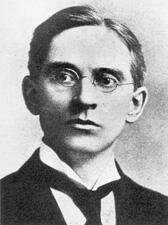
Here you will find contact information for Representative Charles Arnette Towne, including email address, phone number, and mailing address.
| Name | Charles Arnette Towne |
| Position | Representative |
| State | New York |
| District | 14 |
| Party | Democratic |
| Status | Former Representative |
| Term Start | December 2, 1895 |
| Term End | March 3, 1907 |
| Terms Served | 3 |
| Born | November 21, 1858 |
| Gender | Male |
| Bioguide ID | T000324 |
About Representative Charles Arnette Towne
Charles Arnette Towne (November 21, 1858 – October 22, 1928) was an American lawyer and politician who served in both houses of the United States Congress and represented two different states during his federal legislative career. Over the course of his public life, he served as a Representative and Senator from Minnesota and later as a Representative from New York, participating in the national legislative process during a period of significant political and economic change in the United States.
Towne was born in Pontiac, Michigan, on November 21, 1858. He spent his early years in the Midwest, a region undergoing rapid development in the decades following the Civil War. Details of his childhood are relatively sparse in the public record, but his subsequent professional and political trajectory reflects the opportunities and mobility characteristic of the era, as he moved westward and then eastward in pursuit of legal and political careers.
Towne received a formal education that prepared him for the practice of law, and he was admitted to the bar before embarking on his legal career. He established himself as a lawyer in the Upper Midwest, where the expanding economy and growing communities created demand for legal services and civic leadership. His work as an attorney provided the foundation for his entry into politics, as he became involved in public affairs and party activity in Minnesota. Through his legal practice and public engagement, he developed a reputation that facilitated his election to national office.
Towne’s congressional service began with his election as a Representative from Minnesota. He represented Minnesota in the U.S. House of Representatives from 1895 to 1897, serving one term during the Fifty-fourth Congress. During this period, he participated in the legislative process at a time when issues such as monetary policy, tariffs, and economic regulation were at the forefront of national debate. His service in the House marked his emergence as a figure of national political significance and set the stage for his subsequent elevation to the Senate.
In 1900, Towne advanced to the upper chamber of Congress when he was chosen to represent Minnesota in the United States Senate. He served as a U.S. Senator from Minnesota from 1900 to 1901. Although his tenure in the Senate was relatively brief, it was historically notable: he was the last Democratic senator from Minnesota before the state’s Democratic Party later merged with the Farmer–Labor Party to form the Minnesota Democratic–Farmer–Labor Party. His service in the Senate placed him at the center of national policymaking at the turn of the twentieth century, a time marked by the early stirrings of the Progressive Era and growing attention to corporate power, labor conditions, and political reform.
After his service in Minnesota’s delegation, Towne relocated to New York, where he continued both his legal practice and his political career. A member of the Democratic Party, he was elected as a Representative from New York and served in the U.S. House of Representatives from 1905 to 1907, during the Fifty-ninth Congress. In this capacity, he again contributed to the legislative process, representing the interests of his New York constituents while drawing on his prior experience in both houses of Congress. His three terms of service in the House—two representing Minnesota and one representing New York—spanned a period of significant transformation in American political life, including debates over regulation, economic policy, and the role of the federal government.
In his later years, Towne remained identified with the legal profession and with the Democratic Party, his career reflecting the mobility and fluid party alignments of his time. He lived to see the continued evolution of the political landscape in Minnesota and nationally, including the eventual formation of the Minnesota Democratic–Farmer–Labor Party, which underscored the historical significance of his status as the last Democratic senator from Minnesota prior to that merger. Charles Arnette Towne died on October 22, 1928, closing a public career that had encompassed service in both houses of Congress and representation of two different states during a formative era in American history.