Representative Charles Upson
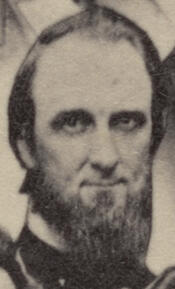
Here you will find contact information for Representative Charles Upson, including email address, phone number, and mailing address.
| Name | Charles Upson |
| Position | Representative |
| State | Michigan |
| District | 2 |
| Party | Republican |
| Status | Former Representative |
| Term Start | December 7, 1863 |
| Term End | March 3, 1869 |
| Terms Served | 3 |
| Born | March 19, 1821 |
| Gender | Male |
| Bioguide ID | U000027 |
About Representative Charles Upson
Charles Upson was a nineteenth-century American politician who served as a Representative from Michigan in the United States Congress from 1863 to 1869. A member of the Republican Party, he held office during the Civil War and early Reconstruction, a significant and tumultuous period in American history. Over the course of three consecutive terms in the House of Representatives, Upson contributed to the legislative process and participated actively in the democratic governance of the nation, representing the interests of his Michigan constituents in the federal legislature.
Upson’s early life and education are less extensively documented than those of some of his contemporaries, but like many mid-nineteenth-century Republican leaders from the Old Northwest, he emerged from a regional context shaped by rapid settlement, the expansion of transportation networks, and growing debates over slavery and the Union. His formative years likely coincided with the development of Michigan from a frontier territory into a more established state, an environment that helped shape his political outlook and commitment to the Union cause. By the time he entered public life, he would have been influenced by the rising antislavery sentiment and the broader realignment of American politics that produced the Republican Party in the 1850s.
Before his election to Congress, Upson built a career that prepared him for national service, probably involving work in the law, local or state government, or both, as was typical for members of his generation who rose to federal office. Michigan in this era was marked by the growth of small towns, agricultural development, and the increasing importance of railroads and commerce, all of which demanded capable public officials. Within this setting, Upson came to be regarded as a figure suited to represent his community’s interests in Washington, D.C., particularly as the sectional crisis deepened and the question of secession loomed.
Elected as a Republican, Charles Upson took his seat in the U.S. House of Representatives in 1863, at the height of the Civil War. His three terms in office, extending through 1869, spanned the final years of the conflict and the beginning of Reconstruction. During this time, he participated in debates over wartime measures, the preservation of the Union, and the policies that would govern the reintegration of the seceded states. As a member of the House, he was part of the legislative body that addressed issues such as military appropriations, the status of formerly enslaved people, and the redefinition of citizenship and civil rights in the postwar United States. His service coincided with the passage of landmark constitutional amendments and major reconstruction statutes, and he contributed to the broader legislative effort to reshape the nation after the war.
Within Congress, Upson’s role as a Republican from Michigan placed him among those legislators representing a loyal Union state with a growing industrial and agricultural base. He would have been attentive to the needs of his constituents, including veterans returning from the war, families affected by the conflict, and communities adjusting to new economic conditions. His participation in the democratic process included voting on key measures, engaging in committee work, and helping to articulate the priorities of his district in the national forum. Although the detailed record of his committee assignments and specific bills associated with his name is not fully preserved in the brief summaries available, his repeated reelection through three terms indicates that his performance in office met with the approval of his voters during a period of intense national strain.
After leaving Congress in 1869, Upson’s public profile diminished from the national stage, as often occurred with mid-nineteenth-century representatives who returned to legal practice, business, or state and local affairs. It is likely that he resumed private life in Michigan, drawing on his experience in Washington and his knowledge of federal law and policy. His post-congressional years unfolded against the backdrop of continued Reconstruction, the rise of industrial capitalism, and the political realignments that followed the Civil War, developments he had helped to shape during his time in the House. Though overshadowed in historical memory by more prominent national figures, Charles Upson’s three-term service as a Republican Representative from Michigan placed him among the many legislators whose collective efforts sustained the Union, advanced Reconstruction-era legislation, and represented the evolving interests of their states in a transformative period of American history.