Senator Charles Henry Van Wyck
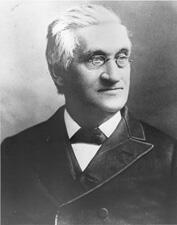
Here you will find contact information for Senator Charles Henry Van Wyck, including email address, phone number, and mailing address.
| Name | Charles Henry Van Wyck |
| Position | Senator |
| State | Nebraska |
| Party | Republican |
| Status | Former Representative |
| Term Start | December 5, 1859 |
| Term End | March 3, 1887 |
| Terms Served | 5 |
| Born | May 10, 1824 |
| Gender | Male |
| Bioguide ID | V000067 |
About Senator Charles Henry Van Wyck
Charles Henry Van Wyck (May 10, 1824 – October 24, 1895) was a representative from New York, a senator from Nebraska, and a Union Army brigadier general in the American Civil War. A member of the Republican Party for most of his public career, he later associated with the Populist movement in Nebraska. Over the course of his service in the United States Congress, he served in both the House of Representatives and the Senate, contributing to the legislative process during five terms in office and representing the interests of his constituents during a significant period in American history.
Van Wyck was born in Poughkeepsie, New York, on May 10, 1824. He was a distant cousin of Robert Anderson Van Wyck and Augustus Van Wyck; their common ancestors were Theodorus Van Wyck (1668–1753) and his wife Margretia Brinckerhoff Van Wyck, members of an early Dutch family in colonial New York. He completed preparatory studies and then attended Rutgers College in New Brunswick, New Jersey, from which he graduated in 1843. After college he studied law, was admitted to the bar in 1847, and commenced the practice of law. He moved to Bloomingburg, New York, where he became district attorney of Sullivan County, serving in that post from 1850 to 1856 and establishing himself in public life in upstate New York.
Entering national politics as a Republican, Van Wyck was elected to the U.S. House of Representatives from New York to the Thirty-sixth and Thirty-seventh Congresses, serving from March 4, 1859, to March 3, 1863. During this initial period in Congress he served as chairman of the Committee on Mileage in the Thirty-sixth Congress and as a member of the Committee on Revolutionary Pensions in the Thirty-seventh Congress. He became known as a reform-minded legislator through his prominent role in an investigation into fraud at the New York Custom House and his crucial participation in the passage of the Fraud Claims Act. In his minority report to the investigating committee he issued a widely quoted denunciation of wartime profiteering, writing: “Worse than traitors in arms are the men, pretending loyalty to the flag, who feast and fatten on the misfortunes of the nation, while patriot blood is crimsoning the plains of the south, and the bodies of their countrymen are mouldering in dust.”
Van Wyck was also an outspoken opponent of slavery. On March 7, 1860, he delivered a harsh anti-slavery speech on the House floor, denouncing the Southern states for what he termed a “crime against the laws of God and nature.” The speech was widely reported and contributed to his reputation as a vigorous critic of the slave system. His rhetoric made him a target of political hostility, and on February 22, 1861, he was assaulted near the United States Capitol by three men in what was reported as an assassination attempt related to his earlier speech. Van Wyck fought off the attack and survived only because a notebook and a copy of the Congressional Globe in the breast pocket of his coat blocked the blade of a Bowie knife. The assailants fled and were never identified. The attack occurred on the same night that an alleged attempt was made to assassinate president-elect Abraham Lincoln in Baltimore, Maryland, underscoring the tense and violent atmosphere in the months leading up to the Civil War.
During the American Civil War, Van Wyck entered the Union Army as colonel and commanding officer of the 56th New York Infantry Regiment. His regiment served as part of the Army of the Potomac during the Peninsula Campaign, and he was wounded in the knee at the Battle of Fair Oaks in 1862. After his recovery, much of the remainder of his wartime service was spent as a brigade and district commander in South Carolina, where he took part in the Siege of Charleston Harbor and the Battle of Honey Hill. In recognition of his service, he was brevetted brigadier general in 1865 and eventually received substantive promotion to brigadier general before being mustered out of the volunteer service in 1866. His military career reinforced his standing as a “soldier-statesman” and provided a foundation for his postwar political prominence.
Returning to Congress after the war, Van Wyck was elected as a Republican to the Fortieth Congress, serving from March 4, 1867, to March 3, 1869. He then successfully contested the election of George Woodward Greene to the Forty-first Congress and was seated on February 17, 1870, serving until March 3, 1871. These terms, combined with his prewar service, gave him a total of four terms in the House of Representatives from New York. In 1874 he moved west to Nebraska, settling on a farm in Otoe County and engaging in agricultural pursuits. He quickly became active in his adopted state’s public affairs, serving as a delegate to the Nebraska constitutional convention in 1875. He was elected to the Nebraska state senate in 1877, 1879, and 1881, helping to shape the legislative framework of the young state.
That same year, 1881, Van Wyck was elected as a Republican to the United States Senate from Nebraska. His service in the Senate, which extended from March 4, 1881, to March 3, 1887, occurred during a significant period of national development and westward expansion. As a member of the Senate, Charles Henry Van Wyck participated in the democratic process and represented the interests of his Nebraska constituents. He served as chairman of the Committee on the Mississippi River and Its Tributaries in the Forty-seventh Congress and then as chairman of the Committee on the Improvement of the Mississippi River and Tributaries in the Forty-eighth and Forty-ninth Congresses, reflecting his involvement in internal improvements and river navigation issues critical to commerce in the Mississippi Valley. He was an unsuccessful candidate for reelection to the Senate in 1886, concluding his federal legislative career in 1887 after five terms in Congress—four in the House and one in the Senate.
On September 21, 1869, Van Wyck married Kate Ross Brodhead (1842–1901), a member of an established New York family with extensive political connections. Her sister, Marcia Ross Brodhead, was married to Congressman Daniel Van Auken of New Jersey. Her first cousin, Henrietta Laura Brodhead, married Civil War U.S. Army Colonel Samuel Fowler, son of Congressman Samuel Fowler; they became the parents of Congressman Samuel Fowler (III). Additionally, she was a cousin of Congressmen John Curtis Brodhead of New York and John Brodhead of New Hampshire. Charles and Kate Van Wyck had four daughters: Lillie Van Wyck (1870–1875), Marie Louise Van Wyck (1873–1881), Meta Van Wyck (1880–1881), and Happy Theodora Van Wyck (1883–1919). The early deaths of three of their daughters marked a personal tragedy amid Van Wyck’s public career.
In his later years in Nebraska, Van Wyck’s political views aligned increasingly with agrarian and reform movements. In 1892 he was an unsuccessful Populist candidate for governor of Nebraska, reflecting the broader shift among many western farmers toward the Populist Party in response to economic and political grievances. After this defeat he retired from political life and active business pursuits. Charles Henry Van Wyck died in Washington, D.C., on October 24, 1895. He was interred beside his wife, Kate Brodhead Van Wyck, in Milford Cemetery in Milford, Pennsylvania, closing the life of a figure who had been both a soldier and a legislator in New York and Nebraska during some of the most turbulent decades in American history.