Representative Charles A. Vanik
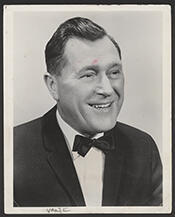
Here you will find contact information for Representative Charles A. Vanik, including email address, phone number, and mailing address.
| Name | Charles A. Vanik |
| Position | Representative |
| State | Ohio |
| District | 22 |
| Party | Democratic |
| Status | Former Representative |
| Term Start | January 5, 1955 |
| Term End | January 3, 1981 |
| Terms Served | 13 |
| Born | April 7, 1913 |
| Gender | Male |
| Bioguide ID | V000047 |
About Representative Charles A. Vanik
Charles Albert Vanik (April 7, 1913 – August 30, 2007) was a Democratic politician from Ohio who served as a Representative in the United States House of Representatives from 1955 to 1981. Over the course of 13 consecutive terms in Congress, he represented districts in the Cleveland area and played a significant role in national trade policy and human rights legislation, while consistently participating in the legislative process on behalf of his constituents.
Vanik was born on April 7, 1913, in Cleveland, Ohio, the son of Stella (née Kvasnicka) and Charles Albert Vanik, a butcher. He was of Czech ancestry, and his maternal grandmother, Alžběta Seberová (1868–1948), was born in the village of Hracholusky in southern Bohemia, then part of Austria-Hungary. Raised in an immigrant family in an industrial Midwestern city, Vanik’s early life reflected the experiences of many Central European Americans who settled in Cleveland in the early twentieth century.
Vanik completed both his undergraduate studies and his law degree at Western Reserve University in Cleveland. His legal education prepared him for a career that combined law and public service, and he entered politics at a relatively young age. By the late 1930s, he had begun to establish himself in local and state government, drawing on his legal training and his familiarity with the concerns of working- and middle-class communities in Cleveland.
Vanik’s political career started at the municipal level when he served on the Cleveland City Council from 1938 to 1939. He then advanced to state office, serving in the Ohio State Senate from 1940 to 1942. With the United States’ entry into World War II, Vanik enlisted in the U.S. Naval Reserve, where he saw action in both the Atlantic and Pacific theaters. After the war, he returned to public service in the judicial branch, serving as a city judge from 1946 to 1954. This combination of legislative, military, and judicial experience provided a broad foundation for his subsequent congressional career.
In 1954, Vanik ran for the U.S. House of Representatives from Ohio’s 21st congressional district, located on Cleveland’s East Side. At the time, the district was evenly divided between African American voters, who were then largely aligned with the Republican Party, and white voters, who were mostly Democrats. In the Democratic primary, Vanik defeated longtime incumbent Congressman Robert Crosser as well as African American challenger John Holly, founder of the Negro Future Outlook League. In the general election, he prevailed over African American Republican Francis E. Young, a key organizer of the Cleveland branch of the NAACP. Vanik took office in January 1955 as a Democratic member of the House of Representatives and went on to serve in Congress until 1981. In 1968, he shifted from the 21st to the neighboring 22nd congressional district to make way for Louis Stokes, whose growing political organization had challenged him in previous races; in the process, Vanik defeated Republican Frances P. Bolton, who had represented the district since 1939.
During his long tenure in the House, Vanik became particularly prominent in the field of trade policy and tax oversight. He served as chair of the House Ways and Means Subcommittee on Trade, a key position in shaping U.S. trade legislation. In 1974, he co-sponsored, with Senator Henry “Scoop” Jackson, the Jackson–Vanik amendment, which denied normal trade relations to certain countries with non-market economies that restricted freedom of emigration. Aimed especially at the Soviet Bloc, the amendment was designed to pressure governments that limited the ability of religious minorities and other dissidents to leave their countries, and it became one of the most notable human rights measures embedded in U.S. trade law. Vanik also used his position to highlight corporate tax practices, regularly inserting into the Congressional Record what he called the “Annual Corporate Tax Study,” in which he listed corporations that paid little to no federal income taxes. Over his 13 terms, he consistently engaged in the democratic process, representing the interests of his Ohio constituents while influencing national policy debates.
After leaving Congress in 1981, Vanik remained active in Democratic politics in Ohio. In 1982, he sought statewide office by contesting for the Democratic nomination for lieutenant governor of Ohio as the running mate of Ohio Attorney General William J. Brown, who was running for governor. Their ticket lost in the Democratic primary to the team of Richard F. Celeste and Myrl Shoemaker. Known personally for his distinctive style, Vanik was often recognized for wearing black bow ties with every suit, a trademark that made him easily identifiable in public life.
Charles Albert Vanik died in his sleep on August 30, 2007, at his home in Jupiter, Florida, at the age of 94. He was survived by his wife, Betty, one son, one daughter, and two grandchildren. His long career in public service—from local government and the Ohio State Senate to the U.S. House of Representatives—left a record of legislative engagement that spanned local concerns, national economic policy, and international human rights.