Representative Charles W. Whalen Jr.
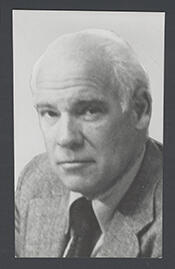
Here you will find contact information for Representative Charles W. Whalen Jr., including email address, phone number, and mailing address.
| Name | Charles W. Whalen Jr. |
| Position | Representative |
| State | Ohio |
| District | 3 |
| Party | Republican |
| Status | Former Representative |
| Term Start | January 10, 1967 |
| Term End | January 3, 1979 |
| Terms Served | 6 |
| Born | July 31, 1920 |
| Gender | Male |
| Bioguide ID | W000317 |
About Representative Charles W. Whalen Jr.
Charles William Whalen Jr. (July 31, 1920 – June 27, 2011) was an American politician from Ohio who served as a Representative from Ohio in the United States Congress from 1967 to 1979. A member of the Republican Party during his years in elective office, he also served in the Ohio House of Representatives and the Ohio State Senate before entering Congress. Over six terms in the U.S. House of Representatives, Whalen established himself in the liberal wing of the Republican Party, contributed to the legislative process during a significant period in American history, and became a prominent opponent of United States involvement in the Vietnam War.
Whalen was born in Dayton, Montgomery County, Ohio, on July 31, 1920. He graduated from Oakwood High School in the Dayton area and went on to attend the University of Dayton, where he earned a degree in business administration in 1942. During World War II, he enlisted in the United States Army and served until 1946, when he was discharged with the rank of first lieutenant. Following his military service, he pursued graduate studies at Harvard University Graduate School of Business, from which he graduated in 1946, further strengthening his background in business and economics.
After completing his education and military service, Whalen returned to Dayton and joined his family’s business, the Dayton Dress Company. From 1946 to 1952 he served as a vice president of the firm, gaining experience in management and private enterprise. He later entered academia, joining the faculty of the University of Dayton. There he became a professor of economics and ultimately chairman of the economics department, serving in that capacity from 1962 to 1966. His work as an educator and department chair reflected his interest in economic policy and public affairs and helped prepare him for his subsequent legislative career.
Whalen began his political career in the Ohio General Assembly. In 1954 he was elected to the Ohio House of Representatives, where he served three terms. In 1960 he won election to the Ohio State Senate, again serving three terms. While in the state senate, he advocated for civil rights measures, including fighting for a Fair Housing Law in Ohio. In 1962 he sought statewide office, entering the Republican primary for lieutenant governor of Ohio. In a crowded six-way primary field, his principal opponent was John Brown, a former two-term lieutenant governor who had briefly served as governor for 11 days following the resignation of Governor Frank Lausche. Whalen finished second in that primary, receiving 15.8 percent of the vote, and returned to his legislative duties in the state senate.
Whalen next sought national office in 1966, running for a seat in the U.S. House of Representatives. During that campaign, he undertook an 880‑mile walk around his district to meet voters personally and increase his visibility. In the general election he defeated freshman Democratic incumbent Rodney Love with 53.8 percent of the vote. He was subsequently reelected five times and was never seriously challenged in those races. In 1968 he won 78 percent of the vote in a year when Democratic presidential nominee Hubert H. Humphrey carried his district. He followed this with victories of 76 percent in 1970 and 74 percent in 1972. In 1974, amid national fallout from the Watergate scandal that damaged Republican fortunes across the country, Whalen was the only Republican in his area who faced no challengers in either the primary or the general election. He served continuously in the House from January 3, 1967, to January 3, 1979, representing his Ohio constituents during a period marked by the Vietnam War, civil rights struggles, and significant shifts in national politics.
In Congress, Whalen developed a reputation as a liberal Republican, though he opposed abortion, a position he attributed to his Catholic faith. He participated actively in the democratic process, representing the interests of his constituents while frequently breaking with the majority of his party on key issues. In 1967 he joined four other Republicans in authoring a position paper titled “How to End the Draft: The Case for an All-Volunteer Army” and introduced legislation to end conscription, anticipating the eventual transition to an all-volunteer force. A consistent critic of the Vietnam War, he supported legislation to reduce the military budget and to establish a timetable for the withdrawal of American forces from Southeast Asia. In 1971 he and Representative Lucien Nedzi co-sponsored the Nedzi–Whalen Amendment to a military procurement bill, which would have prohibited the use of funds authorized by that bill for operations in Southeast Asia after the end of 1971. In his final term, he supported efforts to eliminate the B‑1 bomber program, reflecting his broader skepticism of certain high-cost defense initiatives.
Whalen’s independent voting record increasingly set him apart within the Republican caucus. Congressional Quarterly estimated that in 1974 he voted against the majority position of his party 72 percent of the time. His divergence from party orthodoxy led him to explore changes in his political alignment. In 1977 he acknowledged that he had spoken with Democratic Party leaders about the possibility of switching parties, and he also considered running for reelection as an independent in 1978. He was one of only three House Republicans—along with Millicent Fenwick of New Jersey and Paul Findley of Illinois—to oppose a tax cut bill sponsored by Representatives Jack Kemp of New York and William Roth of Delaware, a measure that would later be seen as a cornerstone of emerging supply-side Republican economic policy. Ultimately, Whalen chose not to run for reelection in 1978. He left Congress at the conclusion of his sixth term in January 1979 and was succeeded by Democrat Tony P. Hall. After his departure from Congress, he formally changed his party registration from Republican to Democratic.
Following his retirement from elective office, Whalen continued to contribute to public life through writing and scholarship. In 1973 he authored “Your Right to Know: How the Free Flow of News Depends on the Journalist’s Right to Protect His Sources,” a book examining press freedom and the protection of journalistic sources, which featured an introduction by broadcast journalist Walter Cronkite. Later, he collaborated with his wife, Barbara Whalen, a former columnist for the Dayton Journal Herald and the longtime voice of the advertising character Elsie the Cow, on two additional books. Their first joint work, “The Longest Debate: A Legislative History of the 1964 Civil Rights Act,” published in 1985, offered a detailed account of the congressional struggle to pass the landmark Civil Rights Act of 1964. Their second book, “The Fighting McCooks – America’s Famous Fighting Family,” chronicled the history of a prominent Ohio family with a distinguished record of military service.
Charles William Whalen Jr. died in Bethesda, Maryland, on June 27, 2011, at the age of 90. His career encompassed service in the United States Army during World War II, leadership in business and academia, three terms in the Ohio House of Representatives, three terms in the Ohio State Senate, and six terms in the United States House of Representatives. Throughout his years in public office, he was known for his liberal Republican views, his opposition to the Vietnam War, and his willingness to depart from party lines in pursuit of policies he believed to be in the public interest.