Representative Charles Preston Wickham
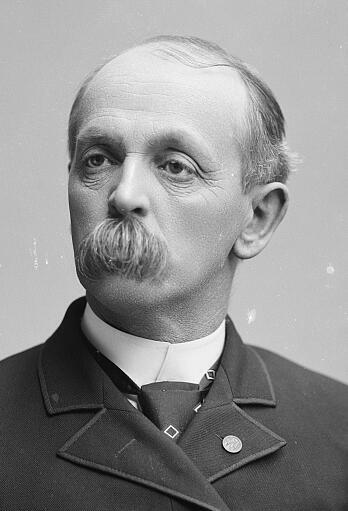
Here you will find contact information for Representative Charles Preston Wickham, including email address, phone number, and mailing address.
| Name | Charles Preston Wickham |
| Position | Representative |
| State | Ohio |
| District | 14 |
| Party | Republican |
| Status | Former Representative |
| Term Start | December 5, 1887 |
| Term End | March 3, 1891 |
| Terms Served | 2 |
| Born | September 15, 1836 |
| Gender | Male |
| Bioguide ID | W000441 |
About Representative Charles Preston Wickham
Charles Preston Wickham (September 15, 1836 – March 18, 1925) was a 19th-century congressman, Civil War officer, and judge from Norwalk, Huron County, Ohio. A member of the Republican Party, he represented Ohio in the United States House of Representatives from 1887 to 1891, serving two terms in Congress and contributing to the legislative process during a significant period in American history.
Wickham was born on September 15, 1836, in Norwalk, Ohio. He was educated in the local public schools and continued his studies at Norwalk Academy, a prominent local institution that prepared students for professional careers. Pursuing the law, he went on to attend the Cincinnati Law School, where he completed his legal education. He was admitted to the bar in 1858 and began the practice of law in his hometown of Norwalk, establishing himself in the legal profession before the outbreak of the Civil War.
During the American Civil War, Wickham enlisted as a private in Company D of the Fifty-fifth Regiment, Ohio Volunteer Infantry, in September 1861. Over the course of his military service he rose through the ranks and ultimately received the rank of lieutenant colonel by brevet, reflecting recognition for meritorious service. He remained in uniform through the close of the conflict and was mustered out of the service on July 11, 1865. Following his return to civilian life, he resumed the practice of law in Norwalk, rebuilding his legal career in the postwar period.
Wickham soon entered public office at the local level. He served as prosecuting attorney of Huron County from 1866 to 1870, a role in which he was responsible for the prosecution of criminal cases and the representation of the public interest in the county courts. His performance as a prosecutor and his standing at the bar led to his election as judge of the Court of Common Pleas of the fourth judicial district of Ohio in 1880. He was reelected to that judgeship in 1885, presiding over a broad range of civil and criminal matters and gaining further prominence in the state’s legal and political circles.
Building on his judicial and legal experience, Wickham was elected as a Republican to the Fiftieth and Fifty-first Congresses, serving from March 4, 1887, to March 3, 1891, as a Representative from Ohio in the United States Congress. His service in the House of Representatives occurred during a significant period in American history marked by industrial expansion, monetary debates, and evolving national policy. As a member of the House, he participated in the democratic process and represented the interests of his Ohio constituents. During the Fifty-first Congress he served as chairman of the Committee on Coinage, Weights, and Measures, a position that placed him at the center of legislative consideration of monetary standards, coinage policy, and the regulation of weights and measures at a time when such issues were of national importance.
After completing his two terms in Congress in 1891, Wickham returned to Ohio and resumed his legal and civic activities, remaining a respected figure in Norwalk and Huron County. He continued to be identified with the Republican Party and with the legal and judicial traditions in which he had long served, though his principal period of public officeholding had concluded with his congressional service.
Charles Preston Wickham died in Norwalk, Ohio, on March 18, 1925, after being struck by a motorist. He was interred in Woodlawn Cemetery in Norwalk. His long life spanned from the antebellum era through the Civil War and into the modern age of the early twentieth century, and his career encompassed service as a soldier, attorney, prosecutor, judge, and member of the United States House of Representatives.