Representative Charles Edwin Winter
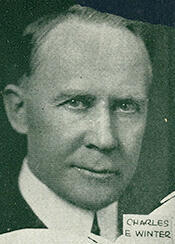
Here you will find contact information for Representative Charles Edwin Winter, including email address, phone number, and mailing address.
| Name | Charles Edwin Winter |
| Position | Representative |
| State | Wyoming |
| District | At-Large |
| Party | Republican |
| Status | Former Representative |
| Term Start | December 3, 1923 |
| Term End | March 3, 1929 |
| Terms Served | 3 |
| Born | September 13, 1870 |
| Gender | Male |
| Bioguide ID | W000643 |
About Representative Charles Edwin Winter
Charles Edwin Winter (September 13, 1870 – April 22, 1948) was an American attorney, politician, and author who served as a member of the United States House of Representatives for Wyoming’s at-large congressional district from 1923 to 1929. A member of the Republican Party, he contributed to the legislative process during three terms in office and represented the interests of his constituents during a significant period in American history.
Winter was born in Muscatine, Iowa, on September 13, 1870. He attended the public schools there and pursued higher education at Iowa Wesleyan College in Mount Pleasant. He later enrolled at Nebraska Wesleyan University, from which he graduated in 1892. After completing his undergraduate studies, he read law, was admitted to the bar in 1895, and began preparing for a professional career that would combine legal practice, public service, and literary work.
Following his admission to the bar, Winter commenced the practice of law in Omaha, Nebraska. Seeking new opportunities in the developing West, he moved to Encampment, Wyoming, in 1902, at a time when the region was experiencing growth tied to mining and ranching. In 1903 he relocated to Casper, Wyoming, which would remain his principal home and professional base for much of his life. During the summer of 1903, while traveling on a train in Pennsylvania, he wrote the lyrics to “Wyoming,” which was later adopted as the official state song, reflecting his deepening connection to his adopted state.
Winter’s early public career developed within the Republican Party. He served as a delegate to the Republican National Convention in 1908, marking his emergence as a figure of statewide political significance. In 1913 he was appointed judge of the sixth judicial district of Wyoming, a position he held until 1919. During these six years on the bench, he presided over a wide range of civil and criminal matters in a rapidly changing frontier region. He resigned from the judiciary in 1919 and resumed the private practice of law in Casper, reentering active political life soon thereafter.
Winter was elected as a Republican to the Sixty-eighth, Sixty-ninth, and Seventieth Congresses, serving from March 4, 1923, to March 3, 1929, as the at-large Representative from Wyoming. His service in Congress occurred during a significant period in American history, encompassing the post–World War I era and the economic and social transformations of the 1920s. As a member of the House of Representatives, Charles Edwin Winter participated in the democratic process, contributed to the legislative work of the chamber, and represented the interests of his Wyoming constituents in national affairs. After three consecutive terms, he chose not to be a candidate for renomination to the House in 1928 and instead sought higher office.
In 1928 Winter was an unsuccessful candidate for election to the United States Senate from Wyoming. Following this defeat, he continued his public service at the federal territorial level. In 1932 he was appointed attorney general of Puerto Rico, serving in that capacity through 1933. During his tenure on the island, he also served as acting governor, assuming executive responsibilities in the administration of the territory’s government at a time of economic strain during the Great Depression.
Alongside his legal and political career, Winter was active as an author of Western-themed literature. His novels drew heavily on Wyoming settings and the mining and ranching culture he had observed firsthand. “Grandon of Sierra” told the story of a cowboy who abandons ranging to become a prospector during the Encampment copper rush, while “Ben Warman” was adapted into the 1920 film “Dangerous Love.” Another work, “Gold of Freedom,” was set in Wyoming’s South Pass, further cementing his reputation as a chronicler of the state’s frontier life and history.
After completing his service in Puerto Rico, Winter returned to Wyoming and resumed the practice of law in Casper. He remained a respected figure in the state’s legal and political circles and continued to be associated with the cultural life of Wyoming through his writing and his authorship of the state song. Charles Edwin Winter died in Casper, Wyoming, on April 22, 1948, closing a career that spanned law, literature, and public office at both state and federal levels.