Representative Chase Going Woodhouse
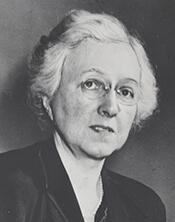
Here you will find contact information for Representative Chase Going Woodhouse, including email address, phone number, and mailing address.
| Name | Chase Going Woodhouse |
| Position | Representative |
| State | Connecticut |
| District | 2 |
| Party | Democratic |
| Status | Former Representative |
| Term Start | January 3, 1945 |
| Term End | January 3, 1951 |
| Terms Served | 2 |
| Born | March 3, 1890 |
| Gender | Female |
| Bioguide ID | W000714 |
About Representative Chase Going Woodhouse
Chase Going Woodhouse (March 3, 1890 – December 12, 1984) was an American politician, feminist, suffragist, and educator who became a pioneering woman in national politics. A member of the Democratic Party, she served as a Representative from Connecticut in the United States Congress from 1945 to 1951, representing the Second Congressional District. In doing so, she became the second congresswoman from Connecticut, the first woman from the state elected as a Democrat, and the first woman born outside the United States to serve in either chamber of the U.S. Congress.
Woodhouse was born Chase Going in Victoria, British Columbia, Canada, on March 3, 1890. She spent her early years in Canada before coming to the United States, an experience that later underscored the significance of her status as the first foreign-born woman to serve in Congress. Details of her family background and early upbringing contributed to a lifelong interest in education, public affairs, and the advancement of women’s rights, which would shape her later work as a suffragist and feminist leader.
Woodhouse pursued higher education at a time when relatively few women did so, and she distinguished herself as a serious student and scholar. She studied economics and related fields, training that prepared her for a career in teaching and public policy. Her academic work and early professional experiences in education helped establish her reputation as an expert in economic and social issues, and they provided a foundation for her later advocacy on behalf of women, workers, and families. As an educator, she emphasized both rigorous scholarship and civic engagement, encouraging women to participate fully in public life.
Before entering Congress, Woodhouse built a career that combined teaching, public service, and political activism. She was active in the suffrage movement and in broader feminist causes, working to secure and then expand women’s political and economic rights. Her professional life included positions in higher education and public affairs in Connecticut, where she became increasingly involved in Democratic Party politics. Through these roles she developed expertise in legislative issues and gained recognition as a forceful advocate for social and economic reform, particularly in matters affecting women and children.
Woodhouse’s congressional service began with her election as a Democrat to the United States House of Representatives in 1944, taking office on January 3, 1945. She served two consecutive terms, from 1945 to 1951, during a significant period in American history that encompassed the end of World War II and the early years of the Cold War. As a member of the House of Representatives, she participated actively in the legislative process and represented the interests of her Connecticut constituents, bringing to bear her background in economics, education, and women’s rights. Her tenure in Congress coincided with major debates over postwar reconversion, veterans’ benefits, labor policy, and the emerging architecture of U.S. foreign policy, and she contributed to these discussions as one of the relatively few women in national office at the time.
During her time in Congress, Woodhouse’s work reflected her longstanding commitment to democratic participation and equality. She supported measures that expanded opportunities for women and families and drew on her experience as an educator to address issues of employment, social welfare, and access to education. As a Democratic representative from Connecticut’s Second District, she helped shape policy at a moment when the federal government was assuming a larger role in economic and social life, and she served as a visible symbol of women’s expanding role in American political institutions.
After leaving Congress in 1951, Woodhouse remained engaged in public life and continued to be identified with feminist and educational causes. She sustained her involvement in Democratic politics and in organizations devoted to women’s political participation, using her experience as a former member of Congress to mentor and encourage other women seeking public office. Her later years were marked by ongoing advocacy for equal rights and civic engagement, reflecting the same principles that had guided her earlier work as a suffragist and legislator.
Chase Going Woodhouse died on December 12, 1984. Her long life spanned the struggle for women’s suffrage, the New Deal, World War II, and the modern women’s movement, and her career embodied the increasing presence of women in American political and public life. As an educator, feminist, suffragist, and congresswoman, she left a legacy of service that highlighted both the importance of women’s representation in government and the value of informed, principled participation in the democratic process.