Representative Cherubusco Newton
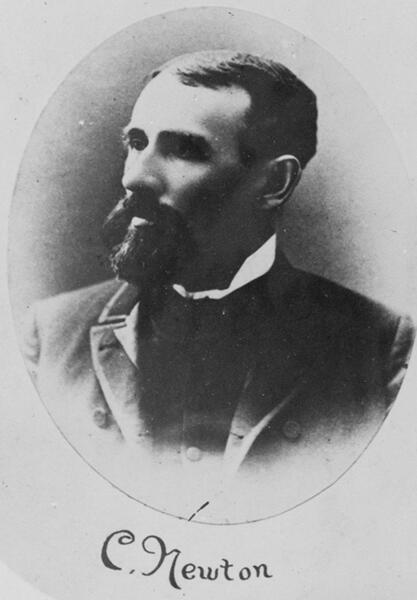
Here you will find contact information for Representative Cherubusco Newton, including email address, phone number, and mailing address.
| Name | Cherubusco Newton |
| Position | Representative |
| State | Louisiana |
| District | 5 |
| Party | Democratic |
| Status | Former Representative |
| Term Start | December 5, 1887 |
| Term End | March 3, 1889 |
| Terms Served | 1 |
| Born | May 15, 1848 |
| Gender | Male |
| Bioguide ID | N000074 |
About Representative Cherubusco Newton
Cherubusco Newton (May 15, 1848 – May 26, 1910) was an American lawyer and Democratic politician who served as a U.S. Representative from Louisiana from 1887 to 1889. He was born in Greensburg, St. Helena Parish, Louisiana, on May 15, 1848, in the years following statehood and amid the antebellum expansion of the American South. Details of his family background are sparse in the historical record, but his early life in rural Louisiana placed him within the social and economic milieu that would shape his later legal and political career.
Newton was educated in private schools in Bastrop, Louisiana, reflecting the limited but locally focused educational opportunities available in the region at the time. He later attended Louisiana State University when the institution was located at Alexandria, Louisiana, continuing his formal studies in an era when higher education in the state was still developing. While pursuing his education, he supported himself and gained practical experience by teaching school, a common path for educated young men of his generation and region. During this period he also undertook the study of law, preparing for admission to the bar.
In 1870 Newton was admitted to the bar and commenced the practice of law in Bastrop, Louisiana. His legal practice established him as a professional figure in the community during the Reconstruction and post-Reconstruction periods, when Louisiana’s legal and political institutions were undergoing significant change. His work as an attorney provided the foundation for his entry into public life and helped build the local reputation that would support his subsequent political career.
Newton’s formal political career began at the state level. He served as a member of the Louisiana State Senate from 1879 to 1883, participating in the governance of Louisiana during a critical period of political realignment and the reassertion of Democratic control in the South. His legislative service in the state senate placed him at the center of debates over reconstruction policies, state administration, and the rebuilding of Louisiana’s institutions. In recognition of his standing in the legal community, he was offered a judgeship in 1885, which he declined, choosing instead to remain in private practice and elective politics.
Newton was elected as a Democrat to the Fiftieth Congress and served one term in the U.S. House of Representatives from March 4, 1887, to March 3, 1889. Representing Louisiana as a member of the Democratic Party, he contributed to the legislative process during a significant period in American history marked by industrial expansion, regional tensions, and ongoing efforts to define the post–Civil War order. During his single term in office, he participated in the democratic process and represented the interests of his Louisiana constituents in the national legislature. He sought to continue his service but was an unsuccessful candidate for renomination in 1888.
In addition to his congressional service, Newton remained active in party affairs. He served as a delegate to the Democratic National Convention in 1888, reflecting his continued influence within the Democratic Party in Louisiana and his engagement with national party politics. His role as a delegate underscored his standing as a committed party leader beyond his formal term in Congress.
After leaving Congress, Newton resumed the practice of law in Bastrop, where he continued for several years, reestablishing his legal career and local ties. He later moved to Monroe, in Ouachita Parish, Louisiana, where he continued to practice law until his death. Newton died in Monroe on May 26, 1910. He was interred in the New Cemetery in Bastrop, Louisiana, closing a career that had spanned local legal practice, state legislative service, and a term in the United States House of Representatives.