Representative Chester Bliss Bowles
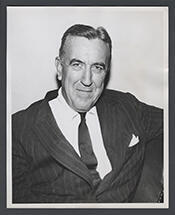
Here you will find contact information for Representative Chester Bliss Bowles, including email address, phone number, and mailing address.
| Name | Chester Bliss Bowles |
| Position | Representative |
| State | Connecticut |
| District | 2 |
| Party | Democratic |
| Status | Former Representative |
| Term Start | January 7, 1959 |
| Term End | January 3, 1961 |
| Terms Served | 1 |
| Born | April 5, 1901 |
| Gender | Male |
| Bioguide ID | B000699 |
About Representative Chester Bliss Bowles
Chester Bliss Bowles (April 5, 1901 – May 25, 1986) was an American diplomat, ambassador, governor of Connecticut, congressman, and co‑founder of the major advertising agency Benton & Bowles, later incorporated into the Publicis Groupe. He was born in Springfield, Massachusetts, and was raised in a middle‑class family that emphasized education and public service. After attending local schools, he enrolled at Yale University, where he graduated in 1924. Reflecting later on his early choices, Bowles observed that although he believed he would have been “happier and more effective” had he gone directly into public service after college, the “grinding effort” he devoted to his early business career enabled him and his family to build a financial reserve that gave him independence and the freedom “to travel, to write, to speak my mind, and to move from one career to the next as various challenges presented themselves.”
Following his graduation from Yale, Bowles entered the field of advertising in New York City. In 1929 he co‑founded the firm Benton & Bowles, which grew into one of the most prominent advertising agencies in the United States. The company’s success during the 1930s and 1940s provided Bowles with substantial financial security and a national reputation in business. At the same time, he became an ardent supporter of President Franklin D. Roosevelt and the New Deal. Because of his strong support for the New Deal domestic policies of the Roosevelt administration, Bowles worked closely with First Lady Eleanor Roosevelt on several key policy initiatives and programs while continuing his responsibilities at Benton & Bowles. His growing engagement with public affairs and social policy laid the groundwork for his transition from business to government service.
During World War II, Bowles moved fully into federal service. He was appointed director of the Office of Price Administration (OPA), where he held high office in Washington overseeing the control of consumer prices and rationing in order to curb inflation and support the war effort. In this role he became a prominent public figure, advocating for price controls and consumer protection at a time of national emergency. Just after the war, he served as chief of the Office of Economic Stabilization, where he again confronted the challenge of inflation in the difficult transition from a wartime to a peacetime economy. Despite his efforts, he had great difficulty controlling postwar inflation, and his tenure highlighted the limits of federal economic management in a rapidly changing marketplace.
Turning to elective office, Bowles entered Connecticut state politics as a Democrat and was elected governor of Connecticut, serving from January 5, 1949, to January 3, 1951. As governor, he promoted an ambitious liberal program that emphasized expanded educational opportunities, improved housing, and broader social welfare measures. His administration sought to modernize state government and extend the spirit of the New Deal at the state level. However, his progressive agenda provoked a conservative backlash in Connecticut politics, and he was defeated for reelection in 1950 after serving a single term. Despite this setback, his governorship established him as a leading liberal voice within the Democratic Party and a figure of national stature.
Bowles’s diplomatic career began in earnest in the late 1940s and early 1950s, when he was appointed United States ambassador to India and Nepal, serving from 1951 to 1953. As ambassador to India, he established a close and productive relationship with Prime Minister Jawaharlal Nehru, an emerging leader of the nonalignment movement during the early Cold War. Bowles believed that the United States and India shared fundamental democratic values and saw India as a crucial partner in the developing world. He promoted rapid economic industrialization in India and repeatedly urged Washington to help finance India’s development. Washington policymakers, however, were often frustrated by India’s policy of neutrality between the United States and the Soviet Union, and U.S. assistance during this period was largely limited to literacy, health, and other social programs rather than the large‑scale industrial aid Bowles advocated.
During the Eisenhower years from 1953 to 1960, Bowles was out of government but remained deeply involved in national politics and foreign policy debates. He organized liberal Democratic opposition to Republican foreign policy and became a prominent foreign policy adviser to Democratic presidential candidates Adlai Stevenson and, later, Senator John F. Kennedy. In 1960 he was selected as a foreign policy adviser to Kennedy during Kennedy’s successful campaign for the presidency of the United States. That same year, Bowles served as chairman of the platform committee for the Democratic National Convention in Los Angeles, California, helping to shape the party’s positions on domestic and international issues. His work on the campaign and at the convention solidified his standing as one of the leading liberal internationalists in the Democratic Party.
Bowles’s congressional service came in the midst of this period of national prominence. A member of the Democratic Party, he was elected as a Representative from Connecticut to the Eighty‑sixth Congress and served in the United States House of Representatives from January 3, 1959, to January 3, 1961. During his single term in Congress, he contributed to the legislative process at a time of significant change in American domestic and foreign policy, participating in debates over economic growth, social welfare, and the emerging challenges of the Cold War. Representing his Connecticut constituents, he took part in the democratic process in the House while continuing to advocate for a foreign policy that emphasized economic assistance to developing nations as a means of combating communism and fostering a more peaceful world order.
With Kennedy’s election to the presidency, Bowles returned to high office in the executive branch. President Kennedy appointed him Under Secretary of State in 1961, a position that made him the second‑ranking official in the Department of State. In this capacity, Bowles sought to staff American embassies with liberal intellectuals and activists who shared his belief in the importance of economic development and social reform in the Third World. His outspoken liberalism and his independent views on foreign policy, however, soon put him at odds with more conservative and bureaucratically minded figures within the administration. In November 1961 he was removed as Under Secretary as part of a broader State Department reshuffle known as the “Thanksgiving Day Massacre.” Although the official explanation emphasized administrative shortcomings, contemporaries such as economist John Kenneth Galbraith argued that Bowles was removed for “his courage and his conscience,” particularly his opposition to the Bay of Pigs invasion and his insistence on a more restrained and development‑oriented foreign policy.
In December 1961, Bowles was named President Kennedy’s Special Representative and Adviser on African, Asian, and Latin American Affairs and Ambassador at Large. Ostensibly a promotion, this roving ambassadorship was widely recognized by experts at the time, and by later historians, as a demotion from his previous position as Under Secretary of State. Even so, Bowles continued to travel extensively, meeting leaders in the developing world and advocating for policies that emphasized economic assistance, political reform, and respect for national independence. On July 19, 1963, Kennedy appointed him United States ambassador to India for a second time. Bowles continued in this position through the remainder of Kennedy’s presidency and throughout the administration of President Lyndon B. Johnson, serving until April 21, 1969, in the early months of President Richard M. Nixon’s term. During these years he worked to improve agricultural productivity in India, supported efforts to combat local famines, and remained a passionate advocate for stronger relations between the United States and India.
Bowles’s second ambassadorship to India was marked by several notable events, including his role in the defection of Svetlana Alliluyeva, the only daughter of Soviet leader Joseph Stalin. In March 1967, while serving in New Delhi, Bowles was formally petitioned for political asylum by Alliluyeva, a writer who had traveled to India. Bowles granted her request and arranged for her to leave India immediately on a middle‑of‑the‑night flight to Rome. From there she traveled to Switzerland and eventually to the United States, where she lived for many years and died in 2011. This episode underscored both the continuing tensions of the Cold War and Bowles’s willingness to act decisively in support of individuals seeking refuge from Soviet control.
After completing his service as ambassador to India on April 21, 1969, Bowles returned to private life, where he devoted himself to writing, lecturing, and reflecting on his long career in public service. He authored several books, including his memoir “Promises to Keep,” which was reviewed by John Kenneth Galbraith in the New York Times on April 25, 1971, and in which he elaborated on his belief that economic assistance to the Third World was the best means to fight communism and to create a more peaceable world order. His papers, speeches, and correspondence are preserved in the Chester Bowles Papers in the Manuscripts and Archives division of the Yale University Library, documenting his multifaceted career in business, state and national politics, and diplomacy. Chester Bliss Bowles died on May 25, 1986, leaving a legacy as a leading liberal voice in mid‑twentieth‑century American foreign policy and domestic reform.