Representative Chester Heilman Gross
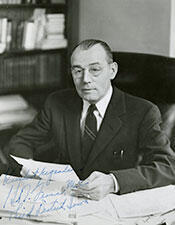
Here you will find contact information for Representative Chester Heilman Gross, including email address, phone number, and mailing address.
| Name | Chester Heilman Gross |
| Position | Representative |
| State | Pennsylvania |
| District | 21 |
| Party | Republican |
| Status | Former Representative |
| Term Start | January 3, 1939 |
| Term End | January 3, 1949 |
| Terms Served | 4 |
| Born | October 13, 1888 |
| Gender | Male |
| Bioguide ID | G000493 |
About Representative Chester Heilman Gross
Chester Heilman Gross (October 13, 1888 – January 9, 1973) was an American politician who served as a Republican member of the United States House of Representatives from Pennsylvania. Over the course of four terms in Congress between 1939 and 1949, he represented his constituents during a period marked by the end of the Great Depression, the Second World War, and the early years of the postwar era, contributing to the legislative process as a member of the House of Representatives.
Gross was born on a farm in East Manchester Township, York County, Pennsylvania, on October 13, 1888. Raised in an agricultural setting, he developed an early familiarity with rural life and the concerns of farming communities that would later inform his public service. He attended the public schools of the area and went on to study at Pennsylvania State College in State College, Pennsylvania, receiving further education that prepared him for both teaching and civic leadership.
Before entering national politics, Gross built a career in local and state public service. He served as a township supervisor in East Manchester Township from 1918 to 1922, gaining firsthand experience in local governance and infrastructure matters. He was elected to the Pennsylvania House of Representatives, serving as a member of the state legislature in 1929 and 1930. Following his term in the state house, he remained active in public affairs at the local level, serving as a school board director from 1931 to 1940. His leadership in education policy was recognized statewide when he became president of the Pennsylvania State School Directors Association in 1939 and 1940, reflecting his prominence in school administration and local educational governance.
Gross’s congressional career began with his election as a Republican to the Seventy-sixth Congress, serving from January 3, 1939, to January 3, 1941. During this initial term, he participated in the democratic process in the U.S. House of Representatives and represented the interests of his Pennsylvania constituents at the federal level. He was an unsuccessful candidate for reelection in 1940 and returned to private life, resuming his work in agriculture. He returned to farming during this interval, maintaining his ties to the rural community that had shaped his early life and political outlook.
Gross reentered Congress when he was elected to the Seventy-eighth Congress and subsequently reelected to the Seventy-ninth and Eightieth Congresses, serving continuously from January 3, 1943, to January 3, 1949. These three consecutive terms, combined with his earlier service, gave him a total of four terms in the House of Representatives. His tenure coincided with World War II and the immediate postwar period, when Congress addressed issues of wartime mobilization, veterans’ affairs, economic reconversion, and the early stages of the Cold War. In 1948 he was an unsuccessful candidate for reelection to the Eighty-first Congress, losing to Democrat James F. Lind, which brought his period of federal legislative service to a close.
After leaving Congress, Gross remained involved in public and political life, though he did not return to elective office. He sought the Republican nomination for Congress again in 1954 and 1956 but was unsuccessful in both attempts. In his later professional life he worked as a real estate salesman, a position he held until his retirement, continuing to be engaged in the economic life of his community even after his congressional career had ended.
Chester Heilman Gross died in York, Pennsylvania, on January 9, 1973. He was interred in Manchester Lutheran Cemetery in Manchester, Pennsylvania, not far from his birthplace in East Manchester Township. His life and career reflected a steady progression from local farm life and township service to state office and ultimately to four terms in the United States Congress, during which he represented Pennsylvania in a transformative era of American history.