Representative Chester Dorman Hubbard
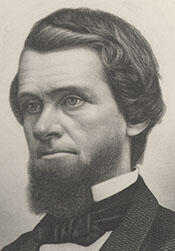
Here you will find contact information for Representative Chester Dorman Hubbard, including email address, phone number, and mailing address.
| Name | Chester Dorman Hubbard |
| Position | Representative |
| State | West Virginia |
| District | 1 |
| Party | Republican |
| Status | Former Representative |
| Term Start | December 4, 1865 |
| Term End | March 3, 1869 |
| Terms Served | 2 |
| Born | November 25, 1814 |
| Gender | Male |
| Bioguide ID | H000879 |
About Representative Chester Dorman Hubbard
Chester Dorman Hubbard (November 25, 1814 – August 23, 1891) was a two-term U.S. Representative from West Virginia, who previously served in the Virginia General Assembly and the Virginia Secession Convention of 1861 before the American Civil War and who helped found the state of West Virginia. Born in Hamden, New Haven County, Connecticut, he was descended from English ancestors who had emigrated in the 17th century; an ancestor, the Rev. William Hubbard, officiated as president of Harvard College at its 1688 commencement exercises. In 1815, when he was an infant, his parents, Dana Hubbard and Aseneth Hubbard, moved the family to Pittsburgh, Pennsylvania, and four years later, in 1819, they settled in Wheeling, then in western Virginia, where Dana Hubbard established the first lumber and grist mills in the new settlement on the National Road. The family grew to include three additional sons who survived childhood and a daughter, although Chester ultimately outlived all his siblings.
Hubbard received his early education in Wheeling and was later sent back east for higher education. He attended Wesleyan University in Middletown, Connecticut, graduating first in his class in 1840. While at Wesleyan, he helped found the Eclectic Society in 1838, making it one of the older fraternal college organizations in the United States. On September 20, 1842, he married English-born Sarah Pallister, the stepdaughter of the late John List. The couple had five children: William Pallister Hubbard, who became a lawyer and later, like his father, a Republican member of the U.S. House of Representatives; Dana List Hubbard (1845–1893); Chester Russell Hubbard (1848–1934); Julia Alice Hubbard Tyler (1850–1908) of Triadelphia; and Anna Hubbard Brady (1852–1933), the wife of Joseph C. Brady. An active Methodist, Hubbard was a member of Wheeling’s Chapline Street Methodist Church and in 1872 served as a delegate to the General Convention of the Methodist Episcopal Church, held that year in Brooklyn, New York.
After graduating from college, Hubbard returned to Ohio County and entered his father’s lumber business in Wheeling. He worked there until Dana Hubbard’s death in 1852, after which he and D. C. List and others organized the Bank of Wheeling. Hubbard served as president of the bank until 1865, when it was reorganized as the German Bank; he continued as president of the reorganized institution until his death. In 1859 he organized C. D. Hubbard & Co., which leased the Crescent Iron Mill and manufactured railroad iron for more than a year. He also helped organize the Wheeling Hinge Company, serving as a director until his death. In 1871 he became secretary of the reorganized Wheeling Iron and Nail Company. He was a member of the firm Logan & Co. for twenty years and was president of the Logan Drug Company at the time of his death. In addition to his business pursuits, Hubbard was an earnest friend of education: he became a trustee of the Linsly Institute in 1848, where his son later studied, and in 1873 he assumed the role of treasurer. He also helped found Wheeling Female College, serving as a trustee and as president of its board from 1865 until the sale of the property.
Hubbard’s political career began in the context of growing sectional tensions and demands for greater representation for western Virginia. After the adoption of the Virginia Constitution of 1850, which increased representation for the trans-Allegheny counties, Ohio County—previously represented in the Virginia House of Delegates by Charles W. Russell—received two additional seats. In 1851, Hubbard was elected to one of these seats in the Virginia House of Delegates, although neither he, John M. Oldham, nor Russell was reelected in 1853, when Ohio County lost one seat and John C. Campbell and Thomas M. Gally were chosen as delegates. In 1861, as the secession crisis deepened, Ohio County voters elected Hubbard as one of their three delegates to the Virginia convention in Richmond. There he opposed secession. Later that year he was chosen as one of Ohio County’s six delegates to the Wheeling Convention of 1861 and served as a delegate to the West Virginia constitutional convention in Wheeling, playing an important role in the movement that led to the creation of the new state of West Virginia.
With the formation of West Virginia during the Civil War, Hubbard continued his public service at the state level. He served in the West Virginia Senate in 1863 and 1864. His eldest son, William Pallister Hubbard, by then a lawyer, served as an officer in the 3rd West Virginia Cavalry, reflecting the family’s strong Unionist commitments. A committed Republican and an active partisan of James G. Blaine, Chester Dorman Hubbard served as a delegate to the Republican National Convention in 1864 and again in 1880. His political activities and leadership in the new state helped solidify the Republican Party’s presence in West Virginia during and after the Civil War.
Chester Dorman Hubbard served as a Representative from West Virginia in the United States Congress from March 4, 1865, to March 3, 1869, a period that encompassed the first years of Reconstruction. He was elected as a Unionist to the Thirty-ninth Congress and reelected as a Republican to the Fortieth Congress, serving two consecutive terms. A member of the Republican Party, he contributed to the legislative process during these two terms in office, participating in the democratic process and representing the interests of his West Virginia constituents at a time of national transformation. During the Fortieth Congress he served as chairman of the Committee on Expenditures in the Department of the Interior, overseeing matters related to federal spending in that department. In 1868 he was defeated in the primary and thus did not return for a third term, after which he resumed his banking and manufacturing pursuits in Wheeling. His letters from this period have been preserved and are considered important to the study of Congressional Reconstruction and Republican Party politics.
In the years following his congressional service, Hubbard remained a prominent figure in business, transportation, and civic affairs. He was among the promoters and builders of the Pittsburgh, Wheeling & Kentucky Railroad in 1873 and became president of the road in 1874, further integrating Wheeling into regional transportation networks and supporting the city’s industrial growth. He continued his leadership roles in banking, iron and nail manufacturing, and drug wholesaling, while also maintaining his involvement in educational and religious institutions in Wheeling. His work in these fields complemented his earlier public service and underscored his influence on the economic and social development of the region.
Hubbard died in Wheeling, West Virginia, on August 23, 1891. The Wheeling Intelligencer published a favorable obituary recognizing his long record of service in business, politics, and civic life. He was interred in Greenwood Cemetery in Wheeling. His legacy in public affairs continued through his son William Pallister Hubbard, who served as a Republican member of the U.S. House of Representatives beginning in 1907. Chester Dorman Hubbard’s preserved correspondence and public record remain valuable sources for understanding the politics of Reconstruction, the rise of the Republican Party in West Virginia, and the creation of the state he helped to found.