Representative Chester William Taylor
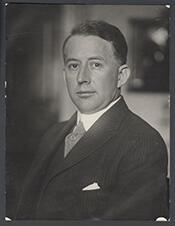
Here you will find contact information for Representative Chester William Taylor, including email address, phone number, and mailing address.
| Name | Chester William Taylor |
| Position | Representative |
| State | Arkansas |
| District | 6 |
| Party | Democratic |
| Status | Former Representative |
| Term Start | April 11, 1921 |
| Term End | March 3, 1923 |
| Terms Served | 1 |
| Born | July 16, 1883 |
| Gender | Male |
| Bioguide ID | T000069 |
About Representative Chester William Taylor
Chester William Taylor (July 16, 1883 – July 17, 1931) was a Democratic U.S. Representative from Arkansas who served one term in the United States Congress from 1921 to 1923. The son of Congressman Samuel Mitchell Taylor, he represented the interests of his Arkansas constituents during a significant period in American history, contributing to the legislative process in the aftermath of World War I and during the early 1920s.
Taylor was born in Verona, Lee County, Mississippi, on July 16, 1883. In 1887 he moved with his parents to Pine Bluff, Arkansas, where he was raised. He attended the public schools of Pine Bluff, receiving his early education in the local school system that served the growing river and railroad community. Seeking professional training in the law, he later studied at Georgetown University Law Center in Washington, D.C., gaining exposure to the federal institutions and political environment in which he would eventually serve.
Before entering Congress, Taylor developed a career in Arkansas state government and public administration. He served one term as Deputy State Auditor from 1908 to 1910, acquiring experience in the financial oversight and accounting functions of state government. In 1911 he was appointed Deputy Secretary of State and, later that same year, also became Deputy State Treasurer, holding both positions under Governor George Washington Donaghey from 1911 to 1912. These overlapping responsibilities placed him at the center of Arkansas’s executive operations during a period of reform and modernization. From 1913 to 1921, Taylor served as secretary to his father, Congressman Samuel M. Taylor, working in Washington, D.C., and gaining direct familiarity with the workings of the U.S. House of Representatives and the needs of their Arkansas district.
Taylor’s own congressional service began following the death of his father. He was elected as a Democrat to the Sixty-seventh Congress to fill the vacancy caused by Samuel M. Taylor’s death and served from October 25, 1921, to March 4, 1923. During this single term in the House of Representatives, he participated in the democratic process and represented the interests of his Arkansas constituents as the nation addressed issues of postwar economic adjustment, agricultural policy, and federal reform. A member of the Democratic Party, he contributed to the legislative process during this one term in office. He was not a candidate for renomination to the Sixty-eighth Congress in 1922, thereby concluding his brief but notable period of federal legislative service.
After leaving Congress, Taylor returned to private life in Arkansas. He engaged in the general insurance business in Pine Bluff, applying his administrative and governmental experience to the private sector. He later continued his public service at the state level as an official in the State Department of Conservation in Little Rock, Arkansas, reflecting an ongoing involvement in the management and stewardship of the state’s resources.
Chester William Taylor died in Pine Bluff, Arkansas, on July 17, 1931, one day after his forty-eighth birthday. He was interred in Bellewood Cemetery in Pine Bluff. His family’s tradition of public service continued into the next generation; his son, Chester W. Taylor Jr., became superintendent of the Pasco County School District in Florida, extending the Taylor family’s involvement in public affairs beyond Arkansas and into the field of education.