Representative Chip Cravaack
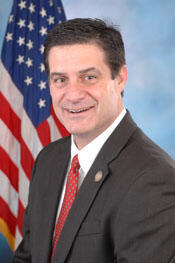
Here you will find contact information for Representative Chip Cravaack, including email address, phone number, and mailing address.
| Name | Chip Cravaack |
| Position | Representative |
| State | Minnesota |
| District | 8 |
| Party | Republican |
| Status | Former Representative |
| Term Start | January 5, 2011 |
| Term End | January 3, 2013 |
| Terms Served | 1 |
| Born | December 29, 1959 |
| Gender | Male |
| Bioguide ID | C001086 |
About Representative Chip Cravaack
Raymond John “Chip” Cravaack (born January 29, 1959) is an American former politician, aviator, and educator who represented Minnesota’s 8th congressional district in the United States House of Representatives from 2011 to 2013. A member of the Republican Party, he was elected in 2010 in his first run for political office, unseating 18-term Democratic incumbent Jim Oberstar by 4,399 votes and becoming the first Republican since 1947 to represent the district. He served one term in Congress, contributing to the legislative process during a significant period in American political history, and was defeated for reelection by Democratic–Farmer–Labor (DFL) nominee Rick Nolan on November 6, 2012.
Cravaack was born in 1959 in Charleston, West Virginia, and is of German, Italian, and Romanian-German ancestry. He grew up in the Cincinnati suburb of Madeira, Ohio, as the eldest of three children in a Republican family with a strong military tradition. His father, Ray Cravaack, served in the Korean War, and his grandfather served in World War I as a motorcycle dispatch rider. He attended St. Xavier High School in Cincinnati, graduating in 1977. Pursuing a long-held ambition to become a military aviator, he entered the United States Naval Academy in Annapolis, Maryland, and graduated in 1981 with a Bachelor of Science degree.
Following his graduation from the Naval Academy, Cravaack served on active duty in the United States Navy as a helicopter pilot, fulfilling his childhood goal. While serving as a flight instructor in Pensacola, Florida, he completed further education, earning a Master of Education degree from the University of West Florida in 1989. After leaving active duty, he continued his military service in the United States Naval Reserve. In that capacity he served with aircraft carrier crew augmentation units, at the Navy Command Center at the Pentagon, with the Commander in Chief, U.S. Pacific Fleet (CINCPAC Fleet) in Hawaii, and later with NATO’s Supreme Allied Commander Atlantic (SACLANT). He retired from the Naval Reserve in 2005 with the rank of captain.
Cravaack transitioned to a civilian aviation career in 1990, when he moved to Minnesota and became a pilot for Northwest Airlines. During the early 1990s he was laid off for two years, during which he worked as a simulator instructor for a Northwest Airlines subsidiary, training foreign pilots. Active in organized labor, he served as a union steward with the Air Line Pilots Association (ALPA). During the 1998 Northwest pilots’ strike, he was a “strike coordinator,” noted for bringing military-style discipline and parade-ground marching to the picket lines. His experience as both a military officer and union representative later became an important part of his political appeal, particularly among working-class voters and miners in northeastern Minnesota.
Cravaack’s entry into electoral politics was closely tied to the Tea Party–era debates over federal health care legislation. In August 2009, after a talk radio host urged listeners to demand town hall meetings with their members of Congress during the controversy over the Affordable Care Act, Cravaack joined about 25 people in visiting Oberstar’s Minnesota office to request an immediate meeting. When Oberstar did not appear, Cravaack decided to challenge him in the 2010 election. A political novice and underdog, he entered a race in a district that had been in Democratic hands since 1947 and where Oberstar, the longest-serving congressman in Minnesota’s history, had typically won reelection by wide margins. His home in Lindström, in Chisago County at the southern end of the district, was geographically distant from the Iron Range core of the constituency. His campaign manager was Anne Neu, who would later serve in the Minnesota House of Representatives.
Cravaack’s 2010 campaign was widely described as being organized along military lines. According to the Minneapolis Star Tribune, the operation was “structured like a military operation.” He traveled the district in a motor home dubbed “The War Wagon” and assigned volunteers ranks such as commander, captain, and precinct lieutenant. He campaigned on free-market principles and reductions in government spending, sharply criticizing Oberstar’s support for the health care bill, which he pledged to repeal and replace. He opposed an Oberstar-backed extension of the Clean Water Act to cover wet meadows, calling it a federal “land grab,” and attacked the earmark process Oberstar used to fund infrastructure projects, arguing that federal spending needed to be curtailed. He also opposed “cap and trade” legislation to limit carbon emissions, contending it would raise energy prices. In his first television advertisement, he paid respect to Oberstar’s long service but argued that the incumbent had lost touch with the district. As the race tightened, a KSTP-TV poll in October 2010 showed Oberstar leading by only one point, 47 percent to 46 percent. Cravaack received endorsements from former Speaker of the House Newt Gingrich, Minnesota Citizens Concerned for Life, and the Duluth News Tribune. He emphasized abortion as a key issue, asserting that the health care law allowed taxpayer funding of abortions and would encourage euthanasia for the elderly, and he portrayed it as socialized medicine that would lead to rationed care. On November 2, 2010, he achieved one of the most notable upsets in Minnesota political history, defeating Oberstar by 4,399 votes.
During the 112th Congress, from January 3, 2011, to January 3, 2013, Cravaack represented Minnesota’s 8th congressional district in the U.S. House of Representatives. He served on the Committee on Homeland Security, including the Subcommittee on Counterterrorism and Intelligence and the Subcommittee on Transportation Security. He also held assignments on the Committee on Transportation and Infrastructure, serving as vice chair of the Subcommittee on Aviation and as a member of the Subcommittees on Coast Guard and Maritime Transportation and on Water Resources and Environment. In addition, he served on the Committee on Science, Space, and Technology, including its Subcommittee on Technology and Innovation. Early in his term, following his election in November 2010, he supported fellow Minnesota Representative Michele Bachmann’s bid for the House Republican Conference chair, the number four leadership position in the House GOP.
Cravaack’s legislative record reflected his focus on transportation, national security, and regulatory issues. In March 2012, he introduced a bill that would have permitted mining and logging in the Boundary Waters Canoe Area Wilderness and the Superior National Forest through a land exchange that relied on state environmental review processes and bypassed federal environmental reviews, with proceeds designated for school districts. He also sponsored legislation, which became law, requiring the Transportation Security Administration (TSA) to treat military personnel with respect while traveling on orders or in uniform, with the intent that service members would be able to pass through airport security with the same ease as registered frequent travelers. He opposed the Budget Control Act of 2011 and the associated sequestration mechanism, arguing that “you cut with a scalpel, not a meat ax.” His votes also drew criticism; in March 2011, he faced opposition from Duluth students and community leaders for supporting a budget bill that reduced funding for the federal Pell Grant program, which aided a significant portion of students at the University of Minnesota Duluth. He also attracted attention during a House Homeland Security Committee hearing for remarks suggesting that Los Angeles County Sheriff Lee Baca was furthering the goals of a terrorist organization, comments that were controversial.
In the 2012 election cycle, Cravaack sought a second term and was endorsed by the Mesabi Daily News in Virginia, Minnesota, and again by the Duluth News Tribune. Nonetheless, in the November 6, 2012, general election he lost his seat to former Democratic congressman Rick Nolan by 31,456 votes. His single term in office thus spanned the 112th Congress, during which he participated in debates over federal spending, health care, environmental regulation, and transportation security, and represented the interests of his northeastern Minnesota constituents during a period of heightened partisan polarization.
After leaving Congress, Cravaack relocated to New Hampshire to be closer to his two sons. He spent approximately eight years before retirement as a social studies teacher at Bishop Guertin High School, a Catholic college preparatory school in Nashua, New Hampshire, where he taught U.S. history, economics, and U.S. government. In retirement he has divided his time between the Lake Winnipesaukee area of New Hampshire and Pensacola, Florida, often referred to as the cradle of naval aviation, reflecting his continuing ties to his military aviation background.
Cravaack has been married twice and divorced twice. He married his first wife, Jill Ann Jurgensen, in 1984; the marriage later ended in divorce. On December 31, 1993, he married Traci Rae Gordon in Hennepin County, Minnesota. They had two sons together and divorced in 2011.