Representative Choice Boswell Randell
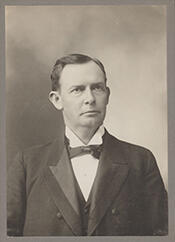
Here you will find contact information for Representative Choice Boswell Randell, including email address, phone number, and mailing address.
| Name | Choice Boswell Randell |
| Position | Representative |
| State | Texas |
| District | 4 |
| Party | Democratic |
| Status | Former Representative |
| Term Start | December 2, 1901 |
| Term End | March 3, 1913 |
| Terms Served | 6 |
| Born | January 1, 1857 |
| Gender | Male |
| Bioguide ID | R000042 |
About Representative Choice Boswell Randell
Choice Boswell Randell (January 1, 1857 – October 19, 1945) was an American lawyer and Democratic politician who served six terms as a U.S. Representative from Texas from 1901 to 1913. Born Charles Boswell Randell in Murray County, Georgia, he was the son of James L. Randell and Louisa Amantha (Gartrell) Randell. Through his mother he was the nephew of Lucius Jeremiah Gartrell, a prominent Georgia politician and Confederate congressman, a family connection that placed him in a milieu of public affairs from an early age.
Randell attended both public and private schools in Georgia before enrolling at the North Georgia Agricultural College in Dahlonega. Although he did not complete a degree there, he shifted his focus to the study of law, a decision that would shape his professional life. He read law in preparation for the bar and was admitted to the Georgia State Bar in 1878, beginning his legal career as a young man in the post-Reconstruction South.
In January 1879, Randell moved west to Texas and commenced the practice of law in Denison. Seeking broader opportunities, he relocated in 1882 to Sherman, Texas, where he continued to build a substantial legal practice. His work as an attorney in Sherman established his reputation in the community and provided the foundation for his later political career. Over time, he became a well-known figure in local and regional legal circles, which aided his emergence as a candidate for national office.
Randell was elected as a Democrat to the Fifty-seventh Congress and to the five succeeding Congresses, serving in the U.S. House of Representatives from March 4, 1901, to March 3, 1913. Representing a Texas district during a significant period in American history marked by the Progressive Era and rapid economic and social change, he participated in the legislative process over six consecutive terms. As a member of the House of Representatives, Choice Boswell Randell contributed to the democratic process and represented the interests of his Texas constituents. He was the author of the Anti-Graft Resolutions, measures designed to prevent members of Congress from receiving gifts or fees from individuals or entities with business before the legislative body, reflecting his concern with ethical standards in public office.
During his congressional service, Randell’s views on key social issues also drew attention. He did not support women’s suffrage and, in correspondence with suffragist leader Ermina Thompson Folsom, expressed opposition that was explicitly race-based, revealing the racial attitudes that shaped some Southern political resistance to expanding the franchise. His tenure thus combined advocacy for stricter ethical rules in Congress with positions on social questions that aligned with many white Southern Democrats of his era.
With the pending reapportionment of his congressional district in 1912, Randell chose not to seek reelection to the House. Instead, he made an unsuccessful bid for a seat in the United States Senate. His decision opened the way for Sam Rayburn, who succeeded him in the House and would later become one of the most influential Speakers in congressional history. Randell’s own congressional career concluded on March 3, 1913, at the close of his sixth term.
After his career in public service ended, Randell returned to Sherman, Texas, where he resumed the practice of law. He continued to be a respected member of the local bar and remained active in civic life. Beyond his professional work, he participated in a wide range of fraternal organizations, including the Freemasons, the Knights of Pythias, the Independent Order of Odd Fellows, Woodmen of the World, and the Improved Order of Red Men, reflecting his engagement in the social and associational life of his community.
Choice Boswell Randell died in Sherman, Texas, on October 19, 1945. His long life spanned from the immediate post–Civil War era through World War II, and his career as a lawyer and six-term congressman from Texas left a record of both legislative engagement and the political attitudes characteristic of his time and region.