Representative Chris Chocola
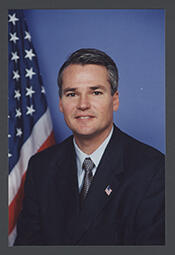
Here you will find contact information for Representative Chris Chocola, including email address, phone number, and mailing address.
| Name | Chris Chocola |
| Position | Representative |
| State | Indiana |
| District | 2 |
| Party | Republican |
| Status | Former Representative |
| Term Start | January 7, 2003 |
| Term End | January 3, 2007 |
| Terms Served | 2 |
| Born | February 24, 1962 |
| Gender | Male |
| Bioguide ID | C001052 |
About Representative Chris Chocola
Joseph Christopher Chocola (born February 24, 1962) is an American businessman, lawyer, and former politician who served as the U.S. representative from Indiana’s 2nd congressional district from 2003 to 2007. A member of the Republican Party, he served two terms in the United States House of Representatives, where he participated in the legislative process during a significant period in American history and represented the interests of his northern Indiana constituents. After leaving Congress, he became a prominent figure in national conservative politics through his leadership of the Club for Growth, a fiscally conservative advocacy organization.
Chocola was born in Jackson, Michigan, and grew up in Michigan, where he graduated from Williamston High School in 1980. He attended Hillsdale College in Hillsdale, Michigan, graduating in 1984 with a double major in business administration and political economy. While at Hillsdale, he joined the Alpha Tau Omega fraternity, an experience that complemented his early interest in business and public affairs. Upon graduation, he was recruited into the management training program at Society National Bank (now KeyBank) in Cleveland, Ohio. He advanced within the bank and ultimately worked as a foreign exchange trader before deciding to pursue legal studies.
While preparing for a legal career, Chocola returned to Michigan and attended Western Michigan University Cooley Law School in Lansing, taking classes at night. At the same time, he worked as a credit manager for his family’s business, Chocola Cleaning Materials. Balancing work and study, he completed his legal education and graduated from Cooley Law School in 1988. His combined background in finance, law, and family enterprise laid the foundation for his subsequent corporate leadership and political career.
In 1988, Chocola was hired as corporate counsel by CTB International in Milford, Indiana, a manufacturer of products for the poultry, egg, swine, and grain production industries founded by his grandfather, Howard Brembeck. Initially responsible for all legal aspects of the business, he moved through a series of management positions and was named chief executive officer in 1994. Under his leadership, CTB expanded its operations and market presence. In April 1999, he stepped down as CEO to become chairman of the board. In August 2002, CTB International was sold to Berkshire Hathaway, the investment firm led by Warren Buffett, in a transaction valued at $140 million; the Chocola family received 55 percent of the proceeds paid to shareholders.
Chocola first sought federal office in the 2000 election, running as the Republican candidate in what was then Indiana’s 3rd congressional district against incumbent Democrat Timothy J. Roemer. He lost that race by a 52–47 percent margin, having spent more than $1 million on the campaign, including $465,000 of his own money. During the 2000 campaign, he was quoted in the October 8 edition of the Elkhart Truth as saying that “Bush’s plan of individual investment of 2 percent of the money is a start. Eventually, I’d like to see the entire Social Security system privatized. It’s not a ‘risky scheme’.” After Roemer used that quotation in political advertising, Chocola contended it was taken out of context and stated that “There is no one proposing, including me, a plan of total privatization,” but the newspaper declined to retract the story and Roemer continued to run the ad.
When Roemer retired after his 2001–2003 term, the district was renumbered as Indiana’s 2nd congressional district following redistricting. In 2002, Chocola ran again for the open seat. In a closely watched race that drew campaign appearances by President George W. Bush, Vice President Dick Cheney, and other top Republicans, he defeated former Democratic congresswoman Jill Long Thompson in November 2002 by a 51–46 percent margin, with 188,446 votes cast. He took office on January 3, 2003, and served in the House of Representatives until January 3, 2007. During his tenure, he sat on the Agriculture, Small Business, Transportation and Infrastructure, and Ways and Means committees, giving him a role in shaping policy on farming, rural development, business regulation, transportation projects, and federal tax and revenue measures.
Chocola’s 2004 reelection campaign took place in a year when President Bush carried the district with 56 percent of the vote. Chocola defeated Democratic challenger Joe Donnelly, a lawyer and then-president of the Mishawaka Marian High School Board, by a 54–45 percent margin, with 259,355 votes cast. He outspent Donnelly $1.4 million to $700,000 and again received fundraising support from Vice President Cheney. In the 2006 election cycle, he first defeated attorney and Navy veteran Tony Zirkle in the Republican primary on May 2, 2006, by a 70–30 percent margin. In the November 2006 general election, however, he lost to Donnelly in a rematch, 54–46 percent, with 191,861 votes cast, ending his two-term service in Congress.
During his congressional service, Chocola was generally regarded, according to an Associated Press profile, as a strong supporter of President Bush, though he differed with the administration on some issues, notably illegal immigration. He backed a “tough enforcement first” House approach to immigration reform, in contrast to Bush’s support for a guest worker program. On foreign policy, in January 2006 he stated that significant progress was being made in transitioning Iraq from military coalition to police control, while cautioning that it was too early to predict when the mission would be completed. His voting record reflected conservative positions on social and constitutional issues: he cosponsored the Federal Marriage Amendment in 2003 and voted for it when it came to the floor in 2004, and he again cosponsored the Marriage Protection Amendment (H.J. Res. 88) in 2006 and voted for it on July 18, 2006. He voted in 2005 for a proposed constitutional amendment to prevent desecration of the American flag, supported the Pledge Protection Act in mid-July 2006 to limit federal court jurisdiction over cases involving the Pledge of Allegiance, and voted against overriding President Bush’s veto of the Stem Cell Research Enhancement Act in July 2006, thereby opposing expanded federal funding for embryonic stem cell research.
Chocola also took active positions on economic, tax, and regulatory policy. He introduced legislation that would have imposed currency-manipulation tariffs on China, a measure he later distanced himself from and denounced after assuming leadership of the Club for Growth, which opposed such trade restrictions. He voted against increasing the Low Income Home Energy Assistance Program by $1 billion in March 2006. In tax policy, he supported the Tax Relief Extension Reconciliation Act in May 2006, extending a series of tax cuts scheduled to expire over the following seven years, and voted for the Permanent Estate Tax Relief Act in June 2006, which permanently exempted personal estates of less than $5 million per spouse from federal estate taxes and reduced rates on larger estates. He backed energy development measures, including a 2006 bill allowing private companies to drill for oil in the Arctic National Wildlife Refuge (ANWR). Among his legislative initiatives, he was one of two cosponsors of the Healthcare Enhancement for Local Public Safety Retirees Act of 2005 (HELPS Retirees Act, H.R. 2177), enabling retired public safety officers to designate up to $5,000 per year from governmental pension or deferred compensation funds for health care premiums on a pre-tax basis, a measure that earned him an endorsement from the International Association of Fire Fighters, one of his few endorsements from organized labor.
After leaving Congress in January 2007, Chocola remained active in national politics and public policy. In 2009 he became president of the Club for Growth, a fiscally conservative 501(c)(4) organization that supports candidates committed to limited government, low taxes, and free-market economic policies. He served in that role from 2009 through the end of 2014, overseeing the group’s political and policy operations during several election cycles and helping to shape debates within the Republican Party over taxation, spending, and regulatory reform.