Representative Christian William Ramseyer
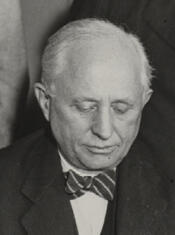
Here you will find contact information for Representative Christian William Ramseyer, including email address, phone number, and mailing address.
| Name | Christian William Ramseyer |
| Position | Representative |
| State | Iowa |
| District | 6 |
| Party | Republican |
| Status | Former Representative |
| Term Start | December 6, 1915 |
| Term End | March 3, 1933 |
| Terms Served | 9 |
| Born | March 13, 1875 |
| Gender | Male |
| Bioguide ID | R000031 |
About Representative Christian William Ramseyer
Christian William Ramseyer (March 13, 1875 – November 1, 1943) was a nine-term Republican U.S. Representative from Iowa’s 6th congressional district who served in the United States Congress from 1915 to 1933. Over nine consecutive terms in the House of Representatives, he contributed to the legislative process during a significant period in American history and represented the interests of his Iowa constituents as a member of the Republican Party.
Ramseyer was born on March 13, 1875, near Collinsville, Ohio. In 1887 he moved with his family to Davis County, Iowa, settling near Pulaski. He attended the local public schools and pursued further education at Southern Iowa Normal School, from which he graduated in 1897. Continuing his preparation for a career in education, he attended Iowa State Teachers College in Cedar Falls, Iowa, earning a degree in 1902.
Before entering the legal profession and national politics, Ramseyer worked as an educator for nine years. He taught in the public schools and advanced to administrative positions, serving first as principal and later as superintendent of Bloomfield High School in Bloomfield, Iowa. Seeking to expand his professional opportunities, he enrolled in the University of Iowa College of Law, from which he graduated in 1906. That same year he was admitted to the bar and commenced the practice of law in Bloomfield, Iowa.
Ramseyer quickly became active in local public affairs. He served as prosecuting attorney of Davis County from 1911 to 1915, gaining experience in public service and legal administration that helped prepare him for national office. His work as county prosecutor, combined with his background in education and law, established his reputation as a capable public servant within his community and the state.
In 1914, Ramseyer was elected as a Republican to the Sixty-fourth Congress from Iowa’s 6th congressional district and took his seat in the U.S. House of Representatives on March 4, 1915. He was re-elected eight consecutive times, serving continuously until March 3, 1933. His congressional career spanned World War I, the postwar period, and the onset of the Great Depression, years in which he participated in the democratic process and contributed to national legislative deliberations. During this period, Iowa underwent a reduction in its congressional representation. In 1931, following reapportionment that cost Iowa two seats, Ramseyer’s district was combined with that of former 8th district Congressman Lloyd Thurston in a newly configured 5th congressional district. In the 1932 Republican primary for that district, the two incumbents faced each other, and Thurston prevailed, bringing Ramseyer’s nine-term House career to a close.
Ramseyer’s most enduring institutional legacy in Congress was his authorship of what is now known as the Ramseyer Rule, codified as Clause 3(e) of Rule XIII of the Standing Rules of the United States House of Representatives. This rule requires that committee-reported bills clearly indicate how proposed legislation would change existing law. Under the practice often referred to as “Ramseyering,” repealed or deleted portions of existing statutes are shown in boldface brackets, while new language is presented in italic typeface. A Ramseyer document, included in the House report filed by the full committee, sets out only those provisions of existing federal law that are amended by the bill as reported. This drafting and reporting convention has been adopted, in various forms, by many other legislative bodies and remains a key tool for transparency in the legislative process.
After leaving Congress, Ramseyer continued his public service at the federal level. In 1933 he was appointed a commissioner for the United States Court of Claims in Washington, D.C., a position he held until his death. In this capacity he assisted the court in handling claims against the federal government, drawing on his long experience in law and legislation.
Christian William Ramseyer died in Washington, D.C., on November 1, 1943, while still serving as a commissioner of the Court of Claims. He was interred in Odd Fellows Cemetery in Bloomfield, Iowa, reflecting his long association with that community. His papers are preserved in the University of Iowa Libraries Special Collections & Archives, providing a documentary record of his career as an educator, lawyer, legislator, and federal official.