Senator Christie Benet
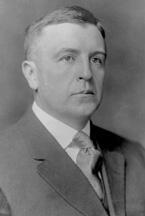
Here you will find contact information for Senator Christie Benet, including email address, phone number, and mailing address.
| Name | Christie Benet |
| Position | Senator |
| State | South Carolina |
| Party | Democratic |
| Status | Former Representative |
| Term Start | July 6, 1918 |
| Term End | November 5, 1918 |
| Terms Served | 1 |
| Born | December 26, 1879 |
| Gender | Male |
| Bioguide ID | B000360 |
About Senator Christie Benet
William Christie Benet Jr. (December 26, 1879 – March 30, 1951) was a Democratic Party politician who briefly represented the state of South Carolina in the United States Senate in 1918. A member of the Democratic Party, Christie Benet contributed to the legislative process during one term in office, serving as a Senator from South Carolina in the United States Congress from 1918 to 1918. His service in Congress occurred during a significant period in American history, as the nation was engaged in World War I, and he participated in the democratic process and represented the interests of his constituents during this critical time.
Benet was born in Abbeville, South Carolina, on December 26, 1879. He attended the common schools in his youth before pursuing higher education at several of the state and region’s leading institutions. He matriculated at the College of Charleston and the University of South Carolina, and later attended the University of Virginia, where he completed his studies and graduated in 1902. His early years thus combined a grounding in South Carolina’s educational system with exposure to a broader Southern academic environment.
During his collegiate years, Benet was also active in athletics, particularly football. He played college football as a guard at the University of South Carolina and later became a star tackle for the University of Virginia, where he was selected All-Southern in 1901, marking him as one of the outstanding players in the region. After his playing career, he remained involved in the sport, coaching football at South Carolina in 1903 and again in 1907. In 1902 he assisted head coach and former Virginia teammate Bob Williams, contributing to a notable upset victory by South Carolina over John Heisman’s Clemson team, a significant achievement in the state’s early football history.
Following his graduation, Benet studied law and, upon his admission to the bar, began the practice of law in Columbia, South Carolina, in 1903. He quickly entered public service and legal administration. In 1908 he was elected solicitor of the fifth judicial circuit, a position he used to build his reputation as a capable attorney and public official. From 1910 to 1912 he served as the city attorney of Columbia, providing legal counsel to the municipal government. In addition to his formal offices, Benet was active in party politics, serving three times as secretary of the Democratic State Committee, which placed him at the center of South Carolina’s Democratic Party organization in the early twentieth century.
Benet’s congressional service came as a result of a vacancy in the United States Senate. On July 6, 1918, he was appointed to the Senate to fill out the unexpired term of Senator Benjamin R. Tillman, who had died in office. As a United States Senator from South Carolina, he served from July 6, 1918, until November 5, 1918, when a successor was elected. During his brief tenure, he served as chairman of the Senate Committee on National Banks, a significant assignment given the financial and economic demands of World War I. Benet sought to continue in the office and was an unsuccessful candidate in the special election held on November 5, 1918, to fill the vacancy permanently. After his defeat, he returned to Columbia and resumed the practice of law.
Beyond his legislative service, Benet remained deeply involved in state institutions and wartime administration. Beginning in 1915, he served as a member of the board of regents of the South Carolina State Hospital, the state’s principal mental health institution. Over time he rose to become chairman of the board, a position he held until 1946, giving him more than three decades of influence over the governance and development of the hospital. During World War II he further contributed to the national effort as chairman of the War Finance Committee for South Carolina, helping to organize and promote the sale of war bonds and other financial measures in support of the Allied cause.
In his later years, Benet continued to hold federal responsibilities. At the time of his death he was serving as chairman of the Alien Enemy Hearing Board for the eastern district of South Carolina, a body charged with reviewing the status and activities of foreign nationals during and after wartime. William Christie Benet Jr. died in Columbia, South Carolina, on March 30, 1951, and was interred in Elmwood Cemetery in that city. His legacy in the state is reflected in part by the naming of Benet Hall, a residence hall at Clemson University, in his honor, recognizing both his public service and his place in South Carolina’s political and civic history.