Representative Christopher P. Carney
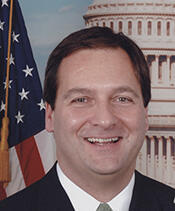
Here you will find contact information for Representative Christopher P. Carney, including email address, phone number, and mailing address.
| Name | Christopher P. Carney |
| Position | Representative |
| State | Pennsylvania |
| District | 10 |
| Party | Democratic |
| Status | Former Representative |
| Term Start | January 4, 2007 |
| Term End | January 3, 2011 |
| Terms Served | 2 |
| Born | March 2, 1959 |
| Gender | Male |
| Bioguide ID | C001065 |
About Representative Christopher P. Carney
Christopher Paul Carney (born March 2, 1959) is an American politician, academic, and naval officer who represented Pennsylvania’s 10th congressional district in the United States House of Representatives from January 3, 2007, to January 3, 2011. A member of the Democratic Party, he served two terms in Congress during a significant period in American history, contributing to the legislative process and representing the interests of a largely rural, traditionally Republican constituency in northeastern and central Pennsylvania.
Carney grew up in Coggon, Iowa. He attended Cornell College in Mount Vernon, Iowa, where he earned his bachelor’s degree, and went on to pursue graduate study in political science. He received his master’s degree from the University of Wyoming and completed his Ph.D. in political science at the University of Nebraska–Lincoln. His academic training in international relations and national security would later inform both his teaching career and his work in government and the military.
In 1992, Carney joined the faculty of Pennsylvania State University’s Worthington Scranton campus (now Penn State Scranton), where he became an associate professor of political science. He has taught there since 1992, focusing on American government, international relations, and security studies. Parallel to his academic career, Carney developed expertise in intelligence and counterterrorism. From 2002 to 2004, he served in the George W. Bush administration as a counterterrorism analyst, working under Douglas Feith in the Office of Special Plans at the Department of Defense and at the Defense Intelligence Agency, where he researched alleged links between al-Qaeda and Saddam Hussein. His work in these roles placed him at the intersection of policy, intelligence, and military affairs in the years following the September 11, 2001, terrorist attacks.
Carney also built a substantial record of military service. Direct commissioned as an ensign in the United States Naval Reserve in 1995, he rose through the ranks and served multiple tours overseas. He was activated for Operations Enduring Freedom and Noble Eagle and served as a Senior Terrorism and Intelligence Advisor at the Pentagon. Over the course of his naval career, he received the Defense Meritorious Service Medal, three Joint Service Achievement Medals, the Navy and Marine Corps Achievement Medal, and the Outstanding Volunteer Service Medal, as well as the Naval Rifle Marksman Ribbon and the Naval Pistol Expert Medal. While serving in Congress, he remained in the Naval Reserve and was one of just two House members to do so. In September 2007, during his first term, he went on active duty for his two weeks of reserve service as a lieutenant commander, working on the “Predator” project near Norfolk, Virginia. He was promoted from lieutenant commander to commander in the Naval Reserve in July 2008. During his unsuccessful 2010 re-election campaign, Carney disclosed that he had served as an interrogator at the U.S. detention facility at Guantánamo Bay; journalist Carol Rosenberg of the Miami Herald later reported that although Carney had traveled to Guantánamo on fact-finding trips with other members of Congress, he had not informed his colleagues that he had previously served there in that capacity.
Carney entered electoral politics in 2006, when he ran for the U.S. House of Representatives in Pennsylvania’s 10th congressional district. At the outset, he was widely regarded as an underdog against Republican incumbent Don Sherwood in a district that had been in Republican hands since 1961 and had a Cook Partisan Voting Index of R+8. The district had been made more rural and more Republican after the 2000 census, and Democrats had not fielded a candidate there in the previous two election cycles. However, Sherwood’s reelection prospects were severely damaged by revelations of a five-year extramarital affair with a woman more than 30 years his junior and allegations of abuse, which resonated strongly in a district with a pronounced social conservative character. Carney’s campaign emphasized a change of direction in Iraq policy, frequently criticizing the Bush administration’s conduct of the war, and he secured the endorsement of approximately 30 labor unions. He attracted support and fundraising help from a wide range of political figures, including Senators Barack Obama and Joe Biden, Representatives Jay Inslee and Jack Murtha, and others. On Election Night, Douglas Feith, former Under Secretary of Defense for Policy, publicly congratulated Carney on his victory, underscoring Carney’s unusual appeal across some traditional partisan and policy lines.
Carney took office on January 3, 2007, as a freshman Democrat in the 110th Congress. In January 2007, he was named chairman of the House Committee on Homeland Security’s Subcommittee on Management, Investigations, and Oversight, an unusually prominent assignment for a first-term member and one that reflected his background in national security and intelligence. He also served on the House Committee on Transportation and Infrastructure, including the Subcommittee on Highways and Transit and the Subcommittee on Economic Development, Public Buildings, and Emergency Management. In these roles, he participated in oversight of homeland security operations and in shaping federal transportation and infrastructure policy. During his time in Congress, Carney consistently participated in the democratic process, working on legislation and constituent services for the residents of his district.
On policy matters, Carney often adopted a moderate Democratic stance tailored to his conservative-leaning district. He opposed proposals to privatize Social Security but stated that he was open to the idea of adding voluntary private accounts in addition to, and not at the expense of, traditional defined benefits. He supported federal investment in stem cell research and was an advocate of universal health care. In foreign and defense policy, he made a change of direction in Iraq a central theme of his 2006 campaign, criticizing the Bush administration’s strategy. Once in office, however, he voted to reauthorize funding for military operations in Iraq through H.R. 2206 and opposed H.R. 2956 in 2007, which would have required the removal of all U.S. personnel from Iraq within 120 days, arguing that since the United States was already at war, the priority should be to win. On domestic economic policy, he voted against the Emergency Economic Stabilization Act of 2008, which created the Troubled Asset Relief Program (TARP), but supported the American Recovery and Reinvestment Act of 2009, the major economic stimulus package enacted in response to the Great Recession. He also voted for major health care reform legislation, including the Affordable Health Care for America Act and the Patient Protection and Affordable Care Act. In 2009, he supported H.R. 2187, the 21st Century Green Schools Act, to provide grants to states for the modernization, renovation, and repair of public schools, including early learning facilities and charter schools, to make them safe, healthy, high-performing, and technologically up to date.
Carney sought reelection in 2008 and faced Republican business executive Chris Hackett. Although he was considered one of the more vulnerable Democratic incumbents because he was a freshman representing a strongly Republican district, the political environment and his personal standing in the district improved his prospects. The National Republican Congressional Committee advertised on behalf of Hackett, while the Service Employees International Union and the Democratic Congressional Campaign Committee, both of which had identified Carney as a vulnerable incumbent, ran advertising in support of Carney, highlighting his vote to increase the federal minimum wage to $7.25 by 2009, a measure signed into law by President George W. Bush on May 24, 2007. By the summer of 2007, the nonpartisan Cook Political Report and other analysts rated the district as “slightly” leaning Democratic, and Federal Election Commission reports showed that Carney had raised more than $500,000 for his reelection in the first six months of 2007. Polling in January 2008 indicated that he held a significant double-digit lead over Hackett, and even a majority of registered Republicans—53 percent—approved of his job performance. The two candidates differed notably over Social Security, with Carney opposing President Bush’s privatization plan and Hackett supporting it. On November 4, 2008, Carney defeated Hackett by a margin of 56 percent to 44 percent, securing a second term.
During the 2008 presidential primary season, Carney served as a superdelegate to the Democratic National Convention. Representing an overwhelmingly conservative district in which Republicans significantly outnumbered Democrats, he announced that he would “wait and see how his district votes,” indicating that he would likely endorse the presidential candidate who won his district by a large margin in the Pennsylvania primary. While another northeastern Pennsylvania congressman, Paul Kanjorski, had long supported and campaigned for Senator Hillary Clinton, and Senator Bob Casey Jr. was a prominent supporter of Senator Barack Obama, Carney withheld his endorsement until after the primary. Following Clinton’s decisive 70–30 percent victory in his district in the April 22, 2008, Pennsylvania primary, he endorsed her on May 9, 2008.
After leaving Congress in January 2011, following his defeat in the 2010 election, Carney returned to his academic and national security work and continued his public service in appointed roles. From 2013 to 2016, he served as a commissioner on the Military Compensation and Retirement Modernization Commission (MCRMC), a nine-member panel tasked with reviewing and recommending reforms to the military pay and retirement systems; he was selected for this position by President Barack Obama. From 2016 to 2017, Carney worked as a senior intelligence specialist for the National Aviation Intelligence Integration Office, operating under the purview of the Director of National Intelligence, where he contributed to the integration and analysis of aviation-related intelligence. In 2019, he joined the Washington, D.C., office of the law and public policy firm Nossaman LLP as a senior policy advisor, drawing on his combined experience in Congress, the military, intelligence, and academia. Throughout his post-congressional career, Carney has remained associated with Penn State Worthington Scranton as an associate professor of political science, continuing his long-standing commitment to teaching and public affairs.