Senator Christopher Grant Champlin
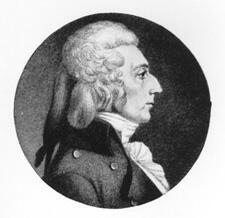
Here you will find contact information for Senator Christopher Grant Champlin, including email address, phone number, and mailing address.
| Name | Christopher Grant Champlin |
| Position | Senator |
| State | Rhode Island |
| Party | Federalist |
| Status | Former Representative |
| Term Start | May 15, 1797 |
| Term End | December 31, 1811 |
| Terms Served | 3 |
| Born | April 12, 1768 |
| Gender | Male |
| Bioguide ID | C000289 |
About Senator Christopher Grant Champlin
Christopher Grant Champlin (April 12, 1768 – March 18, 1840) was a United States Representative, Senator, and slave trader from Rhode Island. A member of the Federalist Party, he served in the United States Congress during a formative period in the early republic, representing the interests of his state in both houses of the national legislature. His congressional service, which included a tenure in the Senate from 1797 to 1811, placed him at the center of national debates in the first decades following American independence.
Champlin was born on April 12, 1768, in Rhode Island, into a family connected with the commercial and maritime life of the region. Growing up in a coastal state whose economy was deeply tied to Atlantic trade, he came of age in the aftermath of the American Revolution, when Rhode Island’s mercantile community was reestablishing its position in international commerce. This environment shaped his early exposure to business and politics and helped orient him toward a career that combined commercial pursuits with public service.
As a young man, Champlin engaged in trade and commercial activity, including participation in the transatlantic slave trade, a practice in which a number of Rhode Island merchants and shipowners were involved during the late eighteenth century. His involvement as a slave trader reflected both the economic patterns of his home state and the broader, deeply troubling entanglement of early American commerce with slavery. Through these activities he accumulated experience and connections in maritime and financial affairs that would later inform his political career.
Champlin’s entry into national politics came through his election as a United States Representative from Rhode Island. Serving in the House of Representatives as a Federalist, he aligned himself with a party that generally favored a strong national government, support for commerce and manufacturing, and closer ties with Great Britain. His time in the House allowed him to participate directly in the legislative work of the young federal government and to represent the concerns of a small but economically significant New England state.
In 1797, Champlin advanced to the United States Senate as a Senator from Rhode Island, beginning a period of service that extended until 1811. During these years he served three terms in office and contributed to the legislative process at a time when the nation confronted issues such as the development of federal financial policy, relations with European powers, and the balance between federal and state authority. As a Federalist senator, he took part in debates characteristic of the era, including those surrounding foreign policy tensions that would eventually lead toward the War of 1812, and he consistently represented the commercial and maritime interests of his constituents.
Champlin’s Senate career unfolded during a significant period in American history, as the institutions of the federal government were still being tested and defined. His participation in the democratic process in both houses of Congress placed him among the early generation of national legislators who helped shape the precedents and practices of the United States Congress. While specific details of his committee assignments and individual legislative initiatives are less fully documented, his long tenure indicates sustained political support at home and an ongoing role in the federal policymaking of his time.
After leaving the Senate in 1811, Champlin returned to private life in Rhode Island. Drawing on his earlier experience, he remained associated with the commercial and civic affairs of his community, part of a cohort of former Federalist officeholders who continued to exert influence at the state and local level even as national politics shifted toward the Democratic-Republican ascendancy. He lived to see the War of 1812, the decline of the Federalist Party, and the emergence of new political alignments in the United States.
Christopher Grant Champlin died on March 18, 1840, in Rhode Island. His life spanned from the colonial era through the early decades of the republic, and his career as a United States Representative, Senator, and slave trader reflects both the political development and the moral contradictions of the period in which he lived.