Senator Christopher Ellery
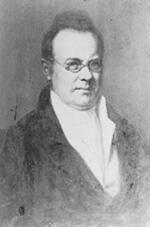
Here you will find contact information for Senator Christopher Ellery, including email address, phone number, and mailing address.
| Name | Christopher Ellery |
| Position | Senator |
| State | Rhode Island |
| Party | Republican |
| Status | Former Representative |
| Term Start | December 7, 1801 |
| Term End | March 3, 1805 |
| Terms Served | 1 |
| Born | November 1, 1768 |
| Gender | Male |
| Bioguide ID | E000114 |
About Senator Christopher Ellery
Christopher Ellery (November 1, 1768 – December 2, 1840) was a United States senator from Rhode Island and a Democratic-Republican officeholder during the early national period. Born in Newport, Rhode Island, he was a member of a prominent local family and a nephew of William Ellery, the Continental Congressman from Rhode Island and a signer of the Declaration of Independence. Through this family connection, Ellery was linked to influential mercantile and political networks in Newport. In 1784, his daughter, Betsy Ellery, married Samuel Vernon, a leading Newport merchant and slave trader, further entwining the Ellery family with the commercial elite of the city.
Ellery pursued a classical education and graduated from Yale College in 1787. Following his graduation, he studied law, was admitted to the bar, and commenced legal practice in his native Newport. His early professional life combined legal work with service in local judicial administration. From 1794 to 1798, he served as clerk of the superior court of Newport County, a position that placed him at the center of the county’s legal affairs and helped establish his reputation in Rhode Island’s legal and political circles.
In the late 1780s, Ellery also participated in the commercial life of Newport in ways that reflected the broader economic practices of the era. In 1788, he financed a slave-trading voyage aboard the brig Washington in partnership with Constant Tabor and his son-in-law, the prominent Newport slave trader Samuel Vernon. The vessel, commanded by Captain William Gardner, sailed to the Gold Coast of Africa, where Gardner purchased 200 enslaved Africans. The ship then proceeded to Martinique, where 165 enslaved people were sold; the remaining 35 are believed to have died during the Middle Passage. This episode illustrates Ellery’s direct financial involvement in the transatlantic slave trade, a significant and troubling aspect of Newport’s and the young nation’s economic history.
Ellery’s formal political career at the national level began with his election to the United States Senate. A member of the Republican Party, more commonly known at the time as the Democratic-Republican Party, he was elected to fill the vacancy caused by the resignation of Senator Ray Greene of Rhode Island. Ellery took his seat on May 16, 1801, and served one full term, remaining in office until March 3, 1805. His tenure in the Senate coincided with a formative period in American history, including the early years of Thomas Jefferson’s presidency and the consolidation of Democratic-Republican control of the federal government. As a senator from Rhode Island, Ellery participated in the legislative process, represented the interests of his constituents, and contributed to debates and decisions that shaped the early republic. He sought reelection in 1804 but was defeated by James Fenner, the son of Rhode Island Governor Arthur Fenner.
During his time in national politics, Ellery became involved in a notable political controversy that drew attention in both Rhode Island and Washington. In 1801, a letter was sent to President Thomas Jefferson from someone purporting to be Nicholas Geffroy, a Newport silversmith. The letter contained accusations against various citizens and officeholders and urged Jefferson that “A purification is necessary, & we cannot be purified unless you cleanse the Augean Stable completely.” When Jefferson replied, Geffroy doubted the authenticity of the correspondence and denied having written to the President. Ellery, a local resident familiar with the parties involved, vouched for the authenticity of the letter and reportedly impounded it for return to Jefferson. He then accused Congressman John Rutledge Jr. of South Carolina, who was residing in Newport at the time, of having forged this and another letter attributed to Geffroy.
The so‑called “Geffroy letters” were subsequently published in the Newport Rhode-Island Republican on September 18, 1802, under the headline “Rutledge’s Letters To the President of the United States.” The publication noted that, although Geffroy spoke English with some competence, it was doubted that he could write “with any degree of correctness, a single sentence of the language,” thereby casting further suspicion on the letters’ authorship. The controversy led to a flurry of accusations, affidavits, and public recriminations. Rutledge, vehemently denying any wrongdoing, challenged Ellery to a duel, which Ellery declined. In January 1803, Rutledge physically assaulted Ellery, publicly caning him and pulling him by the nose and ears. The scandal damaged Rutledge’s reputation, and although he continued to insist on his innocence, he chose not to seek reelection to Congress in 1803 amid the negative publicity.
After leaving the Senate in 1805, Ellery continued to hold important federal appointments. In 1806, President Thomas Jefferson appointed him United States commissioner of loans at Providence, a position that involved oversight of federal financial obligations and public debt instruments in Rhode Island. Ellery later returned to Newport to assume another significant federal post. In 1820, he was appointed collector of customs at Newport, succeeding his uncle William Ellery in that office. As collector, he oversaw the administration of customs laws, the collection of duties, and the regulation of maritime commerce at one of New England’s historic ports. He held the customs collectorship from 1820 to 1834, a lengthy tenure that underscored his continued prominence in Rhode Island’s public life and the trust placed in him by federal authorities.
Christopher Ellery spent his later years in the vicinity of his birthplace. He died in Middletown, Rhode Island, on December 2, 1840. He was interred in the Common Burying Ground and Island Cemetery in Newport, among many members of his extended family and other notable figures from the city’s colonial and early national history.