Representative Christopher Columbus Harris
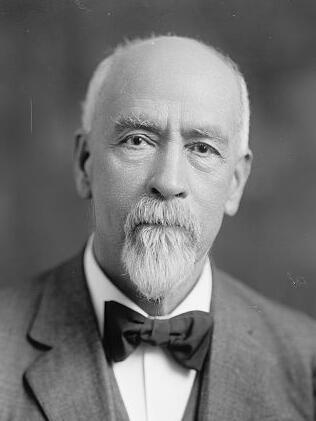
Here you will find contact information for Representative Christopher Columbus Harris, including email address, phone number, and mailing address.
| Name | Christopher Columbus Harris |
| Position | Representative |
| State | Alabama |
| District | 8 |
| Party | Democratic |
| Status | Former Representative |
| Term Start | April 7, 1913 |
| Term End | March 3, 1915 |
| Terms Served | 1 |
| Born | January 28, 1842 |
| Gender | Male |
| Bioguide ID | H000235 |
About Representative Christopher Columbus Harris
Christopher Columbus Harris (January 28, 1842 – December 28, 1935) was an American lawyer, banker, and Confederate Civil War veteran who served as a Democratic Representative from Alabama in the United States Congress. He represented Alabama’s 8th congressional district in the United States House of Representatives from 1913 to 1915, a single term that coincided with a significant period in American political and social history. During his time in Congress, Harris participated in the legislative process and represented the interests of his constituents as a member of the Democratic Party.
Harris was born on January 28, 1842, in Alabama, where he spent his early years in the antebellum South. Growing up in a region deeply shaped by agriculture and the institution of slavery, he came of age in the years immediately preceding the American Civil War. His early life unfolded against the backdrop of mounting sectional tensions between North and South, which would soon culminate in armed conflict and profoundly influence his generation.
With the outbreak of the Civil War in 1861, Harris entered military service in the Confederate States Army. As a Confederate Civil War veteran, he was part of the vast mobilization of Southern men who fought in defense of the Confederacy. His wartime experience placed him among those who witnessed firsthand the destruction and upheaval that accompanied the conflict, as well as the far-reaching consequences of defeat and Reconstruction that followed for the Southern states.
After the war, Harris pursued a professional career in law, establishing himself as an attorney in Alabama. His legal work provided him with a grounding in the statutes and institutions of both state and federal government during a period when the South was undergoing political, economic, and social reorganization. In addition to his legal practice, he became involved in banking, reflecting the broader postwar efforts in the region to rebuild and modernize its economy. His dual roles as lawyer and banker positioned him as a figure of local influence and stability in the decades after Reconstruction.
Harris’s professional standing and Democratic Party affiliation eventually led him into elective office. He was elected as a Democrat to the United States House of Representatives, where he served from 1913 to 1915, representing Alabama’s 8th congressional district. His term overlapped with the early years of the administration of President Woodrow Wilson, a time marked by progressive reforms, debates over tariffs and banking, and the nation’s gradual movement toward a more active role in world affairs. Within this context, Harris contributed to the legislative process in the House of Representatives, participating in deliberations and votes that affected both his district and the country at large.
Although his congressional service lasted only one term, Harris’s tenure reflected the continued influence of former Confederates and their descendants in Southern political life well into the twentieth century. As a representative, he was part of the Democratic dominance in the South during the era of Jim Crow, when questions of states’ rights, economic development, and federal authority were central to regional politics. His work in Congress formed the capstone of a long public and professional life that bridged the prewar, Civil War, Reconstruction, and early modern periods of American history.
Christopher Columbus Harris lived to an advanced age, witnessing the transformation of the United States from a fractured, postwar nation into an emerging global power. He died on December 28, 1935, closing a life that spanned from the early 1840s through the Great Depression. His career as a lawyer, banker, Confederate veteran, and member of the United States House of Representatives from Alabama’s 8th congressional district left a record of service that reflected both the continuities and the profound changes in Southern and national life over nearly a century.