Representative Ciro D. Rodriguez
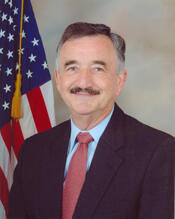
Here you will find contact information for Representative Ciro D. Rodriguez, including email address, phone number, and mailing address.
| Name | Ciro D. Rodriguez |
| Position | Representative |
| State | Texas |
| District | 23 |
| Party | Democratic |
| Status | Former Representative |
| Term Start | January 7, 1997 |
| Term End | January 3, 2011 |
| Terms Served | 6 |
| Born | December 9, 1946 |
| Gender | Male |
| Bioguide ID | R000568 |
About Representative Ciro D. Rodriguez
Ciro Davis Rodriguez (born December 9, 1946) is an American politician and social worker who served as a Representative from Texas in the United States Congress from 1997 to 2011. A member of the Democratic Party, he represented Texas’s 28th congressional district from April 12, 1997, to January 3, 2005, and later the 23rd congressional district from January 3, 2007, to January 3, 2011. Over six terms in the U.S. House of Representatives, Rodriguez participated in the legislative process during a significant period in American history, representing the interests of his constituents and contributing to national policy debates.
Rodriguez was born in Piedras Negras, Coahuila, Mexico, and moved at an early age with his family to San Antonio, Texas, where he was raised and educated. His youth was marked by hardship; his mother died suddenly when he was young, and he left school and worked at a gas station for a year before deciding to resume his education. Determined to rejoin his peers, he attended two summer school sessions, caught up on his coursework, and graduated with his entering class from Harlandale High School in San Antonio. He briefly attended San Antonio College and then enrolled at St. Mary’s University, where he earned a Bachelor of Arts degree in political science. He went on to receive a Master of Social Work degree from Our Lady of the Lake University in San Antonio, training for a career that combined public service, social advocacy, and education.
Before entering state and national elective office, Rodriguez built a career in education and social services closely tied to his community. From 1975 to 1987, he served on the board of the Harlandale Independent School District, where he worked on local education policy and governance. During this period he also worked as an educational consultant for the Intercultural Development Research Association and served as a caseworker with the Texas Department of Mental Health and Mental Retardation, gaining direct experience with mental health, disability, and community support programs. From 1987 to 1996, he taught at Our Lady of the Lake University’s Worden School of Social Service, the oldest school of social work in Texas, further grounding his public life in the practice and teaching of social work.
Rodriguez’s formal political career began in the Texas House of Representatives, where he served from 1987 to 1997. In the state legislature he chaired the important Local and Consent Calendar Committee, served on the Public Health and Higher Education Committees, and was vice chairman of the Legislative Study Group, a research-oriented caucus. He authored legislation to allow high school students to earn college credit while still in high school and helped draft the “Top Ten Percent” law, which guaranteed automatic admission to a Texas four-year public university for students graduating in the top ten percent of their high school class. These measures reflected his longstanding focus on educational opportunity and access for underrepresented communities.
In January 1997, following the death of Representative Frank Tejeda at the start of his third term, a special election was called to fill the remainder of Tejeda’s term in Texas’s 28th congressional district. In the April 1997 special election, Rodriguez won decisively, defeating his nearest rival, Juan F. Solis III, with 66.7 percent of the vote. He was sworn into the U.S. House of Representatives on April 12, 1997. During his tenure representing the 28th district, which he held until January 3, 2005, Rodriguez served on the House Armed Services Committee, the Veterans’ Affairs Committee, and the Resources Committee. On the Veterans’ Affairs Committee he became the ranking member of the Subcommittee on Health, and he emerged as a leading advocate for veterans’ health care. He was the lead sponsor of the Hispanic Health Improvement Act and chaired the Congressional Hispanic Caucus from 2003 to 2004 after four years as chairman of its Health Care Task Force. He was also involved in military base creation and redevelopment, drafting legislation that created Brooks City-Base in San Antonio and promoting the transformation of the former Kelly Air Force Base into KellyUSA, a major maintenance and logistics center.
Rodriguez’s congressional career was significantly affected by the 2003 Texas redistricting. The Republican-controlled legislature redrew district lines in a way that shifted most of heavily Democratic Laredo—previously a base of the 23rd district—into the 28th district, which became the base of former Texas Secretary of State Henry Cuellar, a more conservative Democrat who had nearly unseated Republican Henry Bonilla in the 23rd district in 2002. The redistricting packed large numbers of Democrats into the 28th district, and in the March 2004 Democratic primary Rodriguez lost renomination to Cuellar by 58 votes. He challenged the result in court, but the Texas Fourth Court of Appeals upheld Cuellar’s victory. Rodriguez attempted to regain his seat in 2006, but in the March 7, 2006 Democratic primary he again lost to Cuellar, receiving 40 percent of the vote to Cuellar’s 53 percent. After leaving Congress in January 2005, Rodriguez entered the private sector, joining with his former chief of staff, Jeff Mendelsohn, to create Rio Strategy Group LLC, a boutique government relations firm assisting clients at the local, state, and national levels.
A Supreme Court decision in June 2006, however, reopened Rodriguez’s path to Congress. The Court held that the Texas Legislature had violated the Voting Rights Act when it removed most of Laredo from the 23rd district and replaced it with heavily Republican San Antonio suburbs. A three-judge federal panel subsequently redrew the district lines, and the new 23rd district once again included Rodriguez’s home and much of his old south San Antonio base, an area that had been part of the 23rd from its creation in 1967 until 1993. On August 10, 2006, Rodriguez announced that he would run against Republican incumbent Henry Bonilla in the 23rd district. In the November 7, 2006 all-candidate “jungle” primary, Bonilla led with 48.1 percent of the vote, while Rodriguez finished second with 20.3 percent, forcing a runoff. In the December runoff election, Rodriguez defeated Bonilla by 54 percent to 46 percent, an upset that made the 23rd district the 30th Democratic pickup in the 2006 House elections and the second Democratic gain from Texas, after Nick Lampson’s victory. It was only the second time since 1988 that a Republican congressional incumbent in Texas had lost to a Democratic challenger.
From January 3, 2007, to January 3, 2011, Rodriguez represented Texas’s 23rd congressional district, a vast, predominantly rural and border district stretching roughly 500 miles (800 kilometers) from El Paso in the west to San Antonio in the east. During this period he served on the House Committee on Appropriations, sitting on the Subcommittee on Homeland Security, the Subcommittee on the Legislative Branch, and the Subcommittee on Transportation, Housing and Urban Development, and Related Agencies. He also continued his work on the Committee on Veterans’ Affairs, serving on the Subcommittee on Health and the Subcommittee on Disability Assistance and Memorial Affairs. Within the Congressional Hispanic Caucus, he chaired the Taskforce on Agriculture and Rural Communities. In Congress from 2006 to 2011, Rodriguez was known as a champion for veterans, farmers, law enforcement, and border security in the 23rd district. He helped secure funding for the University of Texas at San Antonio to develop a homeland security program, worked to ensure that veterans received the benefits they had earned, supported efforts to secure the U.S.–Mexico border from escalating violence, and obtained federal resources for the agricultural community, including farmers and research programs at Texas A&M University and Sul Ross State University.
Rodriguez’s voting record reflected a mix of fiscal skepticism toward certain bailouts and support for broader economic and social legislation. He voted against both President George W. Bush’s and President Barack Obama’s Troubled Asset Relief Program (TARP) bank bailouts, and he opposed the General Motors bailout. At the same time, he supported the economic stimulus plan, major health care reform legislation, and increased financial regulation of Wall Street. He helped pass what was described as the largest increase in veterans’ health care funding to that time and supported the Wounded Warrior Act, aimed at reducing bureaucratic obstacles for veterans seeking care and benefits. He also focused on national security issues, including cybersecurity, in the context of his service on the Appropriations Subcommittee on Homeland Security. In July 2011, he joined El Paso County officials to celebrate the groundbreaking of the Tornillo Port of Entry; as a member of the Appropriations Committee in the 2009–2010 legislative session, he had secured $97 million in federal funding to build the port. During the same period he obtained funds for new veterans’ clinics in Del Rio, south San Antonio, and Uvalde.
In the 2008 election cycle, Rodriguez was reelected to the 23rd district, defeating Republican nominee Bexar County Commissioner Lyle Larson and Libertarian candidate Lani Connolly. In 2010 he faced a more competitive race, challenged by Republican nominee Quico Canseco, Libertarian nominee Martin Nitschke, Green Party nominee Ed Scharf, and independent candidate Craig T. Stephens. The Republican National Committee targeted the district and invested heavily in support of Canseco in an effort to reclaim the seat. In the November 2010 general election, Rodriguez was defeated, receiving 44 percent of the vote to Canseco’s 49 percent. In early summer 2011, Rodriguez announced that he would seek election to his former congressional seat in a rematch against Canseco. On November 29, 2011, however, he declared that he would instead run in the newly drawn 35th district, encompassing eastern San Antonio and portions of Atascosa, Comal, and Hays counties. After court-ordered changes to the redistricting map, he returned to the 23rd district race but lost the Democratic primary runoff to State Representative Pete Gallego.
Following his congressional service, Rodriguez continued his involvement in public affairs and local government. In addition to his earlier work with Rio Strategy Group LLC, he later worked with Lone Star Consulting, LLC, another government relations firm founded by one of his former Capitol Hill staffers, Stephen Hofmann, focusing on advocacy for Texas cities and counties at various levels of government. Returning to elective office at the local level, Rodriguez served as a justice of the peace for Bexar County from 2015 to 2021. Throughout his career in education, state government, Congress, and local office, he has remained closely associated with San Antonio and South Texas, maintaining a focus on education, health care, veterans’ issues, and opportunities for the communities he has represented.