Senator Claiborne Pell
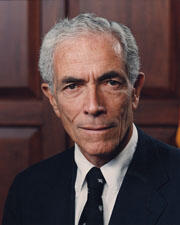
Here you will find contact information for Senator Claiborne Pell, including email address, phone number, and mailing address.
| Name | Claiborne Pell |
| Position | Senator |
| State | Rhode Island |
| Party | Democratic |
| Status | Former Representative |
| Term Start | January 3, 1961 |
| Term End | January 3, 1997 |
| Terms Served | 18 |
| Born | November 22, 1918 |
| Gender | Male |
| Bioguide ID | P000193 |
About Senator Claiborne Pell
Claiborne de Borda Pell (November 22, 1918 – January 1, 2009) was an American politician, diplomat, writer, and longtime United States Senator from Rhode Island. A member of the Democratic Party, he represented Rhode Island in the U.S. Senate for six consecutive terms from January 3, 1961, to January 3, 1997, making him the longest-serving U.S. Senator in the state’s history. He was best known nationally as the sponsor of the 1972 legislation that reformed the Basic Educational Opportunity Grant program, which provides federal financial aid to American college students; in 1980, these grants were renamed “Pell Grants” in his honor, recognizing his central role in modern American higher education policy.
Pell was born on November 22, 1918, in New York City, the son of Matilda Bigelow Pell and Herbert Claiborne Pell Jr., a diplomat and U.S. Representative from New York who later served as U.S. Minister to Portugal and Hungary. He came from a prominent and historically significant family. His relatives included John Francis Hamtramck Claiborne, George Mifflin Dallas, and Nathaniel Herbert Claiborne, and he was a descendant of U.S. Senator and territorial governor William C. C. Claiborne. He was also a direct descendant of the English mathematician John Pell, and, according to the Congressional Record, a direct descendant of Wampage I, a Siwanoy chieftain. His parents divorced in 1927, and his mother later married Hugo W. Koehler of St. Louis, a U.S. Navy commander and intelligence operative who served in Russia during its civil war and later as naval attaché to Poland. Widely rumored to be the illegitimate son of Rudolf, Crown Prince of Austria, and reputed to be the “richest officer in the Navy” in the 1920s, Koehler exerted a strong influence on Pell, who remained close to his stepfather until Koehler’s death when Pell was 22. In later years, Pell made a concerted but only partly successful effort to investigate the many rumors surrounding Koehler’s past.
Pell was educated at St. George’s School in Middletown, Rhode Island, establishing an early and enduring connection with the state he would later represent in the Senate. He went on to Princeton University, where he studied history and graduated with a Bachelor of Arts degree in 1940. His senior thesis, titled “Macaulay and the Slavery Issue,” reflected his early interest in political and moral questions. At Princeton he was a member of the Colonial Club and the American Whig-Cliosophic Society, and he played on the rugby team. After completing his undergraduate studies, Pell undertook a variety of experiences that broadened his understanding of the world, including working as an oil field roustabout in Oklahoma.
On the eve of World War II, Pell entered public service in a quasi-diplomatic capacity by working as private secretary to his father, who was then the United States Ambassador to Portugal and later to Hungary. At the start of the war he was in Hungary with his father, and he undertook humanitarian work, including driving trucks carrying emergency supplies to prisoners of war in Germany. In the course of this work he was detained several times by Nazi authorities. On August 12, 1941, four months before the Japanese attack on Pearl Harbor, Pell enlisted in the United States Coast Guard as a seaman second class. Initially serving as a ship’s cook, he was promoted to seaman first class on October 31, 1941, and commissioned an ensign on December 17, 1941. During World War II he served on Coast Guard vessels that escorted North Atlantic convoys and participated in amphibious operations during the Allied invasion of Sicily and the invasion of the Italian mainland. Fluent in Italian, he was assigned as a civil affairs officer in Sicily, where he became seriously ill after drinking unpasteurized milk and was sent home to recuperate in the summer of 1944. He later returned to active duty and was promoted to lieutenant (junior grade) on October 1, 1942, and to lieutenant in May 1943. Pell was discharged from active duty on September 5, 1945, but remained in the U.S. Coast Guard Reserve, ultimately attaining the rank of captain before retiring from the Reserve in 1978.
In December 1944, during the latter part of the war, Pell married Nuala O’Donnell, daughter of Charles Oliver O’Donnell and Josephine Hartford, a member of the Hartford family associated with the A&P grocery fortune. The couple had four children: Herbert Claiborne Pell III (September 11, 1945 – September 24, 1999), Christopher Thomas Hartford Pell, Nuala Dallas Pell, and Julia Lorillard Wampage Pell (May 9, 1953 – April 13, 2006). Herbert and Julia predeceased their parents. Pell’s grandson, Clay Pell, son of Herbert, later entered Rhode Island politics and was an unsuccessful contender in the 2014 Democratic primary for Governor of Rhode Island.
Following World War II, Pell embarked on a diplomatic and international affairs career that laid the foundation for his later work in the Senate. From 1945 to 1952 he served as a Foreign Service Officer in the United States Department of State, with postings in Czechoslovakia, Italy, and Washington, D.C. He was fluent in French, Italian, and Portuguese, skills that enhanced his effectiveness in these assignments. In 1945 he participated in the United Nations Conference on International Organization in San Francisco, which drafted the United Nations Charter, giving him early exposure to multilateral diplomacy and the emerging postwar international order. He pursued further academic training in international relations, completing graduate studies at Columbia University and receiving a Master of Arts degree in 1946. In the 1950s, Pell moved into international business and humanitarian work. In 1954 he was appointed vice president and a member of the board of directors of the International Fiscal Corporation, and he also served as a vice president and director of the North American Newspaper Alliance. He was a director of the Franklin D. Roosevelt Foundation, the Fort Ticonderoga Association, and the General Rochambeau Commission of Rhode Island, and he worked as a fundraiser and consultant for the Democratic National Committee. As vice president of the International Rescue Committee, he was stationed in Austria and played a significant role in assisting refugees from the Hungarian Revolution of 1956 to leave the country and resettle elsewhere. During his diplomatic and international activities in the 1940s and 1950s, Pell was arrested and jailed at least six times, including detentions by both fascist and communist governments, reflecting both the risks of his work and his willingness to operate in politically volatile environments.
Pell entered electoral politics in 1960, running for the U.S. Senate seat being vacated by retiring Senator Theodore Francis Green of Rhode Island. In the Democratic primary he defeated two prominent former governors, Dennis J. Roberts and J. Howard McGrath, the latter also a former U.S. Senator and U.S. Attorney General. In the general election he prevailed over Raoul Archambault, former chairman of the Rhode Island Republican Party. Despite being described by John F. Kennedy as “the least electable man in America” because of his unconventional habits and demeanor, Pell proved to be a durable and effective campaigner. He was reelected five times, defeating Ruth M. Briggs in 1966, John Chafee in 1972, James G. Reynolds in 1978, Barbara Leonard in 1984, and Claudine Schneider in 1990. When accused of being a carpetbagger during his first campaign, he responded by publishing advertisements featuring a photograph of his grand-uncle Duncan Pell, who had served as lieutenant governor of Rhode Island in the 1860s, underscoring his family’s long association with the state. When Briggs labeled him a “creampuff” in 1966, he turned the insult to his advantage by securing an endorsement from a local bakers’ union. He also made effective use of his foreign experience and language skills, impressing immigrant audiences by campaigning in their native languages on radio and in person.
During his thirty-six years in the Senate, Pell participated in the legislative process during a period of profound change in American society and foreign policy, and he became one of the chamber’s leading voices on education, the arts, foreign relations, and the oceans. He consistently supported major civil rights and social welfare legislation. Pell voted in favor of the 24th Amendment to the U.S. Constitution, which abolished the poll tax in federal elections, the Civil Rights Act of 1964, the Voting Rights Act of 1965, the Medicare program, the Civil Rights Act of 1968, and the confirmation of Thurgood Marshall as the first African American Justice of the U.S. Supreme Court. Early in his Senate career, he was a principal legislative sponsor of the National Sea Grant College Program in 1965 and 1966, which supported marine research and the development of maritime industries and contributed to the growth of oceanography and marine sciences in the mid-twentieth century. He was largely responsible for the creation of Basic Educational Opportunity Grants in 1973, later renamed Pell Grants in 1980, which provided federal financial aid to U.S. college students and initially included provisions for grants to prisoners, although that element was later removed by Congress. In 1974 he co-sponsored, with Senator James Buckley of New York, the Family Educational Rights and Privacy Act (FERPA), which established important protections for the privacy of student education records. Pell was also the main sponsor of the legislation that created the National Endowment for the Arts and the National Endowment for the Humanities, reflecting his strong commitment to culture and scholarship. He advocated for mass transportation initiatives and supported domestic legislation to facilitate U.S. adherence to and implementation of the United Nations Convention on the Law of the Sea. In the early 1990s he was among twenty-five Senators to co-sponsor the Health Security Act, a bipartisan universal health care proposal that would have created a federal health insurance program to provide coverage to all Americans. In 1996, his last full year in the Senate, he voted against the Defense of Marriage Act, which barred federal recognition of same-sex marriages, underscoring his willingness to take positions that were, at the time, politically controversial.
Pell’s influence on foreign policy was particularly pronounced during his tenure as chairman of the Senate Foreign Relations Committee, a position he held from 1987 to 1995. In that role he helped guide Senate consideration of major international issues at the end of the Cold War, including arms control, relations with the Soviet Union and its successor states, and U.S. involvement in conflicts and peacekeeping operations around the world. Throughout his Senate service, he was known for his patrician background combined with a personal style that was modest and often eccentric. He favored threadbare suits, relied on public transportation, and purchased inexpensive used automobiles despite his personal wealth. He wore his father’s belt as a sentimental memento, wrapping it twice around his waist because Herbert Pell had been considerably stouter than his rail-thin son, and he was known to jog in a tweed suit jacket. Pell also had a well-publicized interest in the paranormal, which drew criticism from skeptics such as author Martin Gardner, who argued that Pell combined an interest in science with what Gardner considered extreme gullibility toward psychics. Stories about his eccentricities became part of his public persona; one oft-repeated anecdote recounted that at the conclusion of a meeting with Cuban leader Fidel Castro, Pell took Castro’s cigar, believing it to be a personal gift. In 1972, former lobbyist Robert N. Winter-Berger alleged in his book “The Washington Pay-Off” that Pell had been arrested during a 1964 raid on a Greenwich Village homosexual bar. Pell denied the allegation, and no police records, witness statements, or other corroborating evidence ever emerged. Although he was advised to sue for defamation, he declined, reasoning that litigation would only draw more attention to the unsubstantiated claim.
Pell declined to seek reelection in 1996 and retired from the Senate on January 3, 1997, after thirty-six continuous years of service. He was succeeded by Democrat Jack Reed. After leaving public office, Pell resided in Newport, Rhode Island, and remained active in community and academic life. He was a communicant of St. Columba’s Chapel in Middletown and occasionally attended public events held by organizations with which he had long been associated. He served as a distinguished visiting professor at Salve Regina University in Newport, sharing his experience in public service and international affairs with students. In his later years he was diagnosed with Parkinson’s disease, which gradually limited his public appearances.
Claiborne Pell died at his home in Newport on January 1, 2009, at the age of 90. His funeral was held at Trinity Church in Newport and was attended by family, friends, and numerous national political figures. Eulogies were delivered by former President Bill Clinton, Senators Edward M. Kennedy and Jack Reed, and then Vice President–elect Joseph R. Biden Jr., reflecting the high regard in which he was held across the political spectrum. Pell was buried at St. Columba’s (Episcopal) Chapel, also known as Berkeley Memorial Chapel, in Middletown, Rhode Island, near the graves of his son Herbert and his daughter Julia. In its obituary, The New York Times described him as “the most formidable politician in Rhode Island history,” a characterization that reflected both his electoral durability and his lasting impact on American education, culture, and foreign policy.