Representative Clair Armstrong Callan
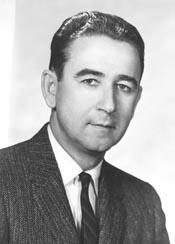
Here you will find contact information for Representative Clair Armstrong Callan, including email address, phone number, and mailing address.
| Name | Clair Armstrong Callan |
| Position | Representative |
| State | Nebraska |
| District | 1 |
| Party | Democratic |
| Status | Former Representative |
| Term Start | January 4, 1965 |
| Term End | January 3, 1967 |
| Terms Served | 1 |
| Born | March 29, 1920 |
| Gender | Male |
| Bioguide ID | C000054 |
About Representative Clair Armstrong Callan
Clair Armstrong Callan (March 29, 1920 – May 28, 2005) was an American politician from Nebraska who served as a Democratic Representative in the United States House of Representatives for Nebraska’s 1st congressional district for a single term from January 3, 1965, to January 3, 1967. His service in Congress occurred during a significant period in American history, and he contributed to the legislative process as a member of the House of Representatives, participating in the democratic process and representing the interests of his constituents.
Callan was born in Odell, Gage County, Nebraska, on March 29, 1920. He was raised in a family with a tradition of public service; his father, John Callan, served in Nebraska’s first state legislative session. Clair Callan attended the local public schools and graduated from Odell High School in 1938. He went on to attend Nebraska State Teachers College, now Peru State College, from which he graduated in 1942. His early life in rural Nebraska and his family’s engagement in public affairs helped shape his later commitment to civic involvement and agricultural and rural issues.
During World War II, Callan served in the United States Navy, attaining the rank of lieutenant. He was assigned to a destroyer in the Pacific Theater, where he participated in naval operations against Japanese forces. His wartime service provided him with leadership experience and a broader perspective on national and international affairs. Following his discharge from the Navy, he returned to his hometown of Odell, where he joined and helped operate his family’s business, Callan Hardware and Implement, a hardware and farm implement enterprise that served the surrounding agricultural community. He also worked as a farmer, further deepening his ties to Nebraska’s rural economy.
In addition to his business and farming activities, Callan became active in local and county government and community organizations. He served on the Odell Village Board and the Odell School Board, reflecting his interest in local governance and education. At the county level, he was a member of the Gage County School Reorganization Board, the Gage County Fair Board, and the Gage County Extension Board, where he worked on issues related to agricultural development, education, and community improvement. He also held statewide responsibilities, serving as chairman of the Governor’s Committee on State Government Reorganization Board and as chairman of the Nebraska Power Review Board, positions that placed him at the center of efforts to modernize state government and oversee public power and utility regulation.
Callan first sought election to Congress in 1962, running as the Democratic candidate for Nebraska’s 1st congressional district. He was defeated in that initial effort by the incumbent Republican, Ralph Beermann. Undeterred, he ran again in 1964 and was narrowly elected to the Eighty-ninth Congress as a Democrat, representing the district from January 3, 1965, to January 3, 1967. His tenure coincided with the administration of President Lyndon B. Johnson and the height of the Great Society legislative program. As a member of the House of Representatives, Callan participated in major legislative debates and helped develop legislation that led to the creation of Medicare and Medicaid, landmark programs that expanded health care coverage for the elderly and low-income Americans. He also supported and helped advance the Voting Rights Act of 1965, a pivotal civil rights measure aimed at eliminating racial discrimination in voting. Through these efforts, he contributed to significant national reforms in health care and civil rights.
In the 1966 election, Callan sought reelection to the Ninetieth Congress but was defeated by Republican challenger Robert Vernon Denney. He attempted to regain the seat in a 1968 rematch against Denney but was again unsuccessful. Nevertheless, he remained engaged in public service and federal policy. From 1967 to 1968, Callan served as Deputy Administrator of the Rural Electrification Administration, a federal agency responsible for extending electric and telephone service to rural areas. In this role, he drew on his background in rural Nebraska and his experience with public power issues to help oversee programs that improved infrastructure and quality of life in agricultural communities across the country.
Callan continued his career in the private sector after his federal service. He became president of Allied Industries International, Inc., and Agri-Tech, based in Nashville, Tennessee, positions that reflected his ongoing involvement in agriculture-related business and international and domestic industrial development. In 1970, when Robert Denney chose not to seek reelection to Congress, Callan again sought to return to the House. After failing to secure the Democratic nomination, he ran as an independent candidate in a three-way race. Although he did not win the seat, he received approximately 26 percent of the vote and finished ahead of the Democratic nominee, demonstrating his continued personal following and political influence within the district.
In his later years, Callan remained associated with Nebraska, maintaining his ties to the communities and agricultural interests that had shaped his life and career. He died on May 28, 2005, in Fairbury, Nebraska. Throughout his life, from his service in World War II and his work in local and state governance to his term in Congress and his leadership in rural electrification and agricultural industry, Clair Armstrong Callan exemplified a sustained commitment to public service and to the development of rural America.