Representative Clara Gooding McMillan
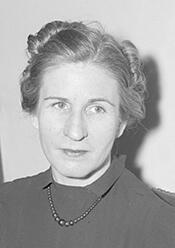
Here you will find contact information for Representative Clara Gooding McMillan, including email address, phone number, and mailing address.
| Name | Clara Gooding McMillan |
| Position | Representative |
| State | South Carolina |
| District | 1 |
| Party | Democratic |
| Status | Former Representative |
| Term Start | January 3, 1939 |
| Term End | January 3, 1941 |
| Terms Served | 1 |
| Born | August 17, 1894 |
| Gender | Female |
| Bioguide ID | M000565 |
About Representative Clara Gooding McMillan
Clara Gooding McMillan (née Gooding; August 17, 1894 – November 8, 1976) was a Democratic U.S. Representative from South Carolina who served one term in the United States Congress from 1939 to 1941. She was elected in a special election to succeed her late husband, Representative Thomas S. McMillan, and became one of the early women to serve in the U.S. House of Representatives. During her brief tenure, she contributed to the legislative process at a time of significant national and international change on the eve of American involvement in World War II.
McMillan was born on August 17, 1894, in Brunson, Hampton County, South Carolina. She was raised in the Lowcountry and attended local public schools, receiving a foundational education in her home state. Seeking further schooling at a time when higher education opportunities for women in the South were still limited, she enrolled at Confederate Home College in Charleston, South Carolina, an institution that offered academic and cultural training for young women. She later continued her studies at Flora MacDonald College in Red Springs, North Carolina, a Presbyterian women’s college known for its emphasis on liberal arts education and leadership development.
Through her marriage to Thomas S. McMillan, a prominent South Carolina Democrat and long-serving member of the U.S. House of Representatives, Clara McMillan became closely acquainted with political life and the workings of Congress. Thomas McMillan represented South Carolina’s 1st Congressional District, and Clara’s experience as a congressional spouse provided her with insight into constituent service, legislative priorities, and the political concerns of her region. This background would later inform her own approach to public service when she entered Congress following her husband’s death.
Clara Gooding McMillan’s congressional career began with a special election held on November 7, 1939, to fill the vacancy caused by the death of her husband. Running as a Democrat, she was elected to the Seventy-sixth Congress and took office the same day, serving from November 7, 1939, until January 3, 1941. As a member of the House of Representatives, she represented the interests of her South Carolina constituents during a pivotal period marked by the final years of the Great Depression and the mounting global tensions that would lead to World War II. Although records of her specific committee assignments and sponsored legislation are limited, she participated fully in the democratic process and contributed to the deliberations of the House. She chose not to be a candidate for reelection in 1940 to the Seventy-seventh Congress, thereby concluding her formal legislative service after one term.
After leaving Congress, McMillan continued her commitment to public service through a series of federal appointments during and after World War II. She served with the National Youth Administration, a New Deal agency focused on providing work and education for young Americans, reflecting her interest in youth and social welfare issues. She then worked in the Office of Government Reports and the Office of War Information in 1941, agencies that played key roles in disseminating information and coordinating public communication during the early years of U.S. involvement in the war. These positions placed her at the intersection of government policy, public outreach, and wartime mobilization.
On January 1, 1946, McMillan was appointed information liaison officer for the Department of State in Washington, D.C. In this capacity, she served for more than a decade, until July 31, 1957. Her work at the State Department spanned the early Cold War years, a period in which public diplomacy and the communication of U.S. foreign policy were increasingly important. As an information liaison officer, she helped facilitate the flow of information between the Department and other branches of government, the press, and the public, drawing on her congressional experience and prior service in federal information agencies.
Following her retirement from federal service, Clara McMillan returned to South Carolina. She resided in Barnwell, South Carolina, maintaining ties to the communities and region she had long represented and served. She lived there until her death on November 8, 1976. McMillan was interred in Magnolia Cemetery in Charleston, South Carolina, a historic burial ground that reflects her enduring connection to the city and the state where she was born, educated, and politically active. Her career, spanning elective office and multiple federal agencies, marked her as a significant early female participant in national political life and public administration.