Senator Clarence Norman Brunsdale
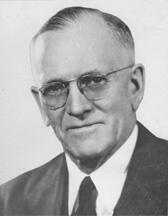
Here you will find contact information for Senator Clarence Norman Brunsdale, including email address, phone number, and mailing address.
| Name | Clarence Norman Brunsdale |
| Position | Senator |
| State | North Dakota |
| Party | Republican |
| Status | Former Representative |
| Term Start | November 19, 1959 |
| Term End | January 3, 1961 |
| Terms Served | 1 |
| Born | July 9, 1891 |
| Gender | Male |
| Bioguide ID | B000982 |
About Senator Clarence Norman Brunsdale
Clarence Norman Brunsdale (July 9, 1891 – January 27, 1978) was an American politician who served as the 24th governor of North Dakota and a United States senator from the state of North Dakota. A member of the Republican Party, he represented North Dakota in the United States Senate from 1959 to 1961, contributing to the legislative process during one term in office. His service in Congress occurred during a significant period in American history, and as a member of the Senate he participated in the democratic process and represented the interests of his constituents.
Brunsdale was born in Sherbrooke, Steele County, North Dakota, to Knute H. Brunsdale (1855–1899) and Anna Margaret (Nordgaard) Brunsdale (1860–1927), both of whom were of Norwegian immigrant heritage. He was raised in a rural environment shaped by the farming communities of Traill and Steele counties, and he attended local public schools before enrolling at Bruflat Academy in Portland, North Dakota, a Lutheran secondary school serving the region’s Norwegian-American population. In 1913 he graduated from Luther College in Decorah, Iowa, an institution affiliated with the Lutheran church that drew many students of Scandinavian descent from the Upper Midwest.
After completing his education, Brunsdale returned to Portland, North Dakota, where he taught at Bruflat Academy and worked in the family farm operations in Traill and Steele counties. This combination of teaching and agricultural work grounded him in the concerns of rural North Dakotans and helped shape his later political priorities, particularly in the areas of agriculture, infrastructure, and education. Throughout his life he remained closely tied to his Lutheran faith and to the Norwegian-American community in which he had been raised.
Brunsdale entered public life as a member of the North Dakota State Senate, in which he served from 1927 to 1934 and again from 1941 to 1951. During these years he became an influential figure in state Republican politics and developed a reputation as a legislator attentive to agricultural and rural issues. He also became active in national party affairs, serving as an alternate delegate from North Dakota to the Republican National Convention in 1940 and as a member of the Republican National Committee from North Dakota from 1948 to 1952. These roles increased his visibility within the party and helped pave the way for higher office.
In 1951 Brunsdale became the 24th governor of North Dakota, a position he held until 1957. As governor, he was an avid supporter of water development projects that he believed were essential to the state’s long-term economic and agricultural stability. During his administration, the Garrison Dam on the Missouri River was completed, and the state legislature established the Garrison Diversion Conservancy District to manage and develop irrigation and water resources. The early 1950s also saw the establishment of the North Dakota Highway Department and the passage of major highway legislation, reflecting his commitment to modernizing the state’s transportation infrastructure. Education, agriculture, and mental health issues were additional priorities of his administration, and he supported measures aimed at improving public schools, assisting farmers, and expanding services for individuals with mental health needs.
Brunsdale’s federal legislative career began when he was appointed to the United States Senate from North Dakota on November 19, 1959, following the death of Senator William Langer. Serving during a pivotal era in national politics, he took part in the work of the Senate at the close of the Eisenhower administration. As a senator, he voted in favor of the Civil Rights Act of 1960, a measure designed to strengthen federal enforcement of voting rights and address continuing barriers to African American suffrage. Although his appointed term extended into 1961, he chose not to be a candidate in the special election to fill the vacancy, and Democrat Quentin Burdick was narrowly elected to the seat in 1960. Brunsdale left the Senate on August 7, 1960, concluding his brief but notable period of congressional service.
In his personal life, Brunsdale married Carrie Lajord (1890–1982) on August 30, 1925. The couple had two daughters, Margaret Marie (Larson) and Helen Lucille (Williams). A practicing Lutheran, he remained active in his church and community throughout his career and retirement. Clarence Norman Brunsdale died in Mayville, Traill County, North Dakota, on January 27, 1978. He was buried in Mayville Cemetery in Mayville, North Dakota, leaving a legacy as a governor and senator who helped guide his state through a period of significant infrastructural and social change.