Representative Clarence Bennett Buckman
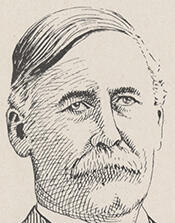
Here you will find contact information for Representative Clarence Bennett Buckman, including email address, phone number, and mailing address.
| Name | Clarence Bennett Buckman |
| Position | Representative |
| State | Minnesota |
| District | 6 |
| Party | Republican |
| Status | Former Representative |
| Term Start | November 9, 1903 |
| Term End | March 3, 1907 |
| Terms Served | 2 |
| Born | April 1, 1851 |
| Gender | Male |
| Bioguide ID | B001029 |
About Representative Clarence Bennett Buckman
Clarence Bennett Buckman (April 1, 1851 – March 1, 1917) was an American farmer, lumberman, and Republican politician who served as a Representative from Minnesota in the United States Congress from 1903 to 1907. He represented Minnesota’s 6th congressional district for two terms and contributed to the legislative process during a significant period in American history. Before his service in the U.S. House of Representatives, he held office in both houses of the Minnesota Legislature and was active in local public affairs, agriculture, and the lumber industry.
Buckman was born in Doylestown, Pennsylvania, on April 1; the exact year of his birth is uncertain, with sources placing it between 1849 and 1852, though 1851 is the most widely accepted year and is generally used in reference works. He grew up in Pennsylvania before moving west during the post–Civil War era of expansion and settlement. In 1872 he relocated to Minnesota, where he established himself as a farmer and lumberman, occupations that would ground his later political career in the economic life of his region.
Soon after his arrival in Minnesota, Buckman became involved in local public service. In 1873 he was appointed justice of the peace, reflecting his early standing in the community. When the area in which he lived was incorporated as a municipality in 1874, it was named Buckman, Minnesota, in his honor, underscoring his prominence in the locality. On September 13, 1876, he suffered a serious threshing machine accident on his farm that resulted in the loss of his left leg. He thereafter used a wooden leg and reportedly practiced walking to such an extent that he moved without a noticeable limp. In 1880 he moved to Little Falls, Minnesota, which became his principal base of operations in business and politics.
Buckman entered state politics in 1880, when he was elected as a Republican to the Minnesota House of Representatives from the 30th district. After serving a single term in the House, he successfully ran for the Minnesota Senate from the 39th district in 1882. During his early Senate service he chaired the Grain and Warehouse Inspection Committee, a key assignment in an era when agricultural production and grain marketing were central to Minnesota’s economy. In 1886 his farm in Buckman was destroyed by the devastating Sauk Rapids tornado, a major regional disaster. That same year he was reelected to the state Senate; during this term his official residence was listed as Sauk Rapids. In the first half of this Senate term he served as president pro tempore and chaired both the Booms and Logs Special Committee and the Finance Committee, positions that gave him influence over transportation, lumber-related issues, and fiscal policy. He was not reelected to the state Senate in 1890.
In addition to farming, lumbering, and legislative work, Buckman engaged in local enterprise and urban development. In 1892, dissatisfied with the accommodations of his hotel room in Little Falls, he decided to construct his own hotel. He purchased a corner lot in the downtown area and personally designed the building, instructing architects essentially to “fill in the blanks” of his plans. The hotel opened on February 16, 1893, and quickly became known as the high-end hotel in Little Falls. The structure later became a senior living facility and is recognized as a contributing building to the Little Falls Commercial Historic District, reflecting its lasting architectural and community significance.
Buckman returned to state politics at the close of the nineteenth century. In 1898 he was again elected to the Minnesota Senate, this time representing the 48th district and running as an Independent Republican rather than as a straight Republican, the label under which he had previously served. During this renewed Senate tenure he chaired the Internal Improvements Committee in his first term, overseeing matters related to infrastructure and public works, and later chaired the Labor Committee in his second term, addressing issues affecting workers and industrial relations. His experience in both agriculture and lumber, combined with his legislative leadership roles, positioned him as a prominent figure in Minnesota’s Republican politics at the turn of the century.
In 1902 Buckman was elected to the United States House of Representatives as a Republican from Minnesota’s 6th congressional district. He took his seat in the Fifty-eighth Congress on March 4, 1903, and was reelected in 1904 to serve in the Fifty-ninth Congress, holding office until March 3, 1907. During his two terms in Congress he participated in the democratic process and represented the interests of his constituents during a period marked by rapid industrialization, Progressive Era reforms, and debates over federal regulation and economic policy. His service in Congress formed the culmination of a long career in public life that had begun in local office and extended through multiple terms in the state legislature. In 1906 he lost the Republican renomination for his House seat to Charles A. Lindbergh Sr., ending his tenure in the national legislature.
After leaving Congress, Buckman continued in federal service as a United States deputy marshal from 1907 to 1912, further extending his record of public employment. In his later years he remained associated with Little Falls, where his earlier business and political activities had left a lasting imprint. Clarence Bennett Buckman died at the Battle Creek Sanitarium in Battle Creek, Michigan, on March 1, 1917. He was interred in Oakland Cemetery in Little Falls, Minnesota, closing a life that had spanned frontier settlement, state-building, and the early twentieth-century evolution of American national politics.