Senator Clarence Don Clark
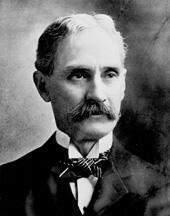
Here you will find contact information for Senator Clarence Don Clark, including email address, phone number, and mailing address.
| Name | Clarence Don Clark |
| Position | Senator |
| State | Wyoming |
| Party | Republican |
| Status | Former Representative |
| Term Start | December 2, 1889 |
| Term End | March 3, 1917 |
| Terms Served | 6 |
| Born | April 16, 1851 |
| Gender | Male |
| Bioguide ID | C000425 |
About Senator Clarence Don Clark
Clarence Don Clark (April 16, 1851 – November 18, 1930) was an American teacher, lawyer, and Republican politician who served as both a United States Representative and United States Senator from Wyoming. Over a congressional career that extended from 1890 to 1917, including six terms in the Senate, he participated in the constitutional convention for Wyoming’s statehood and became one of the new state’s first members of Congress. His long tenure in the Senate coincided with a significant period in American history, during which he contributed to the legislative process and represented the interests of his Wyoming constituents.
Clark was born in Sandy Creek, Oswego County, New York, on April 16, 1851, to Oratia D. Clark and Laura A. (King) Clark. He spent his early years in upstate New York before moving westward to pursue higher education and professional opportunities. Seeking advancement beyond his rural upbringing, he enrolled at the University of Iowa in Iowa City, where he undertook his formal studies prior to entering the legal profession.
After completing his studies, Clark read law and was admitted to the bar in 1874. That same year he married Alice Downs. He began his professional life as both a teacher and a practicing attorney in Manchester, Iowa, combining educational work with the development of a legal practice. In 1881, drawn by the opportunities of the American West, he moved to Evanston in the Wyoming Territory, where he continued the practice of law. His abilities as an attorney and his growing local reputation led to his election as county attorney of Uinta County, a position he held from 1882 to 1884.
Clark’s formal political career began in 1889, when he served as a delegate to the Wyoming constitutional convention, helping to frame the fundamental law under which the territory would enter the Union as a state. With Wyoming’s admission to statehood in 1890, he was elected as a Republican to the United States House of Representatives for the Fifty-first Congress and was reelected to the Fifty-second Congress. As one of Wyoming’s first representatives in Congress, he served from December 1, 1890, until March 3, 1893. During these two terms in the House, he took part in the national legislative process at a time of rapid economic and political change in the United States. He was an unsuccessful candidate for reelection in 1892 and left the House at the close of his second term.
Clark returned to national office two years later. In a special election held in 1895 to fill a vacancy in the United States Senate from Wyoming, he was elected as a Republican and took his seat on January 23, 1895. He was subsequently reelected three times, serving continuously in the Senate until March 3, 1917. Over these six terms in Congress—two in the House and four full terms in the Senate—Clark participated in debates and legislation that spanned the closing of the frontier, the Progressive Era, and World War I. As a member of the Senate, he represented Wyoming’s interests in matters such as western development, natural resources, and national policy, and he played a role in the broader democratic process during a transformative era in American history. He was defeated for reelection in 1916, ending more than two decades of continuous service in Congress.
After leaving the Senate, Clark resumed the practice of law, this time in Washington, D.C., where his long experience in federal affairs informed his legal work. In 1919 he was appointed a member of the International Joint Commission, the bilateral body established to address boundary and water issues between the United States and Canada. He served on the commission for a decade and was its chairman from 1923 until his retirement in 1929, contributing to the peaceful management of international waterways and cross-border disputes.
Upon retiring from public service in 1929, Clark returned to Evanston, Wyoming, where he had first established himself as a lawyer nearly half a century earlier. He lived there until his death on November 18, 1930. Clarence Don Clark was interred at the Masonic Cemetery in Evanston, Wyoming, closing a life that spanned from the post–Civil War era through the dawn of the Great Depression and that was marked by sustained service as a teacher, lawyer, and national legislator.