Representative Clarence Dennis Coughlin
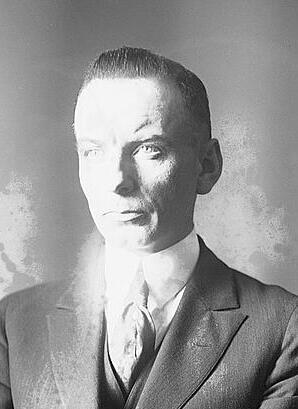
Here you will find contact information for Representative Clarence Dennis Coughlin, including email address, phone number, and mailing address.
| Name | Clarence Dennis Coughlin |
| Position | Representative |
| State | Pennsylvania |
| District | 11 |
| Party | Republican |
| Status | Former Representative |
| Term Start | April 11, 1921 |
| Term End | March 3, 1923 |
| Terms Served | 1 |
| Born | July 27, 1883 |
| Gender | Male |
| Bioguide ID | C000806 |
About Representative Clarence Dennis Coughlin
Clarence Dennis Coughlin (July 27, 1883 – December 15, 1946) was an American lawyer, educator, and politician who served one term as a Republican U.S. Representative from Pennsylvania from 1921 to 1923. A member of a politically active family and the uncle of future Congressman Lawrence Coughlin, he was born in Kingston, Pennsylvania, the son of James M. Coughlin, superintendent of the Wilkes-Barre school area. His father’s long service in public education was later commemorated by the naming of a school in his honor, reflecting the family’s early and sustained engagement in civic and educational affairs.
Coughlin pursued higher education at Wesleyan University in Middletown, Connecticut, and later attended Harvard College, grounding himself in the liberal arts before entering professional life. Following his studies, he returned to northeastern Pennsylvania and embarked on a career in education. From 1906 to 1910 he taught at Wilkes-Barre High School, contributing to the public school system in the same community where his father had been a leading educational figure. During this period he also began to prepare for a career in law, studying in parallel with his teaching responsibilities.
In 1910 Coughlin was admitted to the bar and commenced the practice of law in Luzerne County, Pennsylvania, where he remained active from 1910 to 1920. Alongside his legal practice, he became involved in a range of business enterprises, including manufacturing, banking, and the development of real estate in Wilkes-Barre and nearby Scranton. His expanding professional and commercial interests helped establish him as a prominent figure in local affairs and provided a platform for his subsequent political career.
Coughlin’s early political activity reflected the fluid party alignments of the Progressive Era. In 1912 he ran for Congress under the Progressive Party banner, mounting a notable challenge in his district. In that race he finished ahead of the incumbent Republican, Charles Bowman, but ultimately lost to Democrat John Casey. Within the Republican organization, he rose to a position of influence as chairman of the Republican county committee of Luzerne County from 1915 to 1917. He also developed a reputation for public service and legal reform, serving six years as a member of the commission to revise the penal code of Pennsylvania, and in 1918 he was a member of the committee of public safety of the state and county, contributing to home-front organization during World War I.
Building on this record, Coughlin was elected as a Republican to the 67th Congress and served as a Representative from Pennsylvania in the United States Congress from March 4, 1921, to March 3, 1923. His single term in the House of Representatives coincided with a significant period in American history marked by postwar economic adjustment and the early years of the Harding administration. During his service in Congress he participated in the legislative process and represented the interests of his constituents in Luzerne County and the surrounding region. He also held a leadership role as chairman of the United States House Committee on Expenditures in the Department of Commerce, overseeing and reviewing spending and administrative practices within that department. A member of the Republican Party, Coughlin contributed to the democratic process and the work of the House during his one term in office. He was an unsuccessful candidate for reelection in 1922.
After leaving Congress, Coughlin returned to Pennsylvania and resumed his legal career, soon moving into the judiciary. In 1925 he was appointed judge of the Luzerne County Court of Common Pleas to fill an unexpired term created by the death of Judge Woodward. Demonstrating broad support within the community, he was elected in November 1927 to a full ten-year term on that court and served until 1937. His judicial service capped a public career that had encompassed education, law, legislative work, and legal reform at both the state and federal levels.
Clarence Dennis Coughlin died in Wilkes-Barre, Pennsylvania, on December 15, 1946, at the age of 63. He was interred in Mount Greenwood Cemetery in Trucksville, Pennsylvania. His life and career reflected the civic traditions of northeastern Pennsylvania and the broader currents of early twentieth-century American politics, law, and public service.