Representative Clarence Frederick Lea
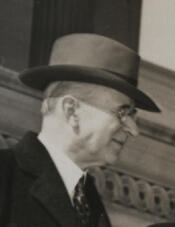
Here you will find contact information for Representative Clarence Frederick Lea, including email address, phone number, and mailing address.
| Name | Clarence Frederick Lea |
| Position | Representative |
| State | California |
| District | 1 |
| Party | Democratic |
| Status | Former Representative |
| Term Start | April 2, 1917 |
| Term End | January 3, 1949 |
| Terms Served | 16 |
| Born | July 11, 1874 |
| Gender | Male |
| Bioguide ID | L000163 |
About Representative Clarence Frederick Lea
Clarence Frederick Lea (July 11, 1874 – June 20, 1964) was an American lawyer and Democratic politician who served 16 consecutive terms as a U.S. Representative from California from 1917 to 1949. Over more than three decades in the House of Representatives, he contributed to the legislative process during a significant period in American history, representing the interests of his constituents through World War I, the Great Depression, World War II, and the early postwar era.
Lea was born near Highland Springs, in southwestern Lake County, California, on July 11, 1874. He spent his early years in this rural part of the state before pursuing formal education in nearby communities. He attended Lakeport Academy in Lakeport, California, where he received his preparatory education. Seeking further study, he enrolled at Stanford University, which had been founded only a few years earlier and was emerging as a major institution in the West. He later continued his professional training out of state, reflecting both ambition and a desire to enter the legal profession.
Lea completed his legal education at the University of Denver, where he obtained a law degree in 1898. In the same year, he was admitted to the bar and returned to California to begin his law practice. He established himself in Santa Rosa, in Sonoma County, where he built a reputation as a capable attorney. His legal work and growing prominence in the community led naturally into public service, as he became increasingly involved in local legal and civic affairs.
In 1907, Lea was elected district attorney of Sonoma County, a position he held for a decade until 1917. As district attorney, he was responsible for prosecuting criminal cases and advising county officials, and he became a well-known public figure in the region. His professional standing among his peers was underscored by his election as president of the District Attorney’s Association of California in 1916 and 1917, placing him in a leadership role among prosecutors statewide at the very moment his career was about to move onto the national stage.
Lea entered national politics when he was elected as a Democrat to the 65th Congress, taking office on March 4, 1917. He was subsequently reelected to the 15 succeeding Congresses, serving continuously until January 3, 1949. During these 16 terms in the U.S. House of Representatives, he participated actively in the democratic process and legislative deliberations at a time of profound transformation in the United States. His tenure spanned the Wilson, Harding, Coolidge, Hoover, Roosevelt, and Truman administrations, and he took part in debates and votes on issues ranging from wartime measures to New Deal legislation and postwar reconstruction.
Within the House, Lea rose to positions of significant influence. He served as chairman of the Committee on Interstate and Foreign Commerce during the 75th through 79th Congresses, a period roughly covering 1937 to 1947. In that capacity, he played a central role in shaping legislation affecting transportation, communications, and commercial regulation, areas that were critical as the nation modernized its infrastructure and managed the economic and logistical demands of World War II. His leadership on this committee placed him at the center of key policy decisions affecting both domestic commerce and aspects of the nation’s international economic relations.
Lea is also known for his role during World War II in matters related to internal security and civil liberties. He led a group of congressmen who advanced the resolution calling for the internment of Italian Americans, Japanese Americans, and German Americans during the war. This action contributed to the federal government’s policy of mass removal and confinement of persons of Japanese ancestry on the West Coast, as well as heightened scrutiny and restrictions on other groups designated as enemy aliens, and remains a notable and controversial aspect of his congressional record.
After choosing not to seek reelection in 1948, Lea left Congress at the conclusion of his final term on January 3, 1949. He remained in Washington, D.C., where he engaged in public relations work from 1949 to 1954, drawing on his long experience in national politics, legislative affairs, and public policy. This post-congressional career kept him connected to the federal government and to issues of public concern, even as he no longer held elective office.
In his later years, Lea returned to California. He died in Santa Rosa, California, on June 20, 1964, closing a life that had begun in rural Lake County and encompassed more than three decades of service in the U.S. House of Representatives. He was interred at the Santa Rosa Odd Fellows Cemetery. His long tenure in Congress, his leadership on the Committee on Interstate and Foreign Commerce, and his role in wartime policies affecting civil liberties mark him as a significant, if complex, figure in California and national political history.