Representative Clarence John McLeod
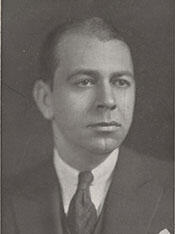
Here you will find contact information for Representative Clarence John McLeod, including email address, phone number, and mailing address.
| Name | Clarence John McLeod |
| Position | Representative |
| State | Michigan |
| District | 13 |
| Party | Republican |
| Status | Former Representative |
| Term Start | May 19, 1919 |
| Term End | January 3, 1941 |
| Terms Served | 9 |
| Born | July 3, 1895 |
| Gender | Male |
| Bioguide ID | M000557 |
About Representative Clarence John McLeod
Clarence John McLeod (July 3, 1895 – May 15, 1959) was a Republican politician from Michigan who served nine terms as a member of the United States House of Representatives. His congressional career, spanning from 1919 to 1941, placed him at the center of national legislative developments during the interwar period and the Great Depression, as he represented the interests of his Detroit-area constituents in the U.S. Congress.
McLeod was born in Detroit, Michigan, the son of a well-to-do Scottish father who had served as collector of internal revenue in Detroit. Raised in the city he would later represent, he attended the Detroit public schools and then the University of Detroit. He pursued legal studies at the Detroit College of Law, from which he graduated with an LL.B. degree in 1918. During his legal education he was a member of the legal fraternity Delta Theta Phi, reflecting an early engagement with the professional and civic networks that would support his later political career.
During the First World War, McLeod entered military service and was assigned to the aviation section at the ground school at Cornell University in Ithaca, New York, where he served as a private. He later advanced to the rank of sergeant in the Intelligence Division. On May 12, 1919, he accepted appointment as a second lieutenant in the Officers’ Reserve Corps and was successively promoted to captain, major, and lieutenant colonel. In 1919, following his graduation from law school, he was admitted to the bar and commenced the practice of law in Detroit, combining his emerging legal career with his continuing service in the reserve components of the armed forces.
McLeod’s entry into national politics came soon after the war. In November 1920, he was elected as a Republican from Michigan’s 13th congressional district to the 66th United States Congress to fill the vacancy caused by the death of Representative Charles A. Nichols. He served this initial term from November 2, 1920, to March 3, 1921. At the time of his election he was just over five months past his twenty-fifth birthday, making him, at that time, the youngest person ever elected to Congress, barely exceeding the minimum age requirement set by the U.S. Constitution. In that special election he was a candidate only to fill the unexpired term of Nichols; at the same time, Vincent M. Brennan was elected to the full term in the 67th Congress.
After a brief interval out of office, McLeod returned to the House of Representatives. In 1922 he was elected to the 68th Congress and was subsequently re-elected to the six succeeding Congresses, serving without interruption from March 4, 1923, to January 3, 1937. Over these years he participated actively in the legislative process as a member of the Republican Party during a period marked by the prosperity of the 1920s, the onset of the Great Depression, and the early New Deal era. McLeod sought to extend his political influence beyond the House when, in 1934, he became an unsuccessful candidate in the Republican primary election for governor of Michigan. Two years later, in 1936, he was defeated in the general election for the 75th Congress by Democrat George O’Brien, bringing his long continuous tenure in the House to a temporary close. In 1937, he attempted to shift to municipal leadership but was unsuccessful in his bid for the Republican nomination for mayor of Detroit.
McLeod regained a seat in Congress in the 1938 election. That year he defeated George O’Brien and was elected to the 76th Congress, serving from January 3, 1939, to January 3, 1941. This final term in the House coincided with the closing years of American neutrality before the nation’s entry into the Second World War. Despite his earlier successes, McLeod was unable to secure a lasting return to Congress. He lost to O’Brien again in the elections of 1940, 1942, and 1944. In 1946, he was defeated for the Republican nomination by Howard Aldridge Coffin, who subsequently went on to defeat O’Brien in the general election. McLeod later won the Republican nomination in both 1950 and 1952, but on each occasion he was again defeated by O’Brien in the general election, underscoring the persistent electoral rivalry that marked the later phase of his political career.
After his final departure from Congress, McLeod returned to the full-time practice of law in Detroit. Drawing on his legislative experience and his background in military and civil defense matters, he also served as a consultant to the administrator of the Federal Civil Defense Administration, contributing to national preparedness efforts in the early Cold War era. Clarence John McLeod died in Detroit on May 15, 1959. He was interred in Mount Olivet Cemetery in Detroit, closing a life closely tied to the city in which he was born, educated, practiced law, and represented in the Congress of the United States.