Representative Clark Betton Cochrane
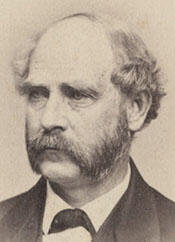
Here you will find contact information for Representative Clark Betton Cochrane, including email address, phone number, and mailing address.
| Name | Clark Betton Cochrane |
| Position | Representative |
| State | New York |
| District | 18 |
| Party | Republican |
| Status | Former Representative |
| Term Start | December 7, 1857 |
| Term End | March 3, 1861 |
| Terms Served | 2 |
| Born | May 31, 1815 |
| Gender | Male |
| Bioguide ID | C000569 |
About Representative Clark Betton Cochrane
Clark Betton Cochrane (May 31, 1815 – March 5, 1867) was a U.S. Representative from New York and a member of the Republican Party who served in the United States House of Representatives from 1857 to 1861. He was born in New Boston, Hillsborough County, New Hampshire, where he spent his early years before moving as a young man to Montgomery County, New York. His relocation to New York placed him within a growing commercial and political region of the state and set the stage for his subsequent legal and political career.
Cochrane pursued higher education at Union College in Schenectady, New York, an institution that was then emerging as a prominent center of classical and legal studies. He was graduated from Union College in 1841. During or following his collegiate studies, he read law in the traditional manner of the period, preparing for admission to the bar rather than attending a formal law school. In the same year that he completed his college education, 1841, he was admitted to the bar and commenced the practice of law.
Cochrane first established his legal practice in Amsterdam, in Montgomery County, New York, where he practiced from 1841 to 1851. His work as an attorney in this growing community helped to build his reputation and introduced him to local public affairs. In 1851 he moved his practice to Schenectady, where he continued to practice law until 1855. That year he relocated once more, this time to Albany, the state capital, where he practiced law from 1855 until his death in 1867. His professional standing was further reflected in his long association with his alma mater; he served as a trustee of Union College from 1853 to 1867, contributing to the governance and oversight of the institution for more than a decade.
Cochrane’s political career began at the state level. Identifying with the emerging Republican Party, he was elected as a Republican member of the New York State Assembly from Montgomery County in 1844. His service in the Assembly introduced him to legislative procedure and state policymaking at a time of significant political realignment in New York and the nation. After moving to Albany, he remained active in public life and party affairs while continuing his legal practice, positioning himself for higher office.
In national politics, Cochrane was elected as a Republican to the Thirty-fifth and Thirty-sixth Congresses, serving as a Representative from New York from March 4, 1857, to March 3, 1861. His two terms in the House of Representatives coincided with a critical period in American history, marked by intensifying sectional conflict over slavery and states’ rights in the years immediately preceding the Civil War. As a member of the House, Cochrane participated in the legislative process and represented the interests of his New York constituents during debates over national policy, party realignment, and the future of the Union. He was not a candidate for renomination in 1860 and concluded his congressional service at the close of the Thirty-sixth Congress.
Following his departure from Congress, Cochrane resumed the practice of law in Albany, where he continued to be a figure in Republican politics. During the Civil War era he remained engaged in national party affairs, serving as a delegate to the Republican National Convention in 1864, a gathering that renominated President Abraham Lincoln and helped shape the party’s wartime and reconstruction policies. He returned to state legislative service later in the decade, being elected again as a member of the New York State Assembly, this time representing Albany County’s 3rd District in 1866. In that capacity he brought to the Assembly the experience of both a seasoned attorney and a former member of Congress.
Cochrane’s later years were spent in Albany, where he continued his legal work and public service until his death. He died in Albany, New York, on March 5, 1867. In keeping with his long association with Montgomery County and his early professional life there, he was interred in Green Hill Cemetery in Amsterdam, New York. His career reflected the trajectory of a mid-nineteenth-century lawyer-politician who moved from local practice to state office, then to the national legislature, and back to state service during one of the most consequential eras in United States history.