Representative Clarke Lewis
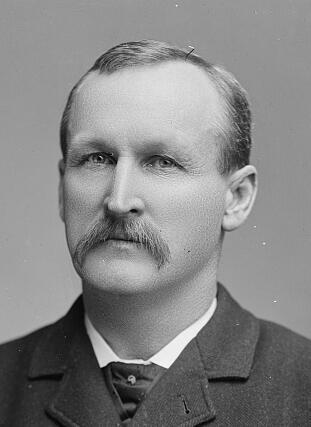
Here you will find contact information for Representative Clarke Lewis, including email address, phone number, and mailing address.
| Name | Clarke Lewis |
| Position | Representative |
| State | Mississippi |
| District | 4 |
| Party | Democratic |
| Status | Former Representative |
| Term Start | December 2, 1889 |
| Term End | March 3, 1893 |
| Terms Served | 2 |
| Born | November 8, 1840 |
| Gender | Male |
| Bioguide ID | L000276 |
About Representative Clarke Lewis
Clarke Lewis (November 8, 1840 – March 13, 1896) was an American educator, Civil War veteran, and politician who served two terms as a United States Representative from Mississippi from 1889 to 1893. A member of the Democratic Party, he represented his constituents in the U.S. House of Representatives during a significant period in American history, contributing to the legislative process in the post-Reconstruction era.
Born on November 8, 1840, Lewis came of age in the antebellum South, in a Mississippi society shaped by agriculture, slavery, and growing sectional tensions. Details of his early family life and upbringing are sparse in the historical record, but his later career as an educator suggests that he received a level of formal schooling that prepared him for both teaching and public service. His formative years were marked by the political and social conflicts that would culminate in the Civil War, experiences that likely influenced his later public life.
Lewis served in the Civil War, an experience that placed him among the many Southern men whose lives were profoundly altered by the conflict. As a Civil War veteran, he returned to a Mississippi undergoing Reconstruction and social upheaval. In the years following the war, he pursued work as an educator, contributing to the rebuilding of civic life in his state by helping to train and instruct a new generation. His dual identity as both a veteran and an educator gave him standing in his community and provided a foundation for his subsequent political career.
By the late 1880s, Lewis had become active in Democratic Party politics in Mississippi, at a time when the party was consolidating its dominance in the post-Reconstruction South. He was elected as a Democrat to the United States House of Representatives and served two consecutive terms, from 1889 to 1893. During his tenure in Congress, he participated in the democratic process at the national level, representing the interests of his Mississippi constituents in debates over economic policy, regional development, and the evolving federal role in the postwar nation. His service coincided with the Fifty-first and Fifty-second Congresses, a period marked by contentious issues such as tariffs, currency, and federal election laws.
As a member of the House of Representatives, Lewis contributed to the legislative work of the chamber, aligning with the Democratic Party’s positions on key questions of the day and reflecting the priorities of a largely rural, agricultural state. While the detailed record of his committee assignments and specific legislative initiatives is limited, his presence in Congress during these years placed him within the broader struggle over the direction of national policy in the Gilded Age, particularly as it affected the South and its efforts to recover economically and politically from the Civil War.
After leaving Congress in 1893, Lewis returned to private life in Mississippi. Drawing on his earlier experience, he remained identified as both an educator and a veteran, figures of respect in Southern communities of the late nineteenth century. He lived out his final years in the state he had represented in Washington, maintaining the public reputation he had built over decades of service in war, education, and politics.
Clarke Lewis died on March 13, 1896. His life spanned the antebellum, Civil War, Reconstruction, and post-Reconstruction eras, and his career as an educator, Civil War veteran, and Democratic member of the U.S. House of Representatives from Mississippi from 1889 to 1893 placed him among those regional leaders who helped shape the political and civic landscape of the late nineteenth-century South.