Representative Clarkson Nott Potter
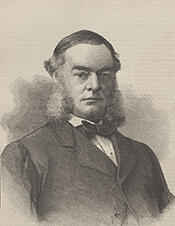
Here you will find contact information for Representative Clarkson Nott Potter, including email address, phone number, and mailing address.
| Name | Clarkson Nott Potter |
| Position | Representative |
| State | New York |
| District | 12 |
| Party | Democratic |
| Status | Former Representative |
| Term Start | March 4, 1869 |
| Term End | March 3, 1879 |
| Terms Served | 4 |
| Born | April 25, 1825 |
| Gender | Male |
| Bioguide ID | P000461 |
About Representative Clarkson Nott Potter
Clarkson Nott Potter (April 25, 1825 – January 23, 1882) was a New York attorney and Democratic politician who served as a Representative from New York in the United States Congress from 1869 to 1879. A member of the Democratic Party, he contributed to the legislative process during four terms in office, serving in the United States House of Representatives from 1869 to 1875, then again from 1877 to 1879. His service in Congress occurred during a significant period in American history, as the nation navigated Reconstruction and its aftermath, and he participated in the democratic process while representing the interests of his constituents.
Born on April 25, 1825, Potter was a member of a prominent New York family that was active in professional and public life. He grew up in an environment that valued education, public service, and the law, influences that shaped his later career. Details of his early schooling reflect the typical education of a young man of his social standing in the mid-nineteenth century, preparing him for advanced study and a professional path in the legal field.
Potter pursued legal studies and was admitted to the bar, establishing himself as a New York attorney. His legal practice developed during a period of rapid economic and social change in the state, and his work as a lawyer helped build the reputation and connections that would support his entry into politics. As an attorney, he gained familiarity with the legal and commercial issues that were central to New York’s growth, experience that later informed his legislative interests and activities.
Elected as a Democrat to the United States House of Representatives, Potter first entered Congress in 1869. He served four terms, holding office continuously from 1869 to 1875, and, after a brief interval out of Congress, returning to serve again from 1877 to 1879. During these years he was part of the national legislature at a time when Congress was addressing Reconstruction policies, questions of federal and state authority, and the economic challenges of the post–Civil War era. As a member of the House of Representatives, Clarkson Nott Potter participated in the democratic process and represented the interests of his New York constituents, contributing to debates and legislation that reflected both regional concerns and national issues.
Alongside his public career, Potter maintained a substantial family life. He and his wife had several children who themselves became notable in various fields. Their daughter Maria Louisa Potter (1855–1882) married Joseph Leslie Cotton of Boston in 1881; after her death, her widower remarried the artist Mariette Leslie Cotton. Another daughter, Virginia Potter (1857–1937), did not marry and became known for founding several independent hotels for women in New York, institutions that provided respectable accommodations and greater independence for women in the city. Their son Howard Nott Potter (1859–1937) became an architect recognized for his design of churches; he married his first cousin, Helen Potter, the daughter of architect Edward Tuckerman Potter. Two younger children, Eleanor Potter (born circa 1862) and Clarkson Alonzo Potter (circa 1870–circa 1936), also survived him and shared in the family’s social and economic legacy.
In his later years, Potter remained a figure of standing in New York legal and political circles, his congressional service and professional work having secured him a prominent place in the state’s public life. He died in New York City on January 23, 1882. Following a funeral service at Grace Church in New Rochelle, he was buried at Vale Cemetery in Schenectady, New York. His estate, estimated in excess of $1,000,000, was divided among his wife and children, reflecting both the success of his legal and political career and the substantial position he had attained in nineteenth-century New York society.