Representative Claude Ignatius Bakewell
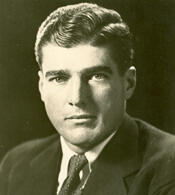
Here you will find contact information for Representative Claude Ignatius Bakewell, including email address, phone number, and mailing address.
| Name | Claude Ignatius Bakewell |
| Position | Representative |
| State | Missouri |
| District | 11 |
| Party | Republican |
| Status | Former Representative |
| Term Start | January 3, 1947 |
| Term End | January 3, 1953 |
| Terms Served | 2 |
| Born | August 9, 1912 |
| Gender | Male |
| Bioguide ID | B000080 |
About Representative Claude Ignatius Bakewell
Claude Ignatius Bakewell (August 9, 1912 – March 18, 1987) was an American lawyer, Republican politician, U.S. Representative from Missouri’s 11th congressional district, and U.S. Postmaster for St. Louis, Missouri. He served as a Representative from Missouri in the United States Congress from 1947 to 1953, contributing to the legislative process during two terms in office and representing the interests of his constituents during a significant period in American history.
Bakewell was born in St. Louis, Missouri, one of five children of Paul Bakewell Jr. and Mary Morgan (née Fullerton) Bakewell. Through his mother, the daughter of Joseph Scott Fullerton and a grand-niece of financier J. P. Morgan, he was connected to a prominent St. Louis and national financial lineage; Mary Fullerton was reportedly regarded as “the richest girl” in St. Louis. On his father’s side, Bakewell descended from a family distinguished in law and public life. His grandfather, Paul Bakewell, was a patent and trademark lawyer in the firm Bakewell & Church, and his grandmother was a granddaughter of Alexander McNair, the first governor of Missouri. His great-grandfather, Robert Armytage Bakewell, served as a Missouri judge and was married to Nancy de Laureal. These family connections placed him within a longstanding tradition of legal practice and public service in Missouri.
Bakewell received his early education in St. Louis, graduating from St. Louis University High School. He then attended Georgetown University in Washington, D.C., where he completed his undergraduate studies in 1932. Pursuing a legal career, he returned to his native city and enrolled at St. Louis University School of Law, from which he graduated in 1935. That same year he was admitted to the bar and began practicing law in private practice in St. Louis, establishing himself professionally before entering public office.
His first elected position was in municipal government. In the 25th Ward of St. Louis, Bakewell served as a member of the board of aldermen from 1941 to 1945. During his tenure on the board, he was chairman of the legislation committee, a role that gave him experience in drafting and evaluating laws and ordinances and helped prepare him for later legislative responsibilities at the federal level. With the United States’ entry into World War II, he entered military service; from 1944 to 1946, Bakewell served in the United States Navy, contributing to the national war effort before returning to political life.
Bakewell was elected as a Republican to the 80th United States Congress in the 1946 elections, representing Missouri’s 11th congressional district. His 1946 campaign was managed by Phyllis Schlafly, who would later become a nationally known conservative activist and founder of Eagle Forum. He took his seat in January 1947 and served in the 80th Congress, but lost his bid for re-election in 1948 to Democrat John B. Sullivan. Following Sullivan’s death, Bakewell returned to Congress after winning a special election in March 1951 to again represent the 11th district. In that campaign he linked his Democratic opponent, Harry Schendel, to the St. Louis political machine dominated by Morris Shenker and Larry Callanan, whose backed candidates typically prevailed in local elections. In the context of the Second Red Scare, he also labeled Schendel a “stooge” of the political action committee of the Congress of Industrial Organizations, which he characterized as “Moscow-inspired.” Bakewell won the special election by 6,187 votes, a result widely viewed as a setback for the otherwise powerful political machine. He served through the remainder of that term but was defeated in the regular 1952 election by Leonor K. Sullivan, the widow of John B. Sullivan. To date, he is the last Republican to have represented a significant portion of the city of St. Louis in the U.S. House of Representatives.
During his congressional service, Bakewell sat on the House Judiciary Committee, where he participated in the consideration of federal legislation at a time of postwar adjustment and early Cold War tensions. In 1952, he was one of three representatives who opposed bringing an unamended bill by Representatives Joseph Bryson and Estes Kefauver to the House floor; the bill would have required royalty fees for jukeboxes that played music on disks, and his opposition reflected concern about its impact on existing business practices. He was also the only Republican to sign the minority report on House Bill 4484, a quitclaim bill concerning tidelands. Bakewell objected that the measure would empower Congress to remove the sovereignty of U.S. public lands rather than simply dispose of the lands themselves, a position that underscored his views on federal authority over public property. In matters of civil rights and public accommodations, he responded to an anti-segregation plan by the St. Louis Committee of Racial Equality, which sent interracial dining groups to three mall restaurants, by criticizing discriminatory practices. He wrote that “it appears utterly inconsistent that the department stores would welcome the patronage of a large segment of the population at all counters and in all departments but would arbitrarily exclude them from the dining facilities,” reflecting his opposition to such segregation in commercial establishments.
After leaving Congress, Bakewell continued his public service in a federal administrative role. From 1958 to 1982, he served as the U.S. Postmaster for St. Louis, Missouri, overseeing postal operations in one of the Midwest’s major urban centers for nearly a quarter of a century. His long tenure in that position extended his influence in civic affairs well beyond his years in elective office and anchored his reputation as a figure of continuity in St. Louis public life.
Claude Ignatius Bakewell died in University City, Missouri, a suburb of St. Louis, on March 18, 1987, at the age of 74. He was interred at Calvary Cemetery in St. Louis, returning in death to the city that had been the center of his family’s prominence, his legal career, and his decades of public service.