Representative Claude Albert Fuller
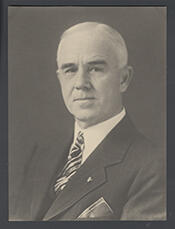
Here you will find contact information for Representative Claude Albert Fuller, including email address, phone number, and mailing address.
| Name | Claude Albert Fuller |
| Position | Representative |
| State | Arkansas |
| District | 3 |
| Party | Democratic |
| Status | Former Representative |
| Term Start | April 15, 1929 |
| Term End | January 3, 1939 |
| Terms Served | 5 |
| Born | January 20, 1876 |
| Gender | Male |
| Bioguide ID | F000408 |
About Representative Claude Albert Fuller
Claude Albert Fuller (January 20, 1876 – January 8, 1968) was an American lawyer, farmer, and Democratic politician who served as a member of the Arkansas House of Representatives from 1903 to 1905 and as a United States Representative from Arkansas’s 3rd Congressional District from 1929 to 1939. Over the course of five consecutive terms in Congress, he represented his constituents during a pivotal decade in American history and contributed to the legislative process as a member of the Democratic Party.
Fuller was born on January 20, 1876, in Prophetstown, Whiteside County, Illinois, to Wilmont P. Fuller and Maria (Ocobock) Fuller. In 1885 he moved with his parents to Arkansas, where the family settled on a farm near Eureka Springs. He attended the public schools in his new community and worked at various jobs, including as a boot black and as a janitor at the school he attended, to help support himself. Although he initially dropped out of high school and went to Chicago to take a better-paying job, he later returned to his studies with the goal of becoming a lawyer. Fuller completed high school in Eureka Springs in 1896 at the age of twenty.
Pursuing his ambition to enter the legal profession, Fuller returned to Chicago to attend the Kent School of Law and subsequently came back to Eureka Springs to continue his legal studies in the office of attorney C. G. White. He took the Arkansas bar examination in open court and was admitted to the bar on February 5, 1898, after which he commenced the practice of law in Eureka Springs. In addition to his legal work, he engaged in farming, reflecting the agrarian character of the region he would later represent. On December 25, 1899, he married May Obenshain; the couple had three children, one of whom died in infancy.
Fuller quickly became active in local government and Democratic Party politics. He served as city clerk of Eureka Springs from 1898 to 1902, gaining early administrative experience in municipal affairs. In 1902 he was elected to the Arkansas House of Representatives, serving from 1903 to 1905. He went on to serve as mayor of Eureka Springs from 1906 to 1910, and again from 1920 to 1928, overseeing local governance during periods of growth and change in the city. From 1910 to 1914 he was prosecuting attorney of the fourth Arkansas judicial district, a role that broadened his experience in public law enforcement and the judicial system. Fuller also played a prominent role in local education, serving as president of the Eureka Springs School Board from 1916 to 1928.
Alongside his elected and appointed offices, Fuller was deeply involved in Democratic Party activities at the state and national levels. He was a delegate to every Democratic State convention in Arkansas from 1903 to 1943, reflecting his long-standing influence within the party. Nationally, he served as a delegate to the Democratic National Conventions in 1908 and 1912, and again at multiple conventions from 1924 through 1960. This sustained participation in party conventions underscored his role in shaping Democratic politics in Arkansas over several decades and connected his local and state leadership with the broader national party organization.
Fuller was elected as a Democrat to the Seventy-first Congress and to the four succeeding Congresses, serving in the U.S. House of Representatives from March 4, 1929, to January 3, 1939, as the representative of Arkansas’s 3rd District. His decade in Congress coincided with the onset of the Great Depression and the New Deal era, a significant period in American history during which the federal government expanded its role in economic and social policy. As a member of the House of Representatives, Claude Albert Fuller participated in the democratic process, represented the interests of his Arkansas constituents, and contributed to the legislative deliberations of this transformative period. In 1938 he was an unsuccessful candidate for renomination, bringing his congressional service to a close at the start of 1939.
After leaving Congress, Fuller returned to Eureka Springs, where he resumed the practice of law. He also remained active in local economic life as president of the Bank of Eureka Springs, a position he held from 1930 until his death, thereby continuing to influence the financial and civic affairs of his community even after his congressional career had ended. His combined roles as lawyer, banker, farmer, and public official reflected a lifelong engagement with both the professional and agricultural interests of his region.
Claude Albert Fuller died in Eureka Springs, Arkansas, on January 8, 1968, at the age of 91 years and 353 days. He was interred in Odd Fellows Cemetery in Eureka Springs. His long life spanned from the post–Civil War era into the modern civil rights period, and his public career encompassed service at the municipal, state, and national levels over more than four decades.