Representative Claude Benton Hudspeth
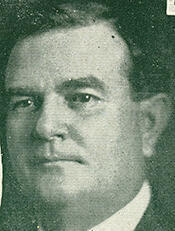
Here you will find contact information for Representative Claude Benton Hudspeth, including email address, phone number, and mailing address.
| Name | Claude Benton Hudspeth |
| Position | Representative |
| State | Texas |
| District | 16 |
| Party | Democratic |
| Status | Former Representative |
| Term Start | May 19, 1919 |
| Term End | March 3, 1931 |
| Terms Served | 6 |
| Born | May 12, 1877 |
| Gender | Male |
| Bioguide ID | H000910 |
About Representative Claude Benton Hudspeth
Claude Benton Hudspeth (May 12, 1877 – March 19, 1941) was an American politician, lawyer, newspaperman, and rancher from Texas who served as a Democratic Representative in the United States House of Representatives from 1919 to 1931. Over six consecutive terms in Congress, he represented Texas’s 16th congressional district and participated actively in the legislative process during a period of significant political and social change in the United States.
Hudspeth was born on May 12, 1877, in Medina, Bandera County, Texas. His parents had recently moved there from Drew County, Arkansas, and he was raised in the rural environment of the Texas Hill Country. At the age of sixteen he moved west to Ozona, in Crockett County, where he quickly became involved in local affairs and the developing civic life of the community. Demonstrating an early interest in public communication and politics, he became the founding publisher of the Ozona Kicker, a local newspaper that served the growing town and surrounding ranching area.
In addition to his work in journalism, Hudspeth engaged in cattle trading and ranching, occupations that tied him closely to the economic and social concerns of West Texas. His experience as a rancher and cattleman informed his later political positions, particularly on issues affecting land use, border security, and rural development. In 1902 he married Marie Cliborne, with whom he had two children, establishing a family life that paralleled his rising public career.
Hudspeth’s formal political career began in the Texas Legislature. He was elected to the Texas House of Representatives, serving from 1902 to 1906, and then advanced to the Texas State Senate, where he served from 1906 to 1918. As a state senator, he became particularly noted for his advocacy on border and law enforcement issues. He successfully persuaded Governor William P. Hobby to create a 16-member unit of the Texas Ranger Division to patrol the border with Mexico, a force that became known informally as the “Hudspeth Rangers.” During this period he also pursued legal training and, in 1909, was admitted to the State Bar of Texas. He began practicing law with the El Paso firm of Nealon, Hudspeth, and McGill, further broadening his professional base in the rapidly growing border city.
Hudspeth’s legislative work in Austin and his legal practice in El Paso positioned him for national office. In 1918 he was elected as a Democrat to the United States House of Representatives from Texas’s newly created 16th congressional district, taking his seat on March 4, 1919. He served six terms, remaining in the House until March 3, 1931. His tenure in Congress coincided with the immediate post–World War I era, the 1920s economic expansion, and the onset of the Great Depression. As a member of the House of Representatives, Hudspeth contributed to the legislative process and represented the interests of his largely West Texas and border-region constituents. He was a strong supporter of U.S. intervention and heightened security measures during the Mexican Border War period, reflecting his longstanding concern with conditions along the Texas–Mexico frontier.
Hudspeth chose not to seek re-election in 1930, declining to run for another term due to ill health. After leaving Congress in 1931, he retired from elective office but remained active in business. He became a director of an oil company, a role that connected him to one of the most important sectors of the Texas economy during the early twentieth century. His earlier legislative efforts also left a lasting geographic legacy: Hudspeth County, Texas, was named in his honor after he supported its creation while serving in the state senate, underscoring his influence on the political and administrative development of West Texas.
In his later years, Hudspeth relocated within the state he had long served. He moved to San Antonio in 1940, where he spent the final months of his life. Claude Benton Hudspeth died in San Antonio on March 19, 1941. He was interred in Mission Burial Park in that city, closing a career that had spanned journalism, ranching, law, state legislation, and twelve years in the United States Congress.