Representative Claude L’Engle
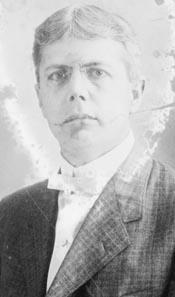
Here you will find contact information for Representative Claude L’Engle, including email address, phone number, and mailing address.
| Name | Claude L’Engle |
| Position | Representative |
| State | Florida |
| District | -1 |
| Party | Democratic |
| Status | Former Representative |
| Term Start | April 7, 1913 |
| Term End | March 3, 1915 |
| Terms Served | 1 |
| Born | October 19, 1868 |
| Gender | Male |
| Bioguide ID | L000548 |
About Representative Claude L’Engle
Claude L’Engle (October 19, 1868 – November 6, 1919) was a United States Representative from Florida who served one term in Congress from 1913 to 1915. A member of the Democratic Party, he represented his constituents during a period of significant political and social change in the early twentieth century and contributed to the legislative process as part of the national Democratic majority of that era.
Born on October 19, 1868, L’Engle came of age in the post–Civil War South, during Reconstruction and its aftermath, when Florida and the broader region were undergoing political realignment and economic transition. The environment in which he was raised exposed him to the evolving issues of race, regional identity, and economic development that would later shape the concerns of his constituents and the broader agenda of the Democratic Party in the South.
L’Engle’s early adulthood coincided with the rise of the Progressive Era, a time when questions of government reform, regulation of business, and expansion of democratic participation were at the forefront of national debate. Against this backdrop, he became involved in public affairs and Democratic Party politics in Florida, building the experience and connections that would eventually support his election to federal office. His political alignment with the Democratic Party reflected the dominant partisan affiliation in Florida at the time, particularly among white voters in the state.
In 1912, L’Engle was elected as a Democrat to the United States House of Representatives, taking his seat at the beginning of the Sixty-third Congress in 1913. His term in Congress ran from 1913 to 1915, a period that overlapped with the administration of President Woodrow Wilson and a wave of significant federal legislation, including measures related to banking and currency, tariffs, and the regulation of business. As a member of the House of Representatives, Claude L’Engle participated in the democratic process at the national level and represented the interests of his Florida constituents during this transformative period. He contributed to the legislative work of the House as part of the Democratic majority, engaging with the issues that affected both his state and the nation.
During his single term, L’Engle’s service occurred at a time when Florida was beginning to experience population growth, increased attention to infrastructure, and debates over agricultural and commercial development. Within this context, he was part of the broader effort by Southern Democrats to secure federal attention and resources for their states while also responding to national questions of economic policy and governance. Although he served only one term, his tenure placed him among the Florida leaders who helped articulate the state’s interests in Washington during the early 1910s.
After leaving Congress in 1915, L’Engle returned to private life. His post-congressional years unfolded as the United States moved toward involvement in World War I and continued to grapple with the legacies of the Progressive Era. While no longer holding federal office, he remained part of the generation of Southern Democrats whose careers bridged the nineteenth and twentieth centuries and whose experiences reflected the shifting political and economic landscape of the South.
Claude L’Engle died on November 6, 1919. His life and single term in the U.S. House of Representatives illustrate the role of early twentieth-century Florida lawmakers in the national legislature and underscore the participation of Southern Democrats in shaping federal policy during a pivotal period in American history.